Hyperlite Mountain Gear Review: The Complete Brand Guide
The brand and its roots
Hyperlite Mountain Gear was founded in 2010 by Mike St. Pierre, who had previously worked as a search-and-rescue professional on Mount Washington in New Hampshire's White Mountains. That background in one of the most weather-volatile ranges in the eastern United States shaped the company's founding premise: gear needed to be light enough to move fast in an emergency but tough enough to trust when conditions turned. St. Pierre started the company using Cuben Fiber, a sailcloth material originally developed for high-performance racing yacht sails, and applied it to backpacking equipment at a time when most of the industry was still building around traditional nylon and polyester fabrics. The material is now more widely known by the generic name Dyneema Composite Fabric, and Hyperlite Mountain Gear built its entire product identity around it years before that fabric became common vocabulary among long-distance hikers.
The company is headquartered in Biddeford, Maine, in a historic mill building on the Saco River that once housed textile manufacturing during New England's industrial era. Hyperlite Mountain Gear manufactures its products domestically at this Maine facility rather than outsourcing production overseas, which is a notable structural choice for a company operating in a product category where offshore manufacturing is the norm. Cutting, welding, and sewing happen under one roof, which gives the company direct control over quality and construction consistency. Over the past decade and a half the brand expanded from a small lineup of shelters and stuff sacks into a full ultralight ecosystem covering backpacks, tents, sleeping quilts, bivys, and tarps, while keeping manufacturing centralized in the same Maine mill rather than scaling through contract factories.
Materials and design
The defining material across the Hyperlite Mountain Gear catalogue is Dyneema Composite Fabric, a non-woven laminate built from a grid of ultra-high-molecular-weight polyethylene fibers sandwiched between layers of polyester film. Unlike woven nylon, Dyneema Composite Fabric does not stretch or sag when wet, does not absorb water, and derives its strength from the fiber grid itself rather than from a tight weave. This has direct downstream effects on how the brand designs products: panels can be cut and welded rather than only sewn, seams can be taped or bonded instead of relying purely on stitching, and finished items hold their shape and weight rating over years of use rather than degrading as fibers absorb moisture and abrade. Denier and fabric weight are typically specified in the product line by variant, since Dyneema Composite Fabric is produced in different face-fabric weights depending on whether the application prioritizes minimum weight or added abrasion resistance.
Construction across the packs and shelters favors welded seams over traditional sewn construction wherever the fabric allows it, since a welded seam does not puncture the laminate with needle holes the way stitching does, which keeps the material fully waterproof at the seam rather than requiring separate seam tape. Packs in the lineup are largely frameless or minimalist-framed, built around roll-top closures instead of zippered main compartments, which removes a common failure point and weight penalty. Shelters follow a similar logic: single-wall pyramid and tarp designs reduce the number of components and seams relative to double-wall tent architecture, trading some condensation management for a significant weight reduction, and relying on the shelter's steep pitch geometry and trekking-pole support to shed wind and precipitation without a separate rainfly system.
The brand's design philosophy is built around minimizing part count and total system weight rather than maximizing features per item. This shows up in details like exterior daisy chains and lash points on packs instead of built-in pockets, floorless or partial-floor shelter designs that pair with a separate bivy or footprint for full ground protection, and quilts rather than mummy bags, which remove the zipper, hood insulation, and compressed underside baffles that add weight without adding usable warmth for most three-season sleepers. The tradeoff embedded in nearly every product is explicit rather than hidden: less structure and fewer conveniences in exchange for a meaningfully lighter base weight, which places the burden on the user to understand their own conditions and skill level before choosing a minimal shelter or a frameless pack over a more structured alternative.
The catalogue
Backpacks
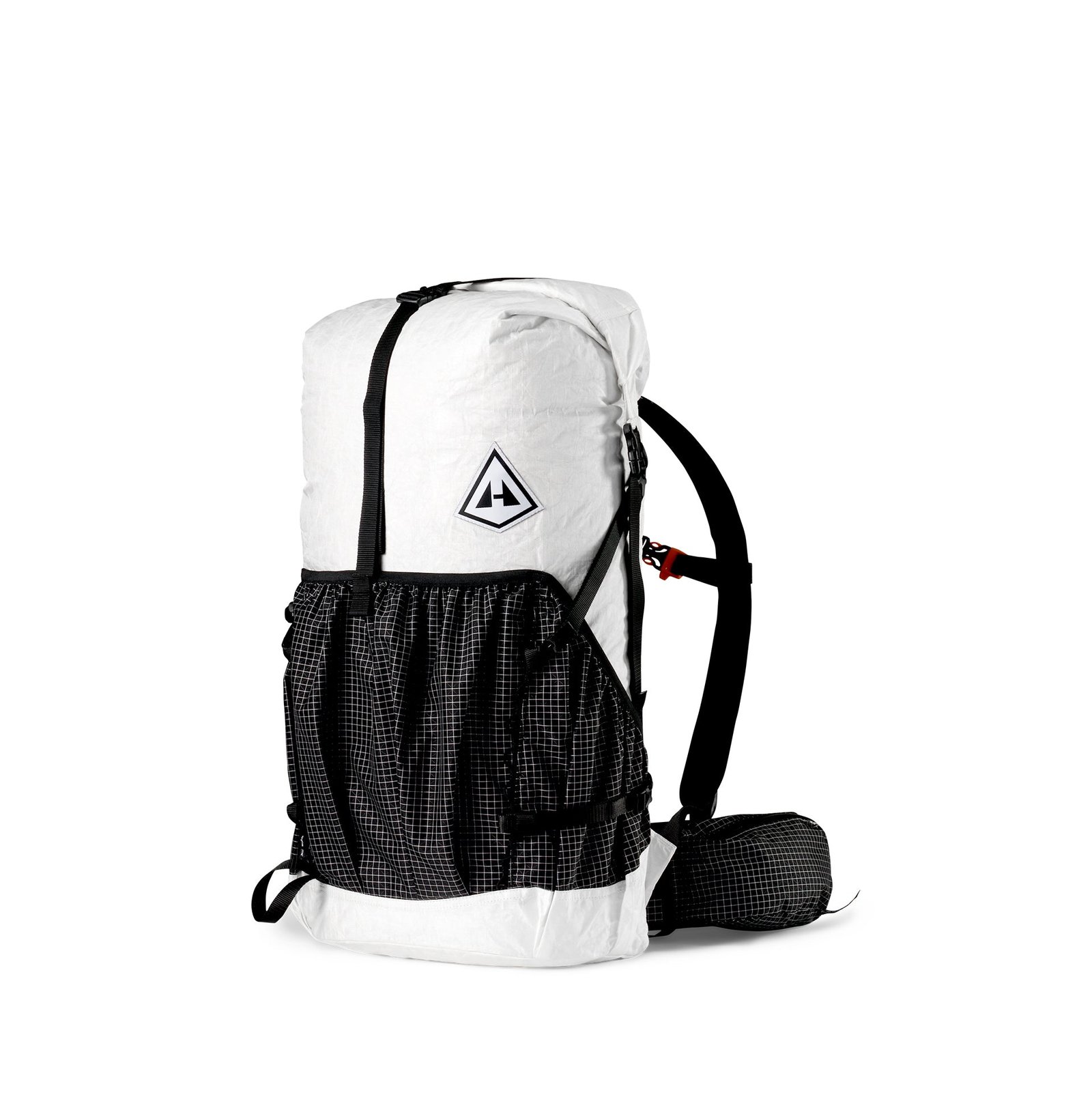
The core of the catalogue, spanning ultralight day packs through multi-day and expedition haulers. Most models use Dyneema Composite Fabric construction with roll-top closures and external attachment points rather than internal organization.
- Ice Pack
- Stuff Pack 30
- CrossPeak 1
- Pemi 15
- Vertex 32
- Daybreak 22
- Windrider
- Junction
- Southwest
- CrossPeak 2
- Aspect 32
- Aero 28
- NorthRim
- Unbound
- Porter
- Contour 35
- Halka 55
- Halka 70
- Waypoint 35
- Crux 40
- Elevate 22
- Unbound 2
- Headwall 55
- Prism 40
- Summit 30
Shelters – Pyramid Tents
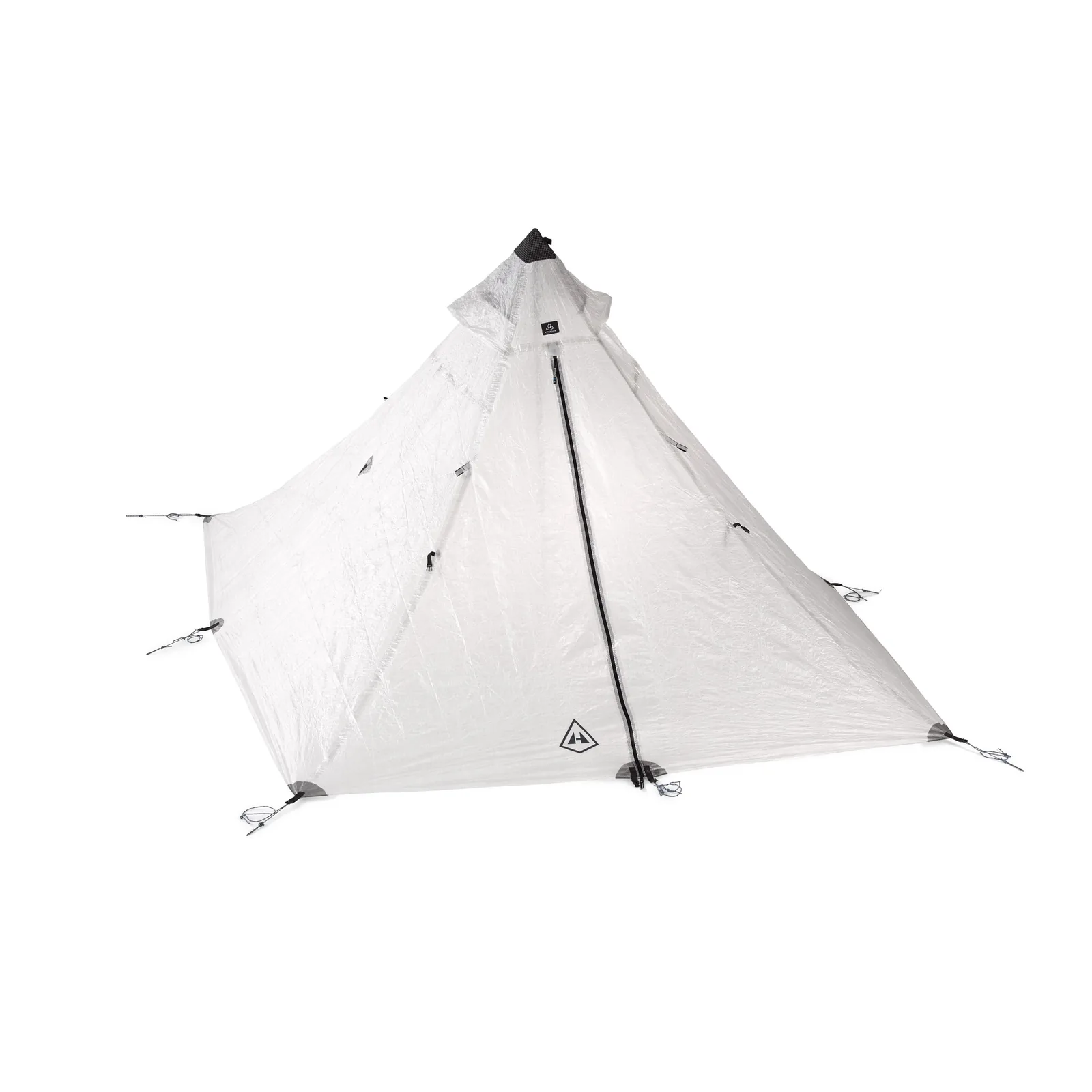
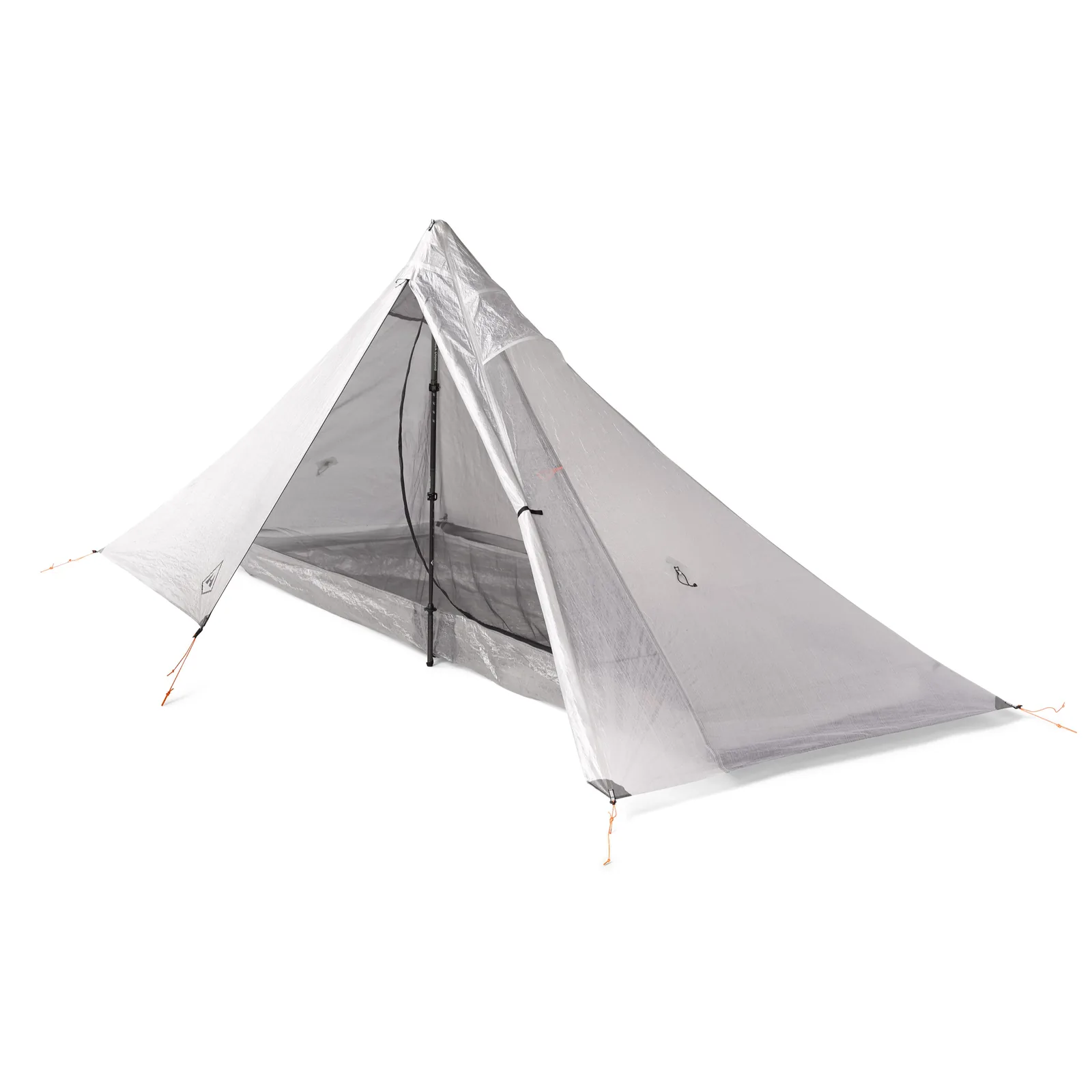
Single-wall, trekking-pole-supported pyramid shelters that scale from solo to four-person capacity. These trade a sewn floor and full mesh enclosure for minimal weight and maximum interior volume per ounce.
- UltaMid 4 – Ultralight Pyramid Tent
- UltaMid 2 – Ultralight Pyramid Tent
- UltaMid 1
- Mid 1
Shelters – Tarps and Bivys
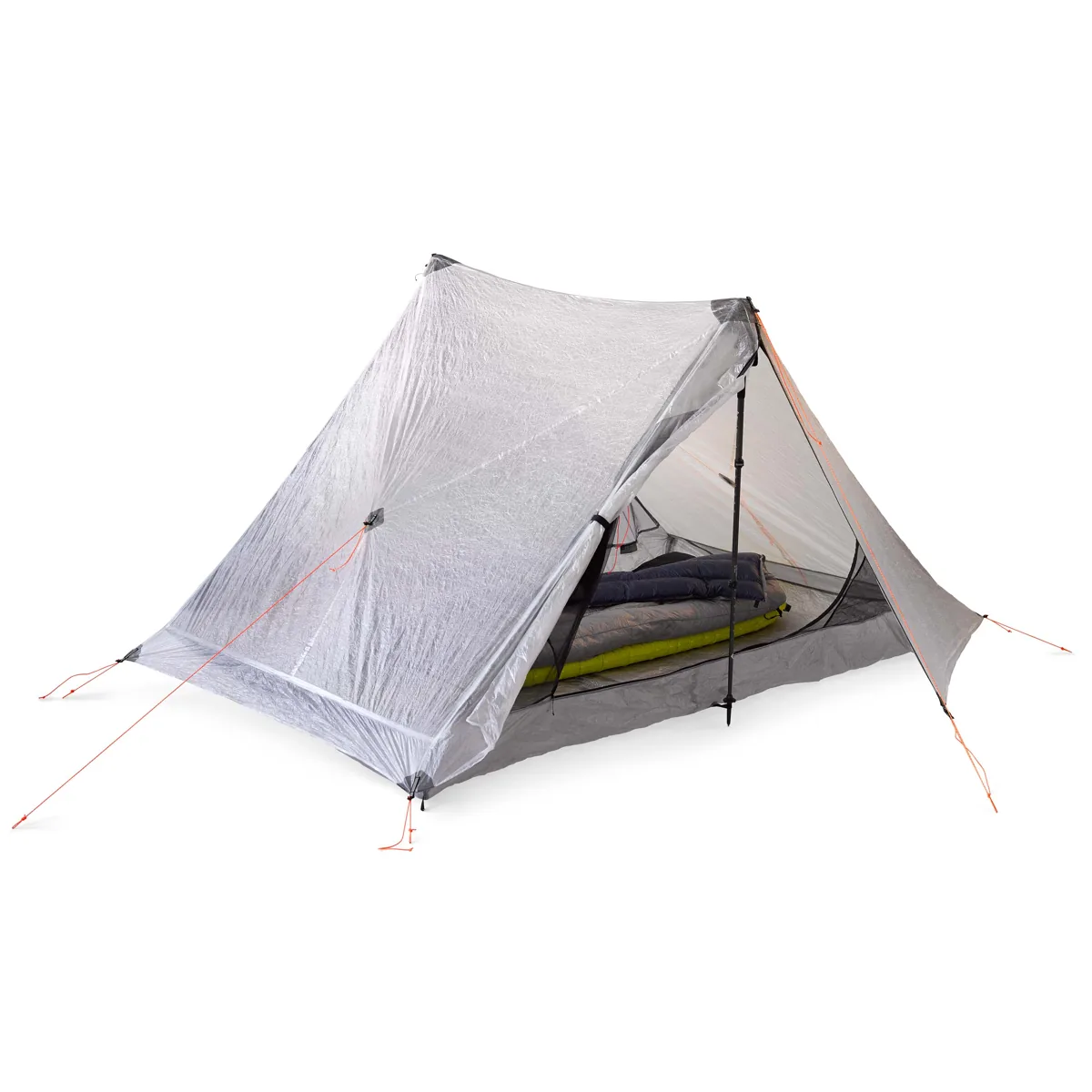
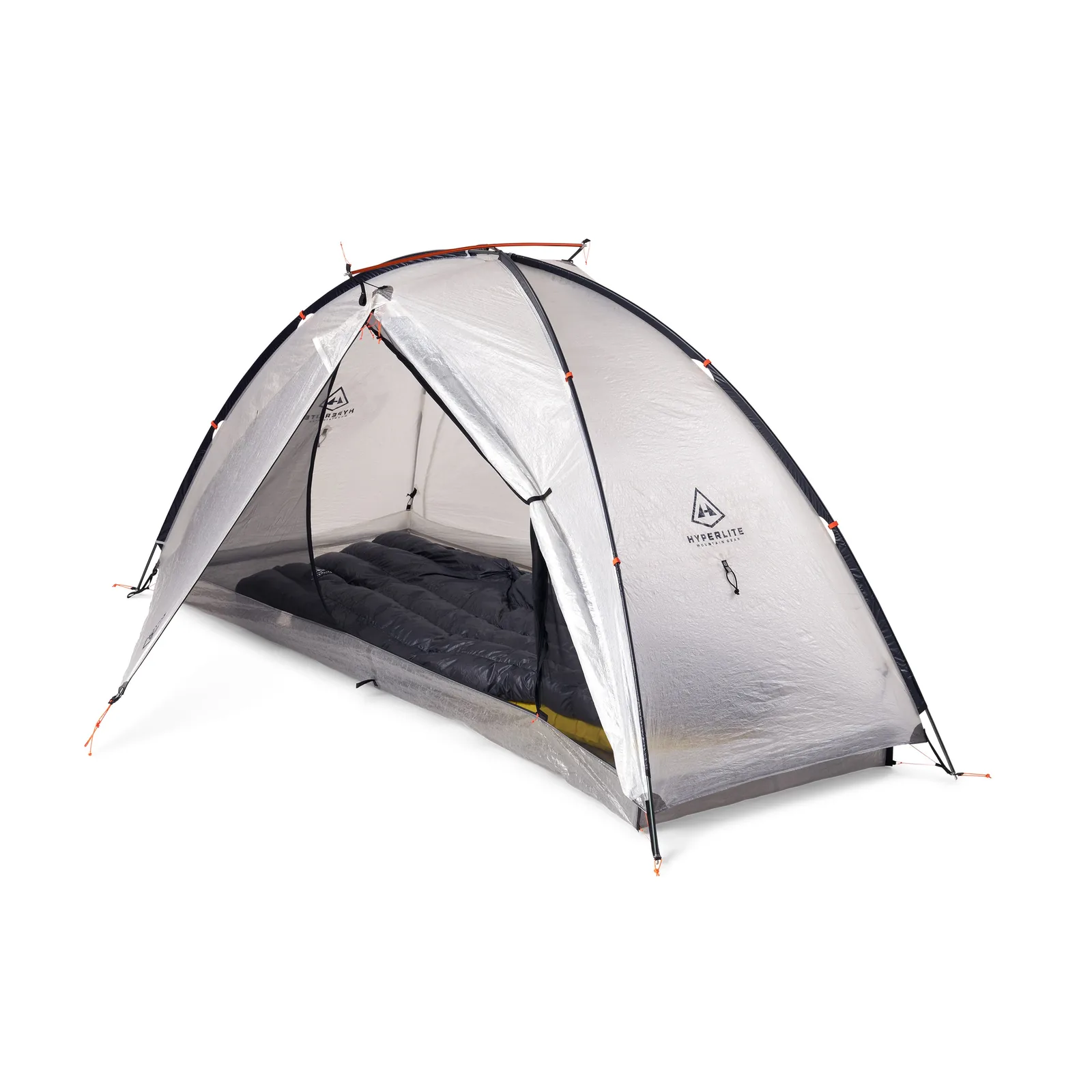
The most minimal end of the shelter lineup, built for hikers who want maximum weight savings and are comfortable managing their own weather protection strategy in the field.
- Flat Tarp
- Bug Bivy
- Splash Bivy
Insulation
Quilt-based sleep systems rather than traditional mummy bags, designed to pair with a sleeping pad and reduce weight by removing zippers and underside insulation.
- 20-Degree Quilt
- 40-Degree Quilt
Apparel and Accessories
A small supporting category outside the core carry and shelter systems.
- 'Til the End Tee
Standout products
Hyperlite Mountain Gear Bug Bivy

- Dyneema Composite Fabric construction resists water absorption and sagging over a multi-month trip
- Roll-top closure and welded seams reduce failure points versus zippered packs
- External attachment points allow bulky or wet gear to be carried outside the main compartment
- Minimalist frame and hip belt padding may not suit heavier carried loads or shorter hikers needing more structured support
- Lack of internal organization means smaller items require separate pouches or stuff sacks
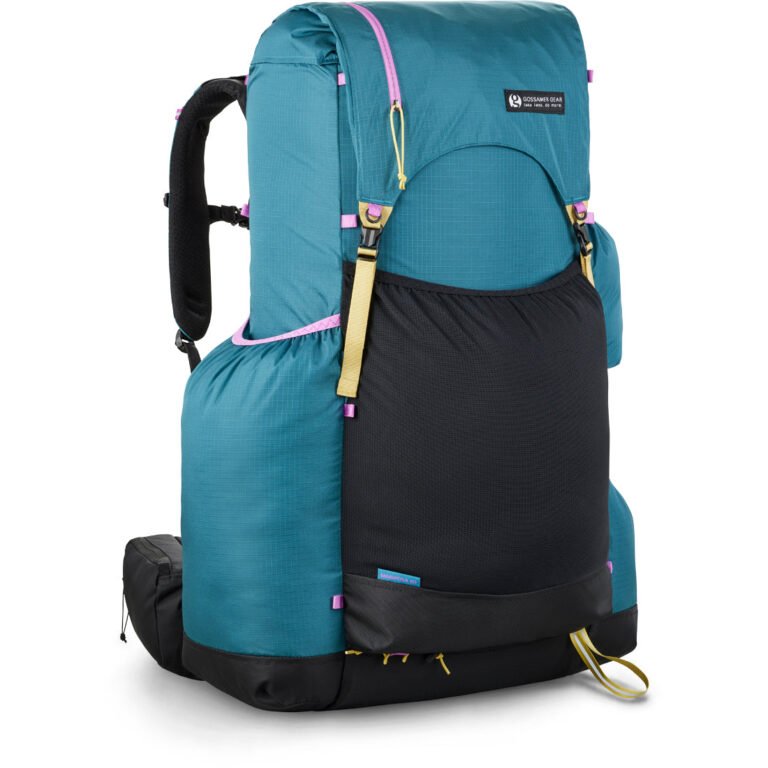
Windrider represents the core design logic of the pack lineup: a roll-top main compartment built from Dyneema Composite Fabric, external mesh or Dyneema pockets for wet or frequently accessed gear, and a frame system pared down to what is needed to transfer moderate loads to the hips. It is built for hikers who have already dialed in a lightweight gear list and do not need a pack with heavy internal structure or extensive organizational pockets. Because the fabric does not absorb water, the pack's weight stays consistent whether it is carried in dry conditions or in sustained rain, which matters over the course of a long trip where cumulative fabric weight gain in a traditional nylon pack becomes a real factor. The tradeoff is that riders who prefer heavier framed support for loads well above the pack's intended range will find the frame system less accommodating than a dedicated load-hauling pack.
Hyperlite Mountain Gear Ice Pack

- Single-wall pyramid geometry sheds wind and precipitation efficiently at a steep pitch angle
- Significant weight savings versus a comparable double-wall tent of similar floor area
- Trekking-pole support removes the need for dedicated tent poles, saving additional weight
- Floorless or partial-floor design requires a separate groundsheet or bivy for full ground protection
- Single-wall construction is more prone to interior condensation than a double-wall design, especially in humid or still conditions
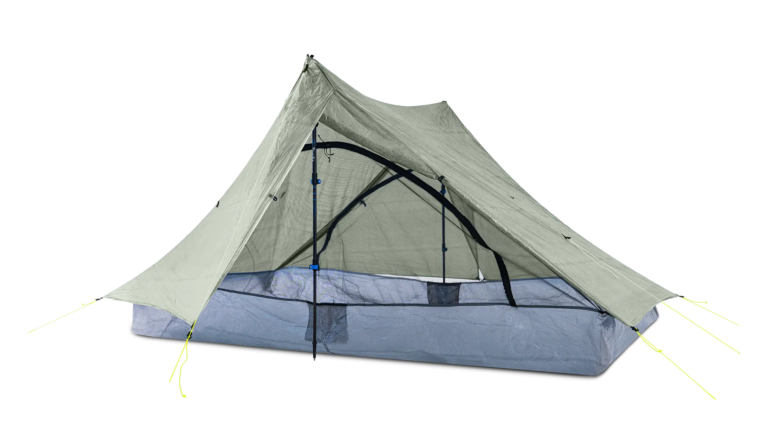
UltaMid 2 – Ultralight Pyramid Tent is built around a four-sided pyramid geometry pitched with a single trekking pole or an optional dedicated pole, using Dyneema Composite Fabric panels welded and taped at the seams. The steep wall angle is functional rather than aesthetic: it sheds wind loading and sheds precipitation faster than a shallow-pitched design, and the resulting interior volume per unit of floor area is high relative to the shelter's total weight. It suits hikers who are comfortable pairing a floorless shelter with a separate bivy or footprint and who prioritize interior room, particularly for waiting out weather, over the fully enclosed, bug-proofed convenience of a integrated floor and mesh system. Condensation management depends heavily on site selection and ventilation technique, since a single-wall shelter has no air gap between an inner and outer layer to buffer interior humidity the way a double-wall tent does.
Hyperlite Mountain Gear Splash Bivy

- Quilt design removes the weight of a zipper, hood, and compressed underside baffles found in mummy bags
- Works as a system with a sleeping pad rather than duplicating the pad's insulating function
- Wide temperature range covers most three-season nights in a single item
- Quilts require a proper seal around the sleeping pad and body to perform at their rated temperature, which has a learning curve for hikers new to the format
- Less versatile than a full mummy bag in exposed, high-wind, or shoulder-season conditions where a hood and full zipper closure add real margin
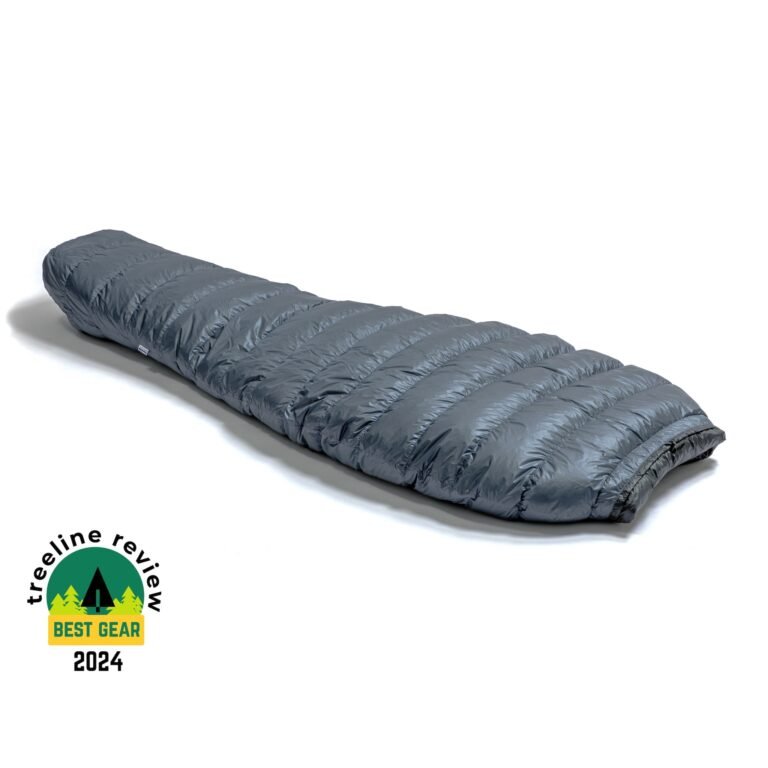
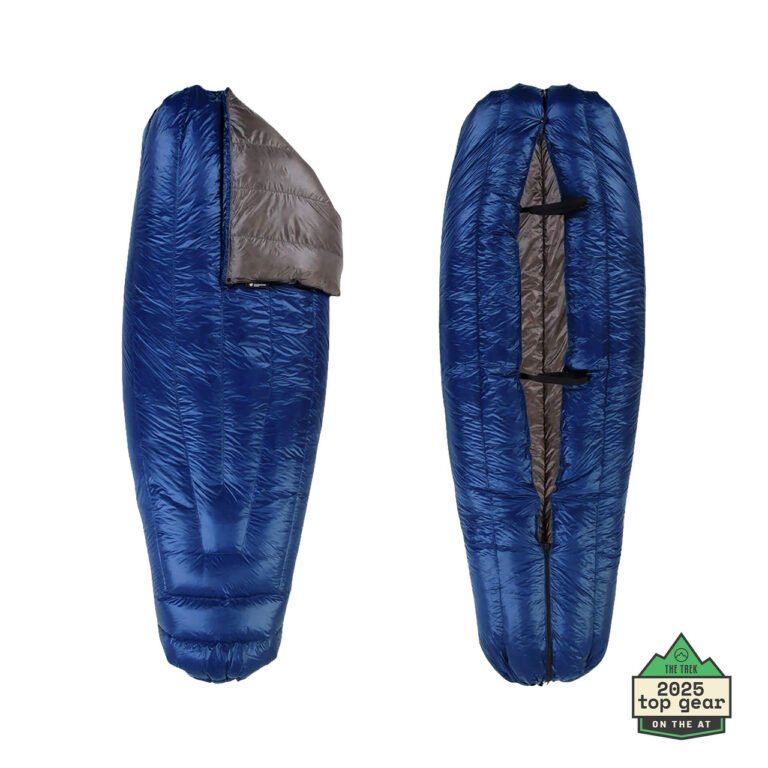
The 20-Degree Quilt follows the quilt logic that has become standard in ultralight sleep systems: since insulation compressed beneath a sleeping body loses most of its loft and therefore most of its insulating value, the quilt removes that underside material entirely and relies on the sleeping pad for ground insulation. This cuts weight without cutting the insulation that actually matters for warmth. It suits hikers who already use or are willing to adopt a quilt-and-pad system and who camp primarily in three-season conditions where the quilt's rated range is appropriate. The absence of a hood and full-length zipper means it offers less sealed protection than a mummy bag in truly cold or wind-exposed bivouac situations, and new quilt users typically need a trip or two to learn how to manage draft control around the shoulders and pad sides.
Hyperlite Mountain Gear 20-Degree Quilt

- Extremely low weight relative to any enclosed shelter option in the lineup
- Dyneema Composite Fabric floor resists ground moisture without absorbing water weight
- Mesh construction on the Bug Bivy provides insect protection without the weight of a full tent body
- Provides no standalone weather protection and is designed to be paired with a tarp or additional shelter in exposed conditions
- Tight interior dimensions relative to a tent, which may feel confining for larger hikers or longer trips
The Bug Bivy is built as a mesh-and-Dyneema ground-level shelter meant to pair with the Flat Tarp or a pyramid shelter rather than serve as a complete standalone system in exposed weather. Its floor uses Dyneema Composite Fabric for ground moisture resistance while the upper body is mesh, keeping weight to a minimum while still sealing out insects. This item suits experienced ultralight hikers who already understand tarp camping and want the bivy purely as a bug barrier and light wind buffer rather than a fully weatherproof shelter, and who are comfortable adjusting their tarp pitch based on forecasted conditions rather than relying on a single enclosed structure for all scenarios.
Strengths and weaknesses
- Domestic manufacturing in a single Maine facility gives the brand direct control over construction quality and consistency across the catalogue
- Deep, sustained use of Dyneema Composite Fabric means the material's water resistance and dimensional stability benefits are embedded across packs, shelters, and bivys rather than limited to one flagship product
- Welded and taped seam construction reduces common failure points found in traditional sewn-and-taped gear
- Founder's search-and-rescue background is reflected in a design philosophy that treats weight savings and reliability as complementary goals rather than competing ones
- Broad catalogue depth within the ultralight category, covering packs, shelters, tarps, bivys, and quilts as an integrated system rather than a single hero product
- Floorless and partial-floor shelters require hikers to source or purchase a separate bivy or groundsheet to achieve full ground protection, adding cost and complexity to the total shelter system
- Frameless and minimal-frame pack construction places real limits on maximum comfortable carry weight compared to more heavily structured packs
- Single-wall shelter designs carry an inherent condensation management burden that depends on the user's site selection and ventilation technique rather than being solved by the shelter alone
- Quilt-based sleep systems require a learning curve around pad sealing and draft control that not every hiker will have prior experience with
Who should buy this brand
Hyperlite Mountain Gear suits experienced backpackers and thru-hikers who have already refined their gear list and understand the tradeoffs inherent in frameless packs, floorless shelters, and quilt sleep systems. It is a strong fit for hikers prioritizing multi-month trail durability and consistent dry weight over feature-rich convenience, particularly those hiking in variable wet conditions where a fabric that does not absorb water pays off over time. It is a less natural fit for newer backpackers who have not yet developed the site-selection and pitching skills that minimal shelters require, or for hikers who need a heavily structured pack for consistently loads well beyond ultralight ranges.
The bottom line
Hyperlite Mountain Gear built its identity on a single material choice made over a decade ago and has stayed disciplined about applying that choice consistently across packs, shelters, and sleep systems rather than diluting it with a broad multi-material catalogue. The result is a brand whose gear rewards hikers who already know how to manage the tradeoffs of minimal, single-wall, frameless design, and whose domestic manufacturing gives it a level of construction consistency that is easy to verify against its own stated specifications.
Related guides
Keep building your system with these closely related guides.
- Zpacks Review Complete Brand Guide
- Gossamer Gear Review Best Packs Pads And Poles
Further reading
Authoritative sources to go deeper on the topics above.