Hoka Speedgoat 7 vs Altra Lone Peak 9+: Weight, Drop and Fit Compared
How we did this: we compared the published specifications of both shoes — weight, drop, stack height, outsole, upper and price — checked on 28 September 2026 against Altra’s and Hoka’s own product pages; Hoka’s page does not list stack height, so that figure comes from two independent reviews (iRunFar, RunRepeat). We have not field-tested them.
The Hoka Speedgoat 7 and the Altra Lone Peak 9+ are two of the most common trail runners on long trails, and they disagree on almost everything except the rubber. The Speedgoat puts a lot of foam under your foot with a small heel-to-toe drop; the Lone Peak sits lower, with zero drop and the widest toe box Altra makes. Both now use a Vibram Megagrip outsole, so grip is not what separates them. Weight, cushioning and fit are.
The verdict up front
Pick the Speedgoat 7 if you want more cushioning and less weight: it is about 1.9 oz lighter per shoe and has roughly 12 mm more foam under the heel. Pick the Lone Peak 9+ if toe room or zero drop matters most to you: Altra calls it its roomiest toe box, and the heel and forefoot sit at the same height. If you have never hiked in a zero-drop shoe, the Speedgoat is the easier switch. If your toes are what hurts at the end of a long day, the Lone Peak is the shoe designed around that problem.
| Spec | Hoka Speedgoat 7 | Altra Lone Peak 9+ |
|---|---|---|
| Weight (men’s, per shoe) | 9.7 oz (275 g), size 9 | 11.55 oz (327 g) |
| Drop | 5 mm (see note) | 0 mm |
| Stack height | 37 mm heel / 32 mm forefoot | 25 mm |
| Outsole | Vibram Megagrip with Traction Lug | Vibram Megagrip |
| Midsole | Supercritical EVA | Altra EGO |
| Upper | Mesh | 100% RPET ripstop mesh, no-sew overlays |
| Price | $165 | $160 |
Sources: Hoka, Speedgoat 7 page (weight, drop, price); Altra, Lone Peak 9+ page (weight, stack, outsole, midsole, upper, price); Speedgoat 7 stack height as quoted by iRunFar and RunRepeat. Men’s figures, checked 3 Oct 2026.
Note on drop: iRunFar gives Hoka’s figure as 5 mm; RunRepeat lists 4 mm as the official figure and measured 7.4 mm on its own pair. Treat the Speedgoat as a low-drop shoe, not a zero-drop one.
Hoka Speedgoat 7
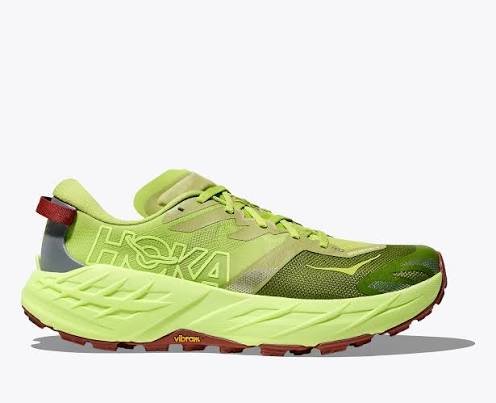
- About 1.9 oz lighter per shoe than the Lone Peak 9+
- 37 mm of stack under the heel, roughly 12 mm more than the Lone Peak
- Low drop eases the transition for hikers coming from boots or road shoes
- Published drop figures disagree (4 vs 5 mm), and one lab measured 7.4 mm
- A tall stack puts your foot further from the ground on off-camber terrain
- $5 more than the Lone Peak
The Speedgoat 7 is Hoka’s high-cushion trail shoe. The two reviews we checked agree on 9.7 oz for a men’s size 9, a stack of 37 mm at the heel and 32 mm at the forefoot, and a price of $165. Underneath is a Vibram Megagrip outsole with Hoka’s Traction Lug pattern; RunRepeat reports the midsole as supercritical EVA, replacing the previous version’s CMEVA. On the scale this is the lighter of the two shoes, and it gives you more foam between your foot and the trail.
Check price →Altra Lone Peak 9+
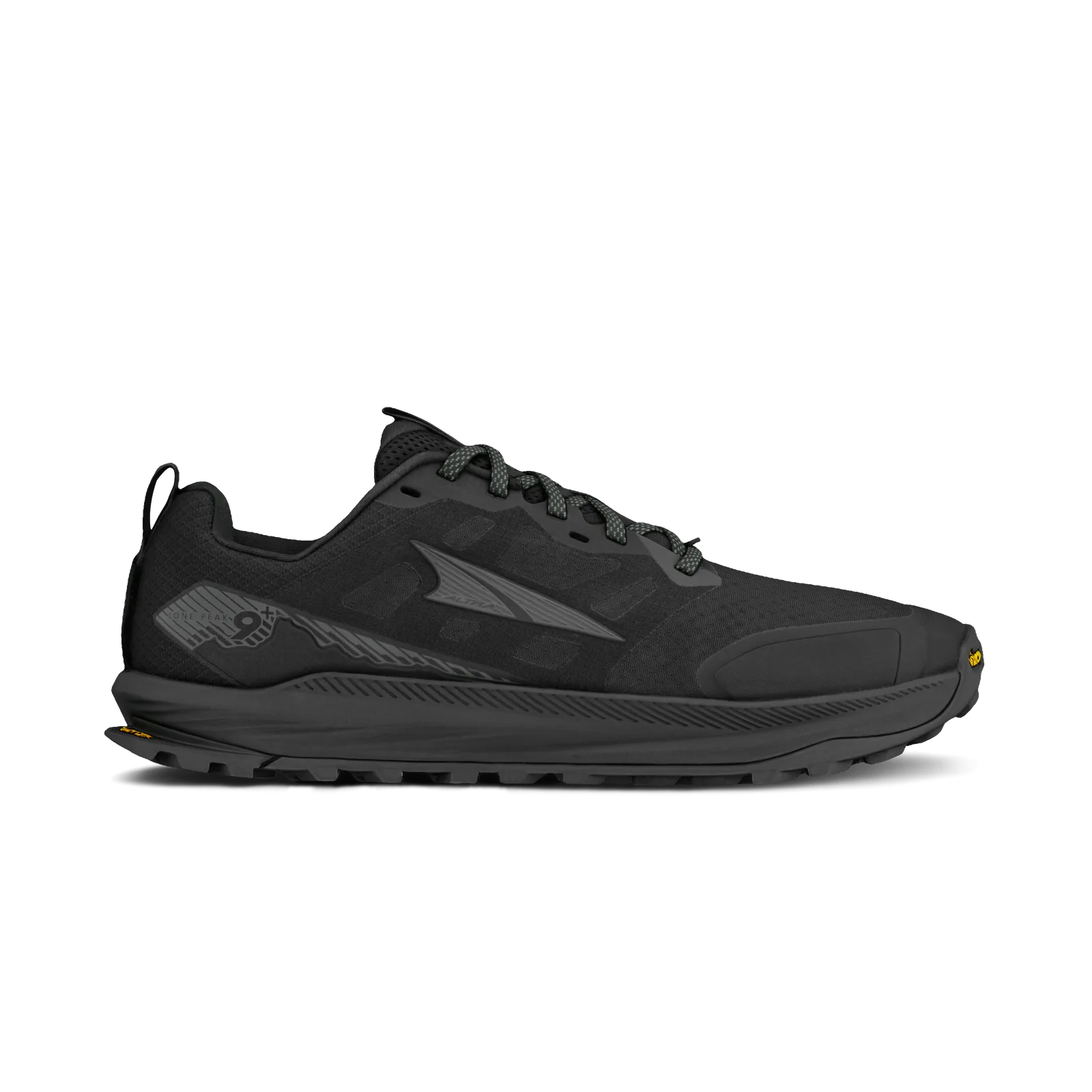
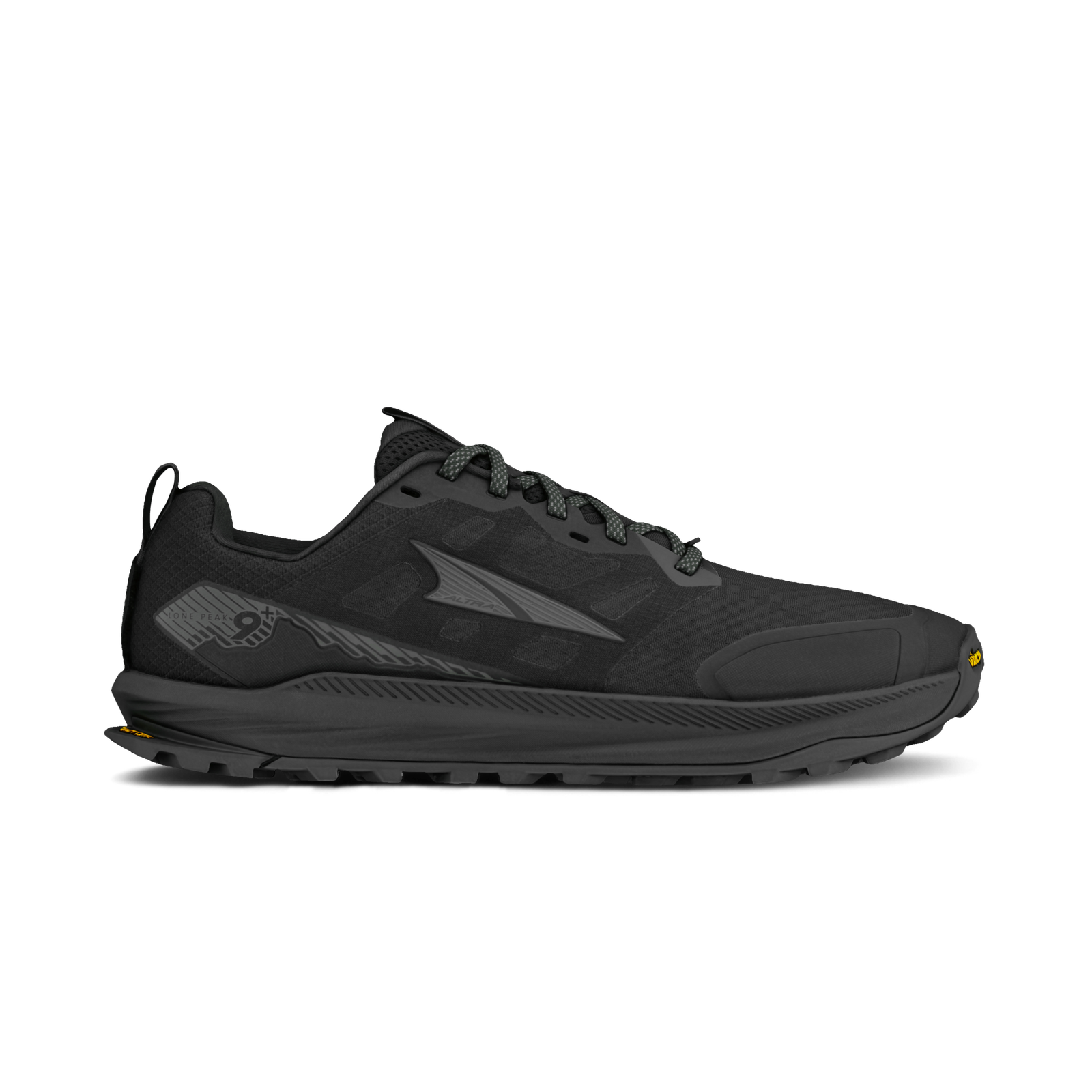
- Altra’s roomiest toe box, with extra space through the midfoot
- Zero drop and a 25 mm stack keep your foot closer to the ground
- Ripstop mesh upper with no-sew overlays, built for high mileage
- About 1.9 oz heavier per shoe (3.7 oz per pair)
- Zero drop takes time to adapt to if you’re used to a heel drop
- Less cushioning under the heel than the Speedgoat
Altra introduces the Lone Peak 9+ as the Lone Peak “now with a legendary Vibram® Megagrip outsole.” Altra lists 11.55 oz (327.4 g), a 25 mm stack with zero drop, an Altra EGO midsole, a 100% RPET ripstop mesh upper and a neutral ride, at $160. In Altra’s words it has “our roomiest toe box, with plenty of room to help your toes move more freely, and space through the midfoot.” We review it on its own in our Altra Lone Peak 9+ review.
Check price →Weight
The Speedgoat 7 is lighter: 9.7 oz against 11.55 oz, a difference of 1.85 oz per shoe and 3.7 oz per pair. Weight on your feet is weight you lift with every step, so over a long day this is the Speedgoat’s clearest advantage. One caveat: the Speedgoat figure is for a men’s size 9, and Altra’s page does not say which size its 11.55 oz refers to. The gap is large enough that it is unlikely to reverse at the same size. Winner: Speedgoat 7.
Cushion, stack and drop
This is the real split between the two shoes. The Speedgoat stands 37 mm at the heel and 32 mm at the forefoot; the Lone Peak is 25 mm front and back. That is about 12 mm more foam under your heel in the Hoka, which means more protection from rocks and more cushioning when the pack is heavy, at the cost of feeling less of the trail underfoot.
Drop is where the published numbers get messy. iRunFar gives Hoka’s figure as 5 mm; RunRepeat lists 4 mm as official and measured 7.4 mm on its own pair. Whichever figure is right, the Speedgoat is a low-drop shoe. The Lone Peak is zero drop by design: your heel and forefoot sit at the same height. If you have always worn shoes or boots with a heel drop, going to zero drop puts more load on your calves and Achilles; build up gradually rather than starting with a thru-hike. Winner: depends on you. Speedgoat for cushioning and an easy switch; Lone Peak if you are already comfortable in zero drop.
Fit and toe box
Altra builds the Lone Peak around its toe box and calls it the roomiest it makes, with extra space through the midfoot. If your toes get squeezed, blister against each other or go numb on long days, that shape targets the problem directly. The sources we checked give no toe-box width for the Speedgoat 7, so we can’t put a number on the difference. Fit is also the one thing no spec sheet settles: try both, late in the day when your feet are at their largest, with the socks you hike in. Winner: Lone Peak 9+ for anyone who needs toe room.
Grip and outsole
Both shoes use Vibram Megagrip rubber, so neither has a compound advantage. The Speedgoat pairs it with Hoka’s Traction Lug pattern. Neither maker publishes lug depth for these models in the sources we checked, so we won’t claim one grips better. Winner: tie.
Upper and durability
Altra describes the Lone Peak 9+ upper as 100% RPET ripstop mesh with no-sew overlays, “made for high-mileage durability.” The sources we checked describe the Speedgoat 7’s upper only as mesh. Neither maker publishes a mileage rating, and we have not worn either shoe out, so we don’t pick a durability winner. Watch the forefoot flex point and the heel collar on either shoe. Winner: no call.
Price
The Speedgoat 7 costs $165 and the Lone Peak 9+ costs $160. Five dollars shouldn’t decide this; buy the shape that fits your foot. Winner: Lone Peak 9+, by $5.
Which suits your kind of hiking
Coming from boots or road shoes: start with the Speedgoat. A low drop and a thick midsole are a smaller change than zero drop, so you can switch without retraining your calves first.
Toes get crushed or blistered on long days: the Lone Peak. Toe room is what it is built around, and feet tend to swell over long, hot days.
Rocky trails with a heavier pack: the Speedgoat’s extra 12 mm of heel stack gives more protection from sharp rocks underfoot.
Counting every ounce: the Speedgoat saves 3.7 oz per pair.
Already hike in zero-drop shoes: stay with the Lone Peak. Moving to a raised heel after years at zero drop is a change of its own.
Which should you buy?
Buy the Hoka Speedgoat 7 if you want the lighter shoe with more cushioning and a conventional low drop. Buy the Altra Lone Peak 9+ if you need a roomy toe box or already walk comfortably at zero drop. Both have the same Vibram Megagrip rubber and cost within $5 of each other, so the decision really is weight and cushioning against toe room and drop.
FAQ
Is the Speedgoat 7 or the Lone Peak 9+ lighter?
Do both shoes have a Vibram outsole?
What is the drop of the Hoka Speedgoat 7?
Which has more cushioning?
Do I need to adapt to the Lone Peak’s zero drop?
Altra vs Hoka: what is the real difference?
The bottom line
Same Vibram rubber, $5 apart, very different shoes. The Speedgoat 7 is lighter (9.7 vs 11.55 oz) and gives you about 12 mm more heel cushioning with a low drop. The Lone Peak 9+ gives you Altra’s roomiest toe box at zero drop. Choose by your feet, not by the grip.
Related guides
Keep building your system with these closely related guides.
- Scarpa Rush 2 vs Rush 2 Pro
- Altra Lone Peak 9+ Review: Men's and Women's Specs
- 3 Best Ultralight Trail Runners
- 3 Best Barefoot Shoes for Hiking to Avoid Foot Fatigue
- Teva Hurricane XLT2 vs Chaco Z/Cloud: Which Sandal Wins
- Bedrock Sandals Cairn Evo vs Teva Hurricane XLT2
Sources
- Altra: Men’s Lone Peak 9+ (weight, stack, drop, materials, price; checked 28 Sep 2026)
- iRunFar: Hoka Speedgoat 7 review (weight, drop, stack, price)
- RunRepeat: Hoka Speedgoat 7 (official and lab-measured specs)