5 Proven Options: Do Trail Running Shoes Work for Hiking?
How we did this: we analyzed the manufacturer-published specifications for 5 products — weight, capacity, price and material — alongside documented design differences. We have not field-tested them.
For ultralight backpackers, the question of whether trail running shoes work for hiking was settled years ago. By shedding heavy leather boots in favor of lightweight, breathable mesh, hikers drastically reduce the metabolic cost of each step while allowing their feet to move naturally over technical terrain. This guide evaluates the leading trail running shoes based on their traction, midsole geometry, and durability to determine which models best serve the modern hiker.
- Switching to trail runners saves significant energy over high-mileage days by reducing weight on the foot.
- Non-waterproof mesh uppers are preferred by most ultralight hikers for their rapid dry times after water crossings.
- Zero-drop and low-drop geometries require a transition period but promote natural foot mechanics.
- Traction compounds like Vibram Megagrip offer vastly superior grip on wet rock compared to standard rubbers.
- Best Overall — Altra Running Men's Lone Peak 9+: Hikers who want a wide toe box and natural foot mechanics with premium traction
- Best for High Mileage — Altra Running Men's Timp 6: Backpackers seeking extra underfoot cushioning without sacrificing a zero-drop platform
- Best Value — Altra Running Men's Experience Wild: Fastpackers and hikers with dialed-in base weights looking for maximum agility
- Best Waterproof BOA Option — Kailas Fuga EX 3 GTX BOA Low Waterproof Trail Running Shoes Women's: Hikers operating in cold, wet environments who value micro-adjustable fit
- Best Premium Waterproof Option — Kailas FUGA DU 2 GTX Low-cut Waterproof Trail Running Shoes Men's: Hikers needing robust support and weather protection for rugged, wet terrain
The picks, reviewed in detail
Best Overall
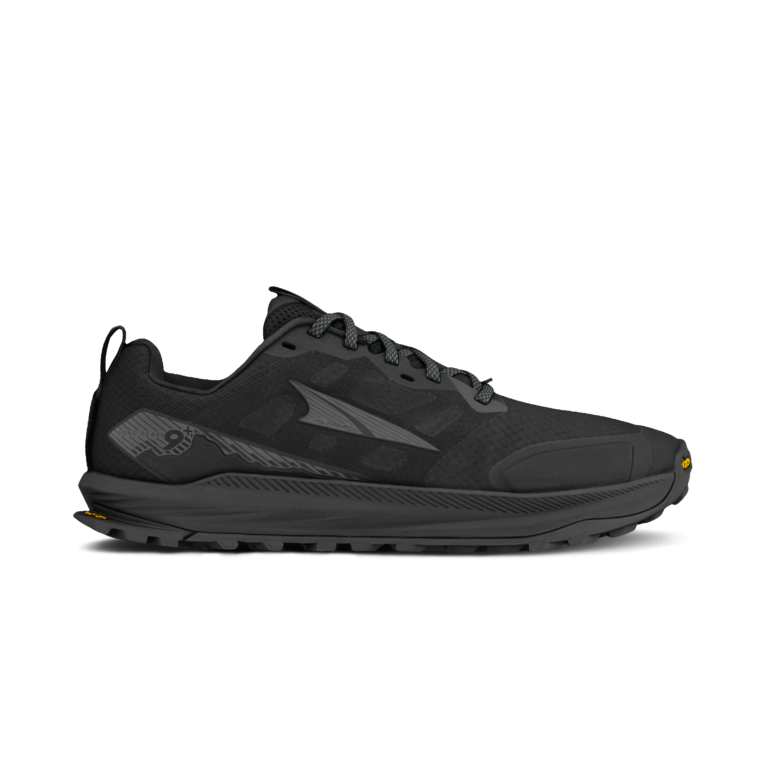
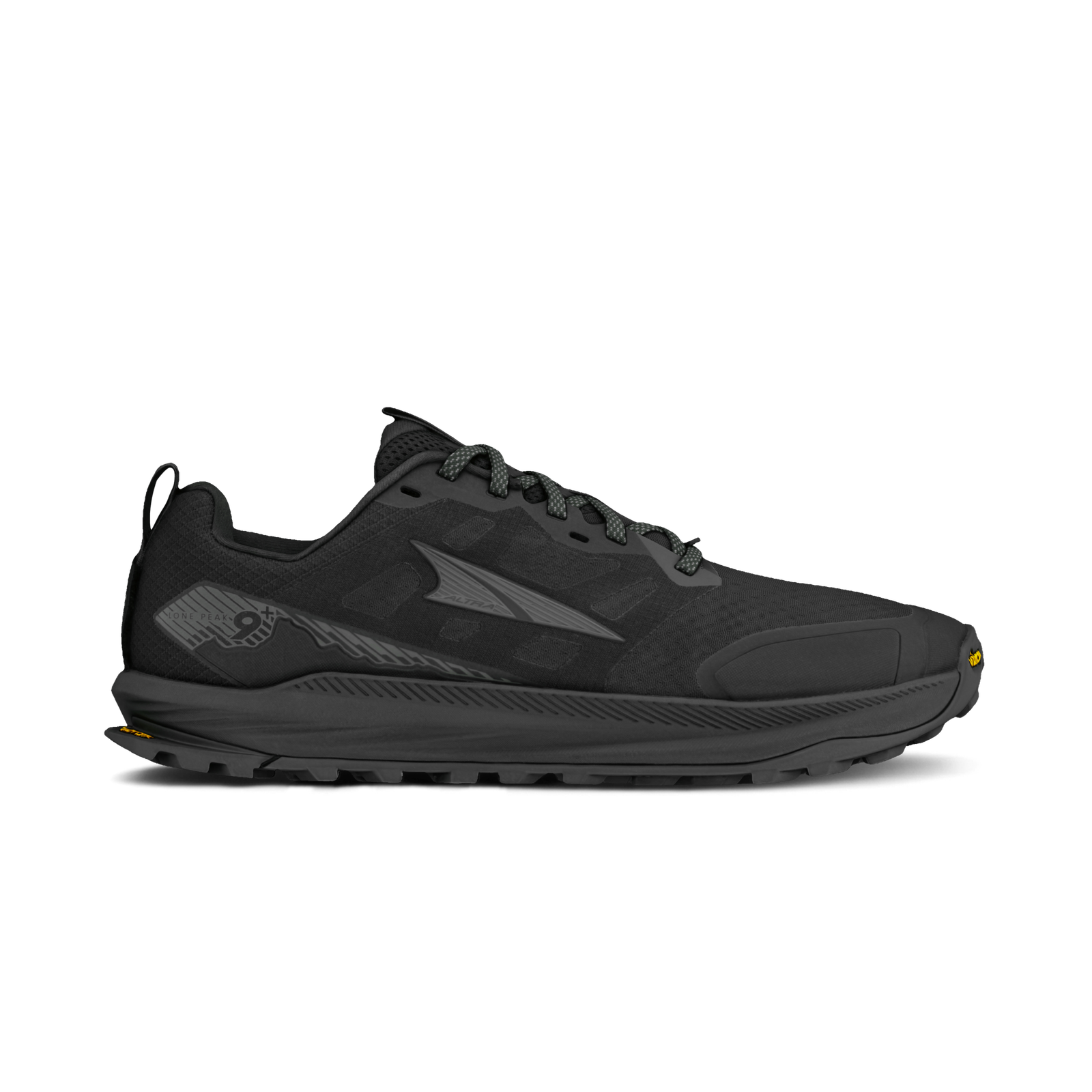
Altra Running Men's Lone Peak 9+

- Vibram Megagrip outsole drastically improves wet-rock traction
- FootShape toe box allows natural toe splay under load
- Zero-drop platform encourages a midfoot strike
- Zero-drop geometry requires a transition period to avoid calf strain
- Moderate stack height offers less protection on sharp scree
The Lone Peak series has long been the default choice for thru-hikers, and the 9+ iteration addresses one of the few historical complaints by integrating a Vibram Megagrip outsole. This rubber compound provides exceptional friction on wet granite and slick roots, environments where previous proprietary rubbers struggled. At 11.55 ounces, the shoe maintains a highly competitive weight while offering a moderate stack height that balances ground feel with necessary underfoot protection. The defining feature remains the wide, anatomical toe box, which allows the metatarsals to expand naturally as the foot swells during high-mileage days, significantly reducing blister formation. Its zero-drop geometry means the heel and forefoot sit at the same distance from the ground, promoting a natural stride but requiring adequate calf and Achilles flexibility. Hikers transitioning from traditional boots with elevated heels will need to ease into this platform to prevent lower leg fatigue. The mesh upper prioritizes breathability and rapid drainage, ensuring the shoe dries quickly after inevitable stream crossings. Ultimately, this model represents the most balanced execution of the ultralight hiking shoe philosophy.
Check price →Best for High Mileage
Altra Running Men's Timp 6

- Increased stack height reduces foot fatigue on rocky trails
- Redesigned outsole improves durability and grip
- Impressively light at 11.45 ounces despite the extra cushion
- Thicker midsole mutes ground feel
- Slightly narrower fit than the widest anatomical models
For hikers tackling rugged, rocky terrain where a minimalist shoe might lead to stone bruising, the Timp 6 offers a thicker bed of cushioning while maintaining a zero-drop profile. Weighing in at 11.45 ounces, it manages to be slightly lighter than its less-cushioned sibling while providing significantly more shock absorption. This makes it an ideal candidate for long-distance trails characterized by hard-packed dirt or sharp limestone, where the cumulative impact of thousands of steps accelerates foot fatigue. The redesigned outsole focuses on durability and aggressive lug placement, ensuring reliable purchase on loose descents and muddy ascents. While the increased stack height successfully isolates the foot from trail debris, it inherently reduces proprioception, meaning hikers will have less tactile feedback from the ground. The fit profile is slightly more streamlined than the widest options available, securing the midfoot tightly to prevent lateral sliding on off-camber trails. The upper materials balance abrasion resistance with breathability, utilizing tighter weaves in high-wear areas near the toe bumper and heel counter. This shoe serves as the optimal middle ground for those who want barefoot mechanics but require maximalist protection.
Check price →Best Value
Altra Running Men's Experience Wild

- Extremely lightweight at exactly 10 ounces
- Accessible price point for a performance trail shoe
- Nimble design excels on well-maintained trails
- Minimal protection for highly technical or off-trail travel
- Lower durability ceiling compared to heavier models
At a mere 10 ounces and priced at $116, the Experience Wild strips away excess material to deliver a highly agile, performance-focused shoe. This model is engineered for fastpackers and ultralight hikers who have reduced their pack weights to the absolute minimum, thereby decreasing the need for heavy structural support underfoot. The lightweight construction translates directly to less energy expended per stride, a metric that compounds significantly over a twenty-mile day. Because it lacks the heavy overlays and thick rock plates found in more robust models, it offers excellent ground feel and flexibility, allowing the foot to contour over obstacles naturally. However, this minimalist approach means the shoe is best reserved for well-graded trails rather than cross-country bushwhacking or sustained scree fields, where the upper would be vulnerable to abrasion. The traction pattern is designed for speed and efficiency, gripping well on dirt and moderate rock but potentially packing out in deep mud. The breathability is exceptional, making it a strong performer in hot, arid climates where foot ventilation is a priority. It is a specialized tool for moving fast and light, offering excellent value for hikers who understand its limitations.
Check price →Best Waterproof BOA Option
Kailas Fuga EX 3 GTX BOA Low Waterproof Trail Running Shoes Women's

- The maker does not publish details about the fit system.
- The maker does not publish details about its waterproofing design.
- The maker does not publish details about the outsole.
- The maker does not publish the exact weight of this shoe.
- Waterproof membrane traps heat in warm conditions
The Kailas Fuga EX 3 GTX BOA integrates several premium technologies into a single package, built specifically for challenging environmental conditions. The inclusion of waterproofing makes this shoe highly effective for shoulder-season hiking, cold morning dew, or trails with shallow mud, keeping the foot dry and warm. The standout feature is the fit system, which allows hikers to micro-adjust the tension across the instep with a single hand. This is particularly useful for quickly loosening the shoe during ascents to allow for foot expansion, and tightening it before steep descents to prevent toe bang. The outsole provides the necessary friction to navigate wet slabs and slick roots safely. The upper offers substantial defense against abrasion from rocks and brush. The primary tradeoff is the inherent nature of waterproof membranes: if water overtops the ankle collar during a deep river crossing, the shoe will drain very slowly compared to non-waterproof mesh. Additionally, the membrane reduces breathability, making this model less suitable for mid-summer hiking in hot climates.
Check price →Best Premium Waterproof Option
Kailas FUGA DU 2 GTX Low-cut Waterproof Trail Running Shoes Men's

- Dual-density midsole provides a balance of rebound and stability
- Dense fabric upper with TPU overlays is highly durable
- GORE-TEX membrane blocks external moisture effectively
- High price point at $250
- Slower drying time if submerged completely
Designed for fastpacking and hiking in demanding conditions, the Kailas FUGA DU 2 GTX utilizes a dual-density midsole to manage the competing needs of shock absorption and structural stability. The softer foam compound handles impact reduction, while the firmer density prevents the foot from rolling excessively on uneven, off-camber terrain. Weighing 11.57 ounces, it remains impressively light for a shoe equipped with a full GORE-TEX waterproof membrane. The upper construction relies on a dense, windproof fabric heavily reinforced with TPU film overlays, creating a protective cage that resists tearing and abrasion far better than standard open mesh. This makes it a highly capable choice for off-trail navigation or routes choked with abrasive vegetation. The waterproof membrane ensures comfort in sustained rain or snowmelt, though hikers must manage the risk of water entering from the top, as the membrane will hold water inside the shoe. The outsole features an aggressive lug pattern designed to bite into soft earth and shed mud efficiently. While the $250 price tag places it in the premium tier, the combination of advanced midsole geometry, durable upper materials, and reliable weatherproofing justifies the investment for hikers facing consistently harsh conditions.
Check price →At a glance
| Spec | Men's Lone Peak 9+ | Men's Timp 6 | Men's Experience Wild |
|---|---|---|---|
| Weight | 11.55 oz | 11.45 oz | 10 oz |
| Price | $160 | $165 | $116 |
What to look for
The foundation of any trail running shoe used for hiking is its midsole geometry, specifically the stack height and the heel-to-toe drop. Stack height dictates the amount of material between the foot and the ground. Minimalist stack heights offer excellent proprioception, allowing the foot to react instantly to changes in terrain, but they provide less isolation from sharp rocks, which can lead to bruising over long distances. Maximalist shoes absorb significant impact, reducing fatigue in the knees and hips, but they can feel unstable on highly technical, uneven ground due to the elevated center of gravity. Heel-to-toe drop refers to the height difference between the heel and the forefoot. Zero-drop shoes place the foot flat, encouraging a natural midfoot strike and proper posture, but they require flexible calf muscles and Achilles tendons. Traditional drops (8mm to 12mm) alleviate strain on the lower leg by slightly elevating the heel, which can be beneficial for those with a history of Achilles issues or those carrying heavier loads.
Traction is the primary safety feature of a trail shoe, determined by both the rubber compound and the lug pattern. Proprietary rubbers vary wildly in performance, but industry standards like Vibram Megagrip are universally recognized for their ability to adhere to wet, frictionless surfaces like river rocks and polished granite. The lug pattern must match the intended environment. Deep, widely spaced lugs (5mm or more) act like cleats, biting into mud and snow while shedding debris with each step to prevent the outsole from packing out. Conversely, shallow, tightly clustered lugs provide maximum surface area contact, which is ideal for dry dirt, slickrock, and scree, but they will slide dangerously in deep mud. Hikers must evaluate the predominant surface of their chosen trails to select the appropriate outsole configuration.
The construction of the upper dictates the shoe's durability, breathability, and thermal regulation. Most ultralight hikers prefer non-waterproof, open-mesh uppers. While these shoes allow water to enter instantly during a stream crossing, the mechanical action of walking forces the water back out, and the breathable mesh dries rapidly, often within a few miles of hiking. This prevents the maceration and blistering associated with prolonged moisture exposure. Waterproof membranes, such as GORE-TEX, are highly effective at blocking external moisture in cold, wet, or snowy conditions, making them excellent for shoulder-season hiking. However, they trap sweat during warm weather and, if flooded over the ankle collar, act as buckets that take days to dry. Upper durability is enhanced by TPU (thermoplastic polyurethane) overlays and robust toe bumpers, which protect the mesh from abrasion against rocks and roots.
Fit is the most critical variable in blister prevention and overall comfort, particularly considering how feet behave under the stress of hiking. Over a long day of carrying a pack, the human foot swells, increasing in both length and width. A toe box that is too narrow will compress the metatarsals, leading to friction blisters between the toes and potentially causing neuromas. Anatomical, foot-shaped toe boxes allow the toes to splay naturally, providing a wider base of support and better balance. However, a wide toe box must be paired with a secure midfoot and heel hold. If the midfoot is too loose, the foot will slide forward on descents, causing the toes to repeatedly strike the front of the shoe, resulting in bruised or lost toenails. A proper fit locks the heel and instep in place while leaving ample volume in the forefoot.
- Verify the heel-to-toe drop aligns with your biomechanics and previous footwear experience.
- Check the rubber compound; prioritize sticky rubbers like Vibram Megagrip for wet, rocky environments.
- Ensure the toe box has enough volume to accommodate foot swelling after 15+ miles of hiking.
- Assess the lug depth: deep and widely spaced for mud, shallow and clustered for hardpack and rock.
- Evaluate the upper material for a balance of breathability and TPU reinforcement in high-wear zones.
- Consider the drying time of the upper; avoid waterproof membranes for summer hiking with frequent river crossings.
How to choose
Selecting the right trail runner depends entirely on your base weight, terrain, and foot mechanics. If you have transitioned to an ultralight pack and hike in wet, varied terrain, prioritize a non-waterproof shoe with a highly breathable mesh upper and premium traction. Hikers operating in cold, snowy, or consistently muddy conditions should opt for models with waterproof membranes to prevent freezing toes. Those with a history of Achilles tightness or who carry slightly heavier loads should seek shoes with a moderate heel-to-toe drop (4mm to 8mm) to reduce lower leg strain. Conversely, hikers seeking to strengthen their feet and improve their natural stride will benefit most from zero-drop, wide-toe-box models. Always match the stack height to the trail surface: maximum cushion for hard-packed, rocky trails, and lower stack heights for soft, technical terrain where agility is paramount.
FAQ
Do trail running shoes work for hiking?
Are trail runners good for hiking with a heavy pack?
How long do trail running shoes last for hiking?
Should I buy waterproof trail runners for hiking?
What is zero-drop and is it good for hiking?
Do I need ankle support for hiking?
The bottom line
The transition from heavy boots to agile trail runners is the single most impactful gear change a hiker can make. The Men's Lone Peak 9+ stands as the definitive choice for this purpose, offering the critical combination of an anatomical toe box, zero-drop geometry, and the superior grip of Vibram Megagrip. By prioritizing natural foot mechanics and rapid drying times, it perfectly executes the requirements of modern ultralight travel.
Related guides
Keep building your system with these closely related guides.
- Trail Runners vs Boots: Lightweight Agility vs Ankle Support
- Altra Lone Peak 9+ Review: The Zero-Drop Standard Reworked
- 3 Best Ultralight Trail Runners That Won’t Weigh You Down
- Xero Mesa Trail II vs Altra Lone Peak 9+: Trail Shoe Showdown
- Sandals
- Hiking Boots
Further reading
Authoritative sources to go deeper on the topics above.