3 Best Ultralight Trail Runners That Won’t Weigh You Down
Ultralight backpackers live and die by ounces on their feet, since foot weight costs roughly five times more energy over miles than pack weight. We narrowed this list to trail runners and trail-runner-adjacent shoes that make sense for fast, light hiking, then ranked them by how well they balance protection, breathability, and real-world weight. Pure lifestyle or gym-crossover shoes and accessories were left off, since they don't hold up to the demands of loaded trail miles.
- The Ultra Raptor 3 GTX leads for hikers who want a waterproof, well-protected trail shoe for rough ground
- The Mesa Trail WP is the budget pick: 9.6 oz per shoe and $69.99 on clearance
- The Scrambler Trail Low WP is the lightest waterproof option with a lugged outsole, at 9.8 oz per shoe
- Match outsole lug depth and rock plate presence to your actual terrain, not the lightest number on the shelf
- Best Overall — La Sportiva Ultra Raptor 3 GTX: hikers who move fast over mixed rocky and root-strewn terrain and want one shoe for most trips
- Best Value — Xero Shoes Mesa Trail WP – Men: budget-conscious hikers who want waterproofing without paying boot prices
- Best for Wet or Rocky Trail — Xero Shoes Scrambler Trail Low WP – Men: hikers who want a light waterproof shoe with a grippier sole
The picks, reviewed in detail
Best Overall
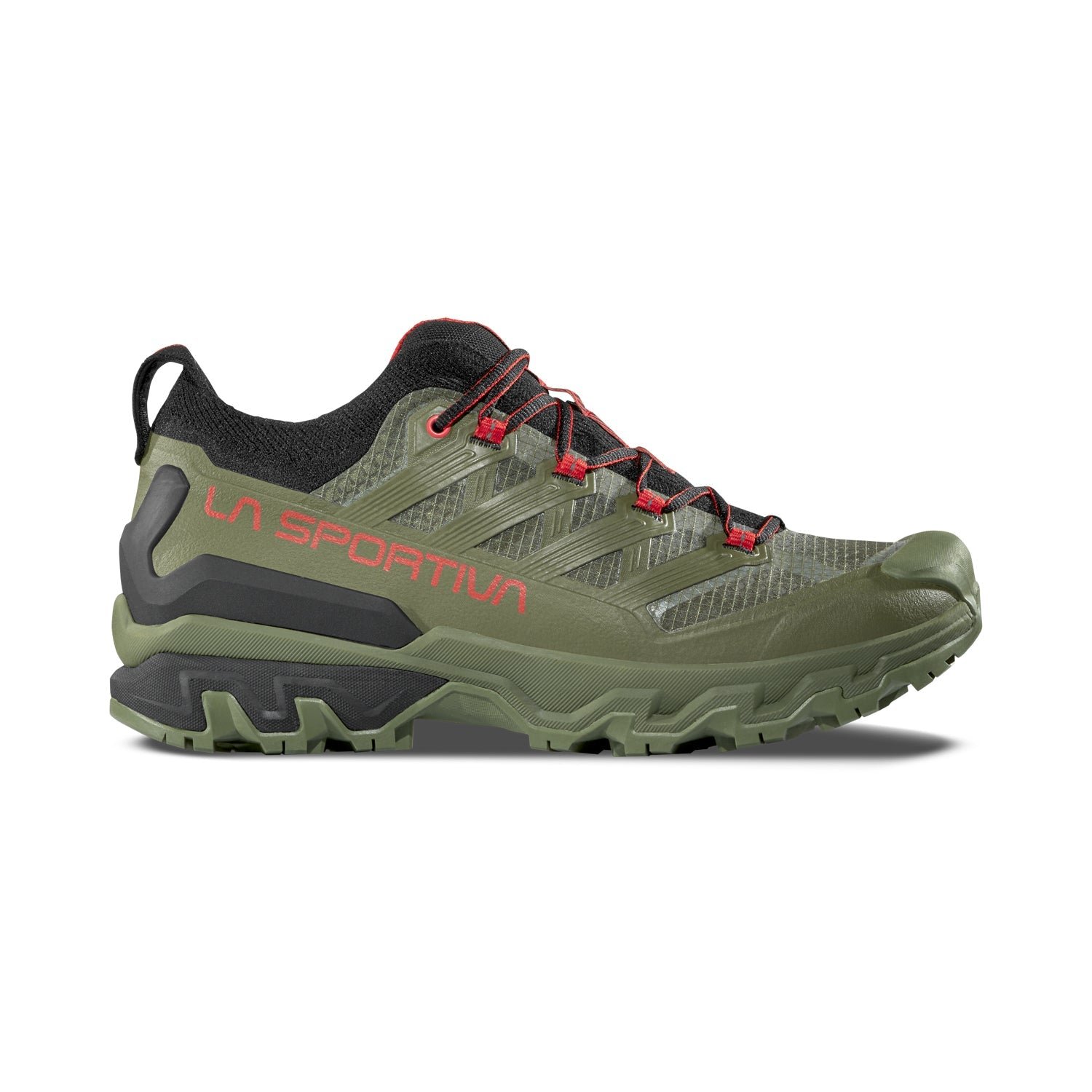
La Sportiva Ultra Raptor 3 GTX

- Broad terrain versatility from technical scrambles to fire roads
- GORE-TEX ePE Extended Comfort membrane and a ripstop mesh upper
- Rubber toe cap, TPU heel stabilizer and 4 mm lugs on a FriXion XF 2.0 outsole
- 14.1 oz per shoe: the heaviest of the three
- A waterproof membrane runs warmer and dries slower than a mesh-only shoe
The Ultra Raptor 3 GTX is the most protective shoe here. La Sportiva pairs a high-tenacity ripstop mesh upper with a GORE-TEX ePE Extended Comfort membrane, a rubber toe cap, a TPU heel stabilizer and a dual-density EVA midsole, on a FriXion XF 2.0 outsole with 4 mm lugs. It also has a roomier fit than earlier Ultra Raptors. La Sportiva lists it at 14.1 oz and $199, making it the heaviest shoe here: you’re paying in weight for protection on rocky, technical trail.
Check price →Best Value
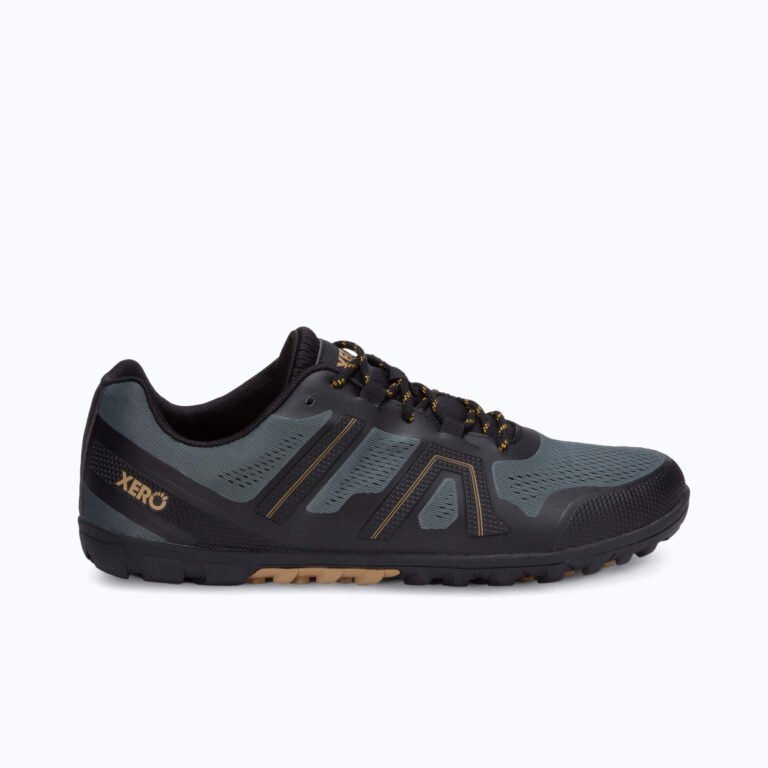
Xero Shoes Mesa Trail WP – Men

- Lowest price on this list by a wide margin
- Seam-sealed bootie construction actually keeps water out, not just resists it
- Gusseted tongue helps block debris and grit from entering at the ankle
- Waterproof membrane traps heat and slows drying if water does get in over the collar
- Clearance stock: sizes and colors may be limited
The Mesa Trail WP earns its spot on value: it’s on clearance at $69.99, and Xero lists it at 9.6 oz for a men’s size 9, the lightest shoe here. The seam-sealed inner bootie is what keeps it waterproof, and a gusseted tongue keeps grit out on dusty or scree-heavy trail.
Check price →Best for Wet or Rocky Trail
Xero Shoes Scrambler Trail Low WP – Men

- 9.8 oz per shoe (men’s size 9, Xero)
- Waterproof, with a grippy lugged outsole
- Durable rubber compound built for repeated abrasive contact
- At $159.99, it costs more than twice as much as the Mesa Trail WP
- Xero’s low-drop, flexible build takes getting used to if you come from cushioned shoes
The Scrambler Trail Low WP is Xero’s waterproof trail shoe with a more aggressive sole than the Mesa Trail. Xero lists it at 9.8 oz for a men’s size 9 and $159.99, and backs the sole with its 5,000-mile warranty. We swapped it in for the Scrambler Trail Mid WP, which is a mid-height boot rather than a trail runner.
Check price →At a glance
| Spec | Ultra Raptor 3 GTX | Mesa Trail WP – Men | Scrambler Trail Low WP |
|---|---|---|---|
| Weight (per shoe) | 14.1 oz | 9.6 oz | 9.8 oz |
| Price | $199 | $69.99 | $159.99 |
What to look for
Toe-box width and volume matter more in trail runners than in almost any other piece of ultralight gear, because your feet swell over the course of a long day and your toes need room to splay for balance on uneven ground. A shoe that fits perfectly at the trailhead can turn into a source of blisters and black toenails by mile twelve if the toe box is too narrow. Unfortunately, none of the listed specs here give exact toe-box measurements, so this is the one criterion you genuinely have to check against your own foot shape, ideally by trying the shoe on with the socks you actually hike in.
Stack height and heel-to-toe drop determine how the shoe loads your calves, Achilles, and knees, and this matters more once you add pack weight. A lower stack puts you closer to the ground with more direct trail feedback, which many ultralight hikers prefer for stability on technical terrain, while a higher stack adds cushioning that reduces fatigue on long, relatively smooth miles at the cost of some ground feel. Drop affects which muscles absorb impact: a lower drop shifts more load to the calf and Achilles, which can be a problem if you are transitioning from a traditional hiking boot with a higher heel and haven't built up that flexibility yet.
Outsole rubber compound and lug depth need to match your actual terrain, not the terrain you wish you were hiking. Deeper, more aggressive lugs, like the Ultra Raptor 3 GTX’s 4 mm, bite better in mud, loose scree and wet rock, but they wear faster on hardpack, gravel roads or pavement, and can feel less stable on slickrock or smooth granite, where a flatter, stickier compound works better.
Underfoot protection, upper breathability, and durability all trade against each other, and no shoe optimizes all three. A rock plate or firmer midsole protects your feet from bruising on sharp, rocky trail but adds stiffness and weight; a fully flexible, minimal shoe feels great on smooth trail but leaves your feet exposed on technical terrain. Breathable mesh uppers dry fast after stream crossings and vent heat well but wear out faster and offer no defense against sustained wet conditions, while waterproof membrane shoes like the Mesa Trail WP and Scrambler Mid trade some breathability and a bit of weight for genuine dryness in wet climates. None of the manufacturer notes here give exact outsole mileage ratings, so treat any durability claim you see elsewhere with the same skepticism you'd apply to a stated waterproof rating.
- Try the shoe on with your actual hiking socks and, if possible, at the end of a day when your feet have already swollen slightly
- Check whether the shoe has a rock plate or firm midsole insert if you expect sharp, rocky, or root-heavy trail
- Match lug depth to terrain: aggressive lugs for mud and scree, flatter compounds for hardpack and slickrock
- Decide if you need waterproofing at all, since a membrane adds weight and heat for dryness you may not need in a dry climate
- Compare heel-to-toe drop against what you currently hike in if you are switching from a traditional boot, and transition gradually
- Weigh the actual pair, not a single shoe, since manufacturer weights are sometimes listed per shoe and sometimes per pair
How to choose
If you want one shoe with the most protection for rocky trail and don’t mind 14.1 oz per shoe, choose the Ultra Raptor 3 GTX. If budget decides it, the Mesa Trail WP gives you waterproofing for $69.99 while clearance stock lasts. If you want a light waterproof shoe with more grip, choose the Scrambler Trail Low WP.
FAQ
How much lighter are trail runners than traditional hiking boots?
Do I need waterproof trail runners?
Will trail runners hold up on rocky or technical terrain?
How long do ultralight trail runners typically last?
Should I size up in trail runners?
What is heel-to-toe drop and why does it matter for ultralight hiking?
The bottom line
The Ultra Raptor 3 GTX is the pick for rough, wet trail if you accept 14.1 oz per shoe. The Mesa Trail WP (9.6 oz, $69.99 on clearance) is the budget choice, and the Scrambler Trail Low WP (9.8 oz, $159.99) is the lighter waterproof option with a grippier sole.
Related guides
Keep building your system with these closely related guides.
- Trail Runners vs Boots: Lightweight Agility vs Ankle Support
- 5 Proven Options: Do Trail Running Shoes Work for Hiking?
- Altra Lone Peak 9+ Review: The Zero-Drop Standard Reworked
- Xero Mesa Trail II vs Altra Lone Peak 9+: Trail Shoe Showdown
Further reading
Authoritative sources to go deeper on the topics above.