5 Best Ultralight Dog Gear Items to Cut Pack Weight
How we did this: we analyzed the manufacturer-published specifications for 5 products — weight, capacity, price and material — alongside documented design differences. We have not field-tested them.
Backpacking with a dog requires carrying their equipment alongside your own, making every ounce critical to your combined base weight. We evaluated the current market of canine accessories, filtering for advanced materials like Dyneema and minimalist designs to identify items that minimize weight without compromising your dog's safety on the trail.
- Dyneema Composite Fabric offers the highest strength-to-weight ratio for collars and leashes, entirely eliminating water absorption.
- Standard dog gear often adds unnecessary pounds in heavy metal hardware; specialized ultralight alternatives use minimalist plastics and aluminum.
- Harnesses require a careful balance between minimal strap weight and adequate surface area to prevent chafing during high-mileage days.
- Best Overall — Adotec Gear Ultralight Dog Leash: Gram-counting hikers with highly disciplined trail dogs
- Lightest — Adotec Gear Ultralight Dog Collar: Hikers seeking a non-absorbent collar for wet environments
- Best Harness — Mountain Paws Dog Harness, Large, Black: Dogs navigating technical terrain requiring physical assists
- Best for Large Dogs — Mountain Paws Rope Dog Lead, Orange: Handlers managing powerful dogs on hazardous routes
- Best Accessory — Hammock Gear Dog Bandana: Summer hikers utilizing evaporative cooling techniques
The picks, reviewed in detail
Best Overall
Adotec Gear Ultralight Dog Leash

- Weighs only 0.5 oz
- Zing-it cordage offers massive tensile strength
- Packs down smaller than a golf ball
- Zero stretch transfers all shock to the handler
- Thin 2mm line is uncomfortable to grab directly
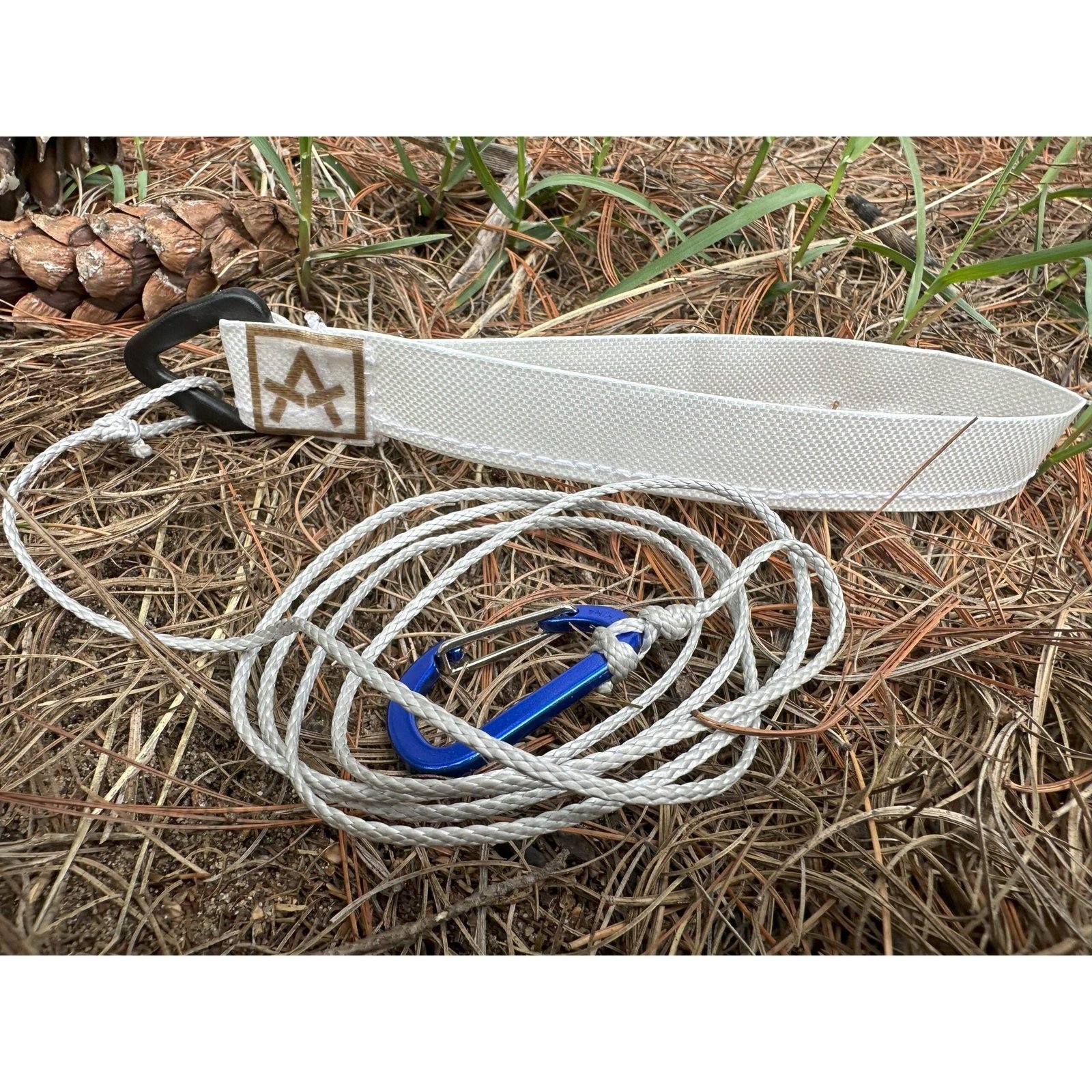
The Ultralight Dog Leash strips canine control down to its absolute structural minimum, achieving a total weight of just 0.5 oz. This is accomplished by replacing traditional heavy nylon webbing with a combination of 6.0 oz Dyneema Composite Fabric and 2mm Zing-it or Lash-it cordage. Zing-it is a highly specialized, urethane-coated braided Dyneema line originally designed for arborist throw lines and hammock suspensions, offering a breaking strength that vastly exceeds the pulling capacity of any dog. The handle utilizes the 6.0 oz DCF, providing a wider surface area for the handler's grip without adding the bulk or water-retention properties of standard fabrics. Because the 2mm line is exceptionally thin, it lacks the surface area to distribute pressure comfortably if a heavy dog lunges suddenly, requiring the handler to rely strictly on the DCF handle rather than grabbing the line itself. The complete lack of elasticity in the Dyneema fibers means that all force is transferred instantly between the dog and the handler, demanding a disciplined animal for safe use on steep gradients. The minimalist attachment hardware requires dexterity to operate, which can be challenging when wearing thick gloves in cold conditions. For hikers strictly managing their combined base weight, this leash provides high-tensile security without a single unnecessary gram.
Check price →Lightest
Adotec Gear Ultralight Dog Collar

- Extremely light at 0.5 oz
- DCF material will not absorb water or odor
- Dries almost instantly after river crossings
- Material is initially rigid and requires a break-in period
- Lacks padding for dogs that pull heavily
Weighing only 0.5 oz, the Ultralight Dog Collar utilizes 6.0 oz Dyneema Composite Fabric to create a highly durable, non-absorbent alternative to traditional pet store collars. Standard nylon and polyester collars act like sponges in wet conditions, absorbing rain and stream water, which increases their weight and leads to bacterial growth and odor over time. The non-porous nature of DCF means this collar sheds water instantly, keeping the dog's neck dry and preventing the chafing that often occurs with wet, heavy webbing. The 6.0 oz variant of DCF is significantly thicker and more abrasion-resistant than the versions used for ultralight tents, ensuring it can withstand the friction of underbrush and daily wear. Initially, this heavy DCF exhibits a distinct stiffness that can feel rigid compared to woven fabrics, requiring a break-in period of several days to soften and conform naturally to the curvature of the dog's neck. The hardware is reduced to a minimalist plastic side-release buckle and a streamlined attachment point, eliminating the heavy steel or brass D-rings that typically anchor traditional collars. It lacks any form of interior padding, making it strictly an attachment point for tags and a leash rather than a primary pulling interface. For well-behaved trail dogs, it provides essential identification at a fraction of the weight of conventional options.
Check price →Best Harness
Mountain Paws Dog Harness, Large, Black

- Low weight of 4.4 oz for a large size
- Four points of adjustment for a precise fit
- Open strap design maximizes airflow and cooling
- Lacks broad chest padding for lifting comfort
- Black webbing absorbs solar heat in exposed areas
The Mountain Paws Dog Harness provides a critical structural interface for navigating technical terrain, keeping weight to a highly respectable 4.4 oz for the large size. A harness is essential when a dog requires physical assistance over deadfall, steep rock steps, or fast-moving water, but traditional padded vests easily exceed a full pound and trap excessive body heat. This model achieves its lower weight by utilizing a stripped-down, strap-based architecture rather than expansive panels of mesh and heavy canvas. The design features four fully adjustable straps around the body, allowing handlers to dial in a precise fit that accommodates the dog's specific chest depth and torso length, which is vital for preventing friction injuries during high-mileage days. The open-strap configuration maximizes airflow across the dog's core, significantly aiding in thermoregulation when hiking exposed ridges in direct sunlight. Because it omits the broad, padded chest plates found on heavier harnesses, handlers must be mindful of point-pressure when lifting the dog, ensuring the force is distributed evenly across the straps rather than digging into the ribs. The black webbing is highly resistant to showing dirt and mud, though it will absorb solar radiation more readily than lighter colors in hot environments. It serves as a secure, reliable attachment point for scrambling sections without burdening the dog with unnecessary bulk.
Check price →Best for Large Dogs
Mountain Paws Rope Dog Lead, Orange

- Screw-gate carabiner prevents accidental un-clipping
- 11mm climbing rope provides slight shock absorption
- Thick rope is comfortable for the handler to grip
- Heavier than Dyneema alternatives at 4.1 oz
- Nylon rope absorbs water and takes time to dry
For hikers managing larger, more powerful dogs in hazardous terrain, the Mountain Paws Rope Dog Lead provides robust security at a weight of 4.1 oz. While this is substantially heavier than Dyneema-based alternatives, the construction utilizes 11mm diameter rock climbing rope, which introduces distinct mechanical advantages for specific use cases. The dynamic nature of climbing rope provides a slight degree of shock absorption, cushioning the impact on both the dog's neck and the handler's arm if the animal lunges unexpectedly at wildlife or loses its footing on a scramble. The attachment point features a high-strength screw-gate carabiner instead of a standard spring-loaded thumb clip, completely eliminating the risk of the leash accidentally un-clipping when the hardware grinds against rocks or thick brush. The thick, round profile of the 11mm rope is significantly more comfortable for the handler to grip during sustained tension compared to thin cordage or flat webbing, reducing hand fatigue on steep descents. However, the nylon sheath and core will absorb water during rain or river crossings, temporarily increasing the lead's weight and requiring time to dry in camp. The bulk of the climbing rope also demands dedicated pack space, as it cannot be compressed into a tiny pocket like ultralight materials. It effectively bridges the gap between strict minimalism and the structural demands of managing a heavy dog on complex routes.
Check price →Best Accessory
Hammock Gear Dog Bandana
- Weighs less than 0.4 oz
- Slides over the collar to prevent snagging
- Can be soaked in water for evaporative cooling
- Cannot be worn independently without a collar
- Fabric collects burrs and mud easily
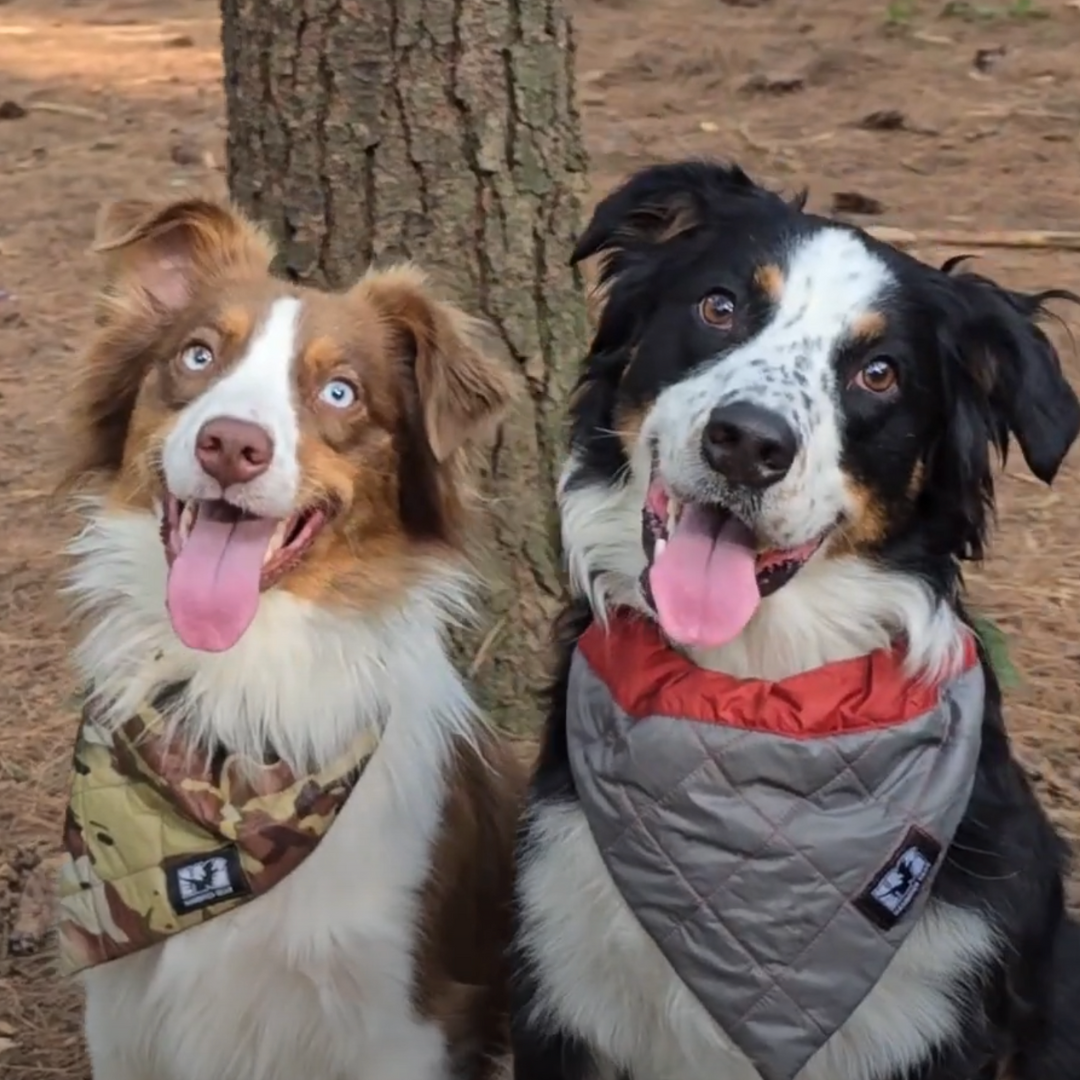
The Dog Bandana offers a highly functional, multi-season accessory for temperature management, weighing a mere 0.34 ounces. While bandanas are often viewed as purely aesthetic additions, this quilted fabric piece serves a distinct physiological purpose on the trail when utilized correctly. During high-temperature summer hikes, the fabric can be thoroughly soaked in cold water and placed over the dog's neck, facilitating evaporative cooling directly over the major arteries to help regulate core body temperature. The design features a sleeve that slides directly over the dog's existing collar, a critical detail that prevents the bandana from snagging on low branches or coming untied during active movement through dense vegetation. The quilted construction provides a very slight layer of insulation when worn dry during crisp morning starts in the shoulder seasons, offering a minor thermal benefit without the weight of a full canine jacket. Because it relies entirely on the collar for its mounting structure, it cannot be used independently as a standalone neck gaiter in camp if the collar is removed. The fabric will inevitably collect dirt, mud, and burrs over the course of a trip, requiring occasional rinsing at water sources to maintain its cooling efficiency and appearance. It delivers a high utility-to-weight ratio for environmental adaptation without requiring complex, heavy cooling vests.
Check price →At a glance
| Spec | Ultralight Dog Leash | Ultralight Dog Collar | Mountain Paws Dog Har… |
|---|---|---|---|
| Weight | 0.5 oz | 0.5 oz | 4.4 oz |
| Price | $22 | $20 | $59.33 |
What to look for
Material science dictates both the dry weight and the wet weight of canine gear. Traditional dog accessories rely heavily on thick nylon webbing and polyester blends, materials that act as sponges during rainstorms or stream crossings. A standard nylon collar can easily double or triple in weight once saturated, retaining that moisture against the dog's skin for hours, which promotes chafing and bacterial growth. Advanced textiles like Dyneema Composite Fabric (DCF) and HMPE cordage (like Zing-it) are inherently hydrophobic. They shed water instantly, ensuring that the listed weight is the actual weight you carry, regardless of the weather conditions.
Hardware is the hidden anchor in most commercial dog gear. Pet store collars and leashes utilize heavy brass or steel D-rings, massive spring-loaded thumb clips, and thick metal buckles to ensure durability across a wide range of consumer use cases. In an ultralight context, this metal is excessive. Manufacturers reduce weight by substituting steel for streamlined aluminum, utilizing minimalist plastic side-release buckles, or eliminating hardware entirely through spliced Dyneema loops. When evaluating a piece of gear, look closely at the attachment points; a leash made of lightweight fabric is compromised if it terminates in a heavy steel clasp.
Harness biomechanics require careful evaluation to prevent soft-tissue injuries on high-mileage days. A harness must distribute load safely across the dog's sternum and ribcage without impeding the natural articulation of the shoulder blades. Minimalist harnesses achieve low weights by stripping away broad mesh panels in favor of a strap-only architecture. While this saves ounces and vastly improves ventilation, it reduces the surface area available to distribute pressure. Handlers must ensure the straps are wide enough to prevent cutting into the skin and that the fit can be adjusted precisely to avoid friction in the sensitive armpit areas.
The choice between static and dynamic leash materials fundamentally alters how force is managed on the trail. Static materials, such as Dyneema cordage, possess zero stretch. This provides absolute, immediate control over the dog's movements but transfers 100 percent of any sudden shock directly to the handler's shoulder and the dog's neck. Dynamic materials, like nylon climbing rope, offer inherent elasticity that absorbs and dampens sudden lunges. While dynamic leads are significantly heavier and bulkier, they offer a necessary margin of safety and comfort for hikers managing large, powerful breeds on uneven terrain where a sudden pull could cause a fall.
- Verify the exact weight of the hardware components, as heavy metal clips can negate the benefits of lightweight fabrics.
- Check the water retention properties of the primary material to ensure it won't gain significant weight after a river crossing.
- Ensure harness straps offer four points of adjustment to dial in a friction-free fit around the chest and shoulders.
- Confirm the breaking strength of the leash material far exceeds the maximum lunge force of your specific dog.
- Assess the closure mechanism on leashes for security; screw-gate carabiners prevent accidental releases in heavy brush.
- Measure your dog's neck and chest accurately to avoid carrying excess strap material that requires trimming.
How to choose
Selecting the right gear depends entirely on your dog's obedience level, size, and the ruggedness of your intended route. For the strict gram-counter with a highly trained dog, a DCF leash and collar combination minimizes base weight to the absolute structural limit. Hikers navigating technical terrain where dogs require physical assistance over obstacles should prioritize a secure, adjustable harness, accepting the slight weight penalty for safety and load distribution. If your dog is large or prone to sudden pulls, a thicker rope lead with a locking carabiner provides necessary handler comfort and hardware security that thin cordage lacks. Summer hikers should integrate lightweight accessories that can be soaked for evaporative cooling. Ultimately, match the structural integrity of the gear to the physical demands your dog places on it.
FAQ
Does Dyneema dog gear hold odors?
Are ultralight leashes strong enough for large dogs?
Why avoid metal buckles on ultralight collars?
Can a dog wear an ultralight harness all day?
How do I clean DCF dog gear?
Is a static or dynamic leash better for backpacking?
The bottom line
The Ultralight Dog Leash and Collar combination represents the peak of canine gear minimalism, utilizing DCF and Zing-it to eliminate every non-essential ounce. For technical routes requiring physical assists, the Mountain Paws Dog Harness offers a secure, adjustable fit without the heat-trapping bulk of traditional padded vests. Selecting the appropriate gear ensures your dog remains safe and comfortable without adding unnecessary pounds to your combined load.
Related guides
Keep building your system with these closely related guides.
- How to Choose Dog Gear for Backpacking: What Actually Matters
- Ultralight Backpacks: 9 Packs Compared per Liter and Load
- How to Reduce Backpack Weight by 10 Lbs: A Step-by-Step Guide
- Ultralight Weight Measurement Standards: The Complete Guide
- Trekking Poles
- Lighting
Further reading
Authoritative sources to go deeper on the topics above.