5 Proven Ultralight Lighting Options, Weighed and Compared
How we did this: we analyzed the manufacturer-published specifications for 5 products — weight, capacity, price and material — alongside documented design differences. We have not field-tested them.
Lighting in the backcountry requires a careful calculation of output, battery efficiency, and weight. For ultralight backpackers, carrying a heavy headlamp with excess battery capacity is unnecessary, but a light that fails during a pre-dawn alpine start is a serious liability. This guide examines the most efficient headlamps and backup lights available, focusing on lumen-to-weight ratios, charging mechanisms, and beam profiles to help you find the exact tool for your nighttime navigation.
- USB-C rechargeability is now the standard for ultralight headlamps, eliminating the need to carry spare batteries.
- Shock cord headbands save significant weight but require careful adjustment to avoid pressure points.
- Maximum lumen claims are temporary bursts; sustained output at medium settings is the most critical metric.
- Handheld lights provide better depth perception in fog or rain by separating the light source from your eye line.
- Best Overall — Hilltop Packs NU25 UL Nitcore 400 Lumen Headlamp: Thru-hikers and gram-counters who need reliable night-hiking capability.
- Lightest — Zpacks Nitecore NU20 Classic 360L Headlamp: Minimalists seeking the absolute lightest primary light source for summer backpacking.
- Best for High Output — Hilltop Packs NU33 Nitcore Rechargable Headlamp: Hikers who frequently navigate technical terrain at night and need sustained brightness.
- Best for Battery Flexibility — Black Diamond Spot 400 Headlamp: Traditional backpackers who prefer the flexibility of replaceable batteries for remote trips.
- Best Handheld Backup — Ampex Gear Lightweight Flashlight | 300L: Hikers who prefer a handheld directional light or need a reliable, waterproof backup.
The picks, reviewed in detail
Best Overall
Hilltop Packs NU25 UL Nitcore 400 Lumen Headlamp

- Excellent weight-to-performance ratio
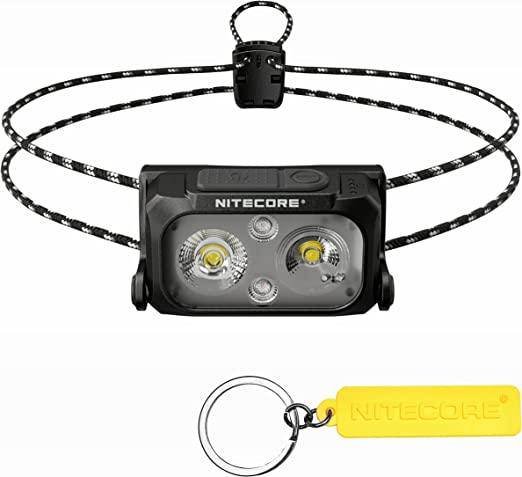
- Dual-beam system for spot and flood
- USB-C rechargeable
- Shock cord strap can slip on smooth hair
- Battery capacity limits all-night use
The Nitecore NU25 UL represents the current baseline for ultralight headlamps, offering a dual-beam system that separates flood and spot functions. Weighing just 1.6 oz, it utilizes a minimalist shock cord headband instead of a traditional flat elastic strap, which cuts weight but requires precise tensioning to prevent bouncing during high-output activities. The 400-lumen maximum output is a temporary burst mode, but the sustained medium settings provide ample illumination for navigating established trails after dark. USB-C charging allows integration with standard power banks, streamlining the electronic kit for long-distance hikers. The dual-button interface separates power and mode selection, reducing the learning curve and preventing accidental activation inside a tightly packed backpack. While the internal battery is sufficient for typical camp tasks and occasional night hiking, it lacks the capacity for consecutive all-night pushes without daily recharging. The dual-beam design allows users to switch to a wide floodlight for reading or cooking, saving battery compared to using the primary spotlight.
Check price →Lightest
Zpacks Nitecore NU20 Classic 360L Headlamp

- Incredibly low one-ounce weight
- USB-C charging compatibility
- Sufficient output for camp chores
- Very small battery capacity
- Not suited for technical night hiking
At an astonishing one ounce, the Nitecore NU20 Classic pushes the boundaries of how light a functional headlamp can be while still remaining practical. It delivers a 360-lumen peak output, which is more than adequate for setting up camp or navigating short distances to water sources in the dark. The extreme weight savings come from a highly compact polymer body and a significantly reduced battery capacity compared to heavier models. This makes it an ideal choice for hikers who primarily hike during daylight hours and only need a light for brief evening tasks. USB-C compatibility ensures it can be quickly topped up from a portable charger while hiking, mitigating the small battery size. The beam profile leans toward a balanced flood, prioritizing close-range visibility over long-distance spotting. Users must be mindful of battery management, as relying on the higher output modes will drain the small internal cell rapidly. The simplified strap system is comfortable for short periods but lacks the structural support needed for aggressive movement or running.
Check price →Best for High Output
Hilltop Packs NU33 Nitcore Rechargable Headlamp

- High 700-lumen peak output
- Larger battery for extended runtimes
- Aluminum front housing for heat dissipation
- Heavier at 3.37 ounces
- Bulky compared to minimalist options
The Nitecore NU33 is built for users who prioritize battery life and brightness over absolute weight savings. Weighing 3.37 ounces, it houses a larger internal battery capable of sustaining higher lumen outputs for much longer durations than sub-two-ounce models. The unibody optical lens system projects a smooth, artifact-free beam that reaches further down the trail, which is critical when route-finding on ambiguous or rocky terrain. A 700-lumen maximum output provides a powerful searchlight function, though it will step down to prevent overheating. The aluminum front housing aids in heat dissipation, a necessary feature for a light driving this much power without damaging internal components. This headlamp includes a traditional, wider elastic strap that distributes the heavier weight comfortably across the forehead, preventing the light from sagging during prolonged use. While it is heavier than minimalist options, the trade-off is a robust light that can survive multiple days of heavy winter use or long night-hiking sessions without requiring a recharge.
Check price →Best for Battery Flexibility
Black Diamond Spot 400 Headlamp

- Dual-fuel capability (AAA or rechargeable pack)
- Excellent spot beam penetration
- IPX8 waterproof rating
- Complex button interface
- Heavier 3.0-ounce weight penalty
The Black Diamond Spot 400 remains a staple for backpackers who want a versatile, full-featured headlamp with a proven track record. At 3.0 ounces, it sits at the upper limit of what most ultralight hikers will carry, but it offers a dual-fuel design that accepts either standard AAA batteries or a proprietary rechargeable lithium-ion pack. This flexibility is highly valuable on remote routes where relying entirely on a power bank might be risky, allowing users to resupply with standard batteries at any small-town gas station. The optical design provides a very clean, penetrating spot beam that excels at picking out trail markers at a distance. It features a touch-sensitive housing for quick brightness adjustments, known as PowerTap, which allows users to instantly switch between maximum output and a dimmed setting. The IPX8 waterproof rating ensures it will survive complete submersion, making it highly reliable in sustained downpours. The user interface, relying heavily on a sequence of button presses to access different modes, can be complex and requires memorization to avoid frustration in the dark.
Check price →Best Handheld Backup
Ampex Gear Lightweight Flashlight | 300L

- Improves depth perception in fog
- Highly durable aluminum body
- IPX8 waterproof rating
- Occupies a hand during use
- Lacks hands-free convenience for camp chores
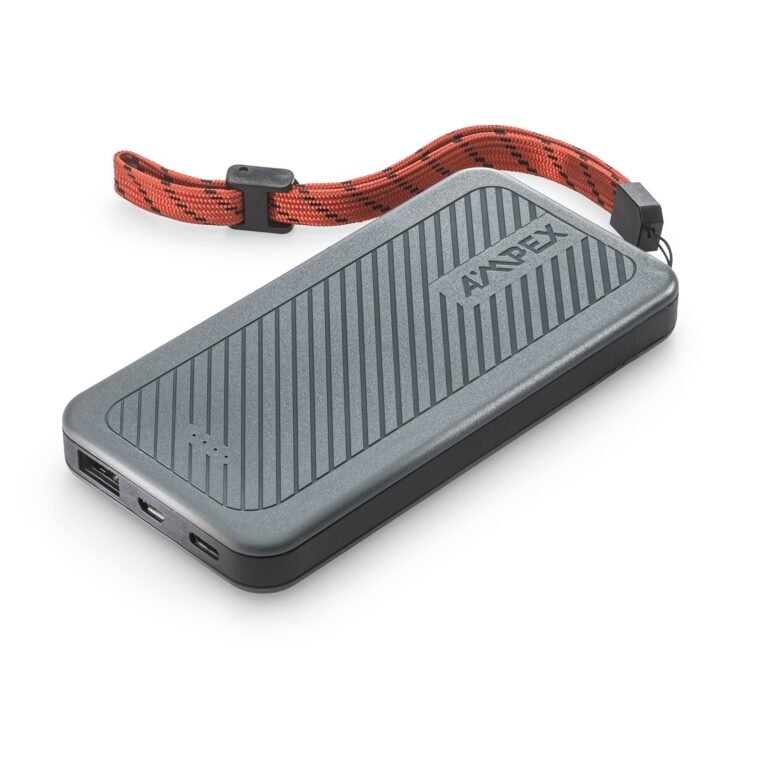
The AMPEX Lightweight Flashlight serves as an excellent secondary light source or a primary option for those who dislike wearing headlamps. Weighing 2.2 ounces, it provides a highly directional 300-lumen beam that is useful for piercing through fog, snow, or heavy rain, where headlamps often create blinding glare right in front of the user's face. The IPX8 waterproof rating guarantees it can handle being dropped in puddles or used in severe weather without failure. Handheld lights offer superior depth perception on technical trails because the light source is separated from the user's eye line, casting shadows that reveal rocks, roots, and depressions in the ground. The aluminum body is highly durable, resisting crushing forces inside a tightly packed backpack much better than thin polymer headlamp housings. While it lacks the hands-free convenience of a headlamp for camp chores like cooking or pitching a tent, it excels as a navigational tool. It is best paired with a micro-light or used by hikers who spend very little time active after dark but want a reliable emergency beam.
Check price →At a glance
| Spec | NU25 UL Nitcore 400 L… | Nitecore NU20 Classic… | NU33 Nitcore Recharga… |
|---|---|---|---|
| Weight | 1.6 oz | 1.3 oz | 3.37 oz |
| Price | $36.95 | $24.95 | $49.99 |
What to look for
Maximum lumen numbers are primarily marketing metrics that do not reflect real-world trail use. A 400-lumen headlamp rarely sustains that output for more than a few minutes before thermal regulation or battery protection steps the brightness down to a fraction of that number. When evaluating lighting, the medium and low settings are where you will spend the vast majority of your time. Look for a light that can sustain 50 to 100 lumens for at least eight hours, which covers a full night of hiking or several days of camp chores. High burst modes are useful for briefly spotting a trail marker or checking for wildlife, but they are not the baseline for continuous navigation. Understanding the step-down curve of a headlamp is more important than knowing its peak brightness.
The ultralight market has largely shifted to internal, non-removable lithium-ion batteries recharged via USB-C. This eliminates the dead weight of spare AAA batteries and integrates perfectly with the power banks most hikers already carry to charge their phones and satellite messengers. However, internal batteries degrade over time and cannot be instantly swapped in the field if they die unexpectedly. Dual-fuel headlamps offer a compromise, allowing the use of a rechargeable pack or standard alkalines, but they require a heavier housing to accommodate the battery compartment latches and springs. Cold weather also severely impacts lithium-ion performance; if you hike in freezing temperatures, keeping the headlamp close to your body before use is necessary to preserve battery life.
A headlamp's utility is dictated by its lens and optical design as much as its LED. Spot beams tightly focus the light to throw it far down the trail, which is essential for route-finding and fast-paced movement. Flood beams disperse the light widely, creating a soft, even illumination that is perfect for reading, cooking, and close-up tasks without blinding campmates. The most versatile ultralight headlamps feature dual lenses, allowing you to switch between spot and flood, or blend them together. Additionally, look for lights with a high Color Rendering Index (CRI) for their flood settings. High CRI lighting renders colors more accurately, reducing eye strain and making it much easier to distinguish between a stick and a snake on the trail.
The strap system plays a major role in both the total weight and the comfort of the headlamp. Traditional flat elastic straps are comfortable, absorb sweat, and provide excellent stability, but they retain water and add unnecessary bulk to a sleep system pocket. Minimalist shock cord systems, often found on sub-two-ounce lights, save weight and dry instantly. However, shock cords can create pressure points on the forehead or slip on smooth hair during vigorous movement. Factory-designed minimalist straps usually include a small plastic routing piece at the back to distribute tension more evenly. When comparing weights, ensure you are looking at the total weight including the strap, as manufacturers sometimes list the weight of the bare housing to appear lighter.
- Check the sustained lumen output on medium settings, not just the maximum burst claim.
- Verify the charging port is USB-C to avoid carrying outdated micro-USB cables.
- Confirm the presence of a physical or electronic lockout feature to prevent accidental activation in your pack.
- Look for a dedicated red light mode to preserve night vision and avoid attracting insects.
- Assess the waterproof rating; IPX4 handles light rain, while IPX8 survives complete submersion.
- Ensure the listed weight includes the headband and any necessary brackets.
How to choose
Selecting the right ultralight lighting depends entirely on your specific hiking habits and route requirements. If you strictly hike from dawn to dusk and only need illumination for setting up your tent and cooking dinner, a minimalist one-ounce headlamp is the most efficient choice. Thru-hikers who occasionally push miles into the night or start before sunrise should opt for a dual-beam, two-ounce model with a robust medium setting and USB-C charging. For deep winter backpacking or navigating off-trail routes where route-finding is critical, prioritize a heavier light with a larger battery capacity and a powerful spot beam. Hikers who struggle with glare in foggy or rainy conditions should consider carrying a lightweight handheld flashlight to improve depth perception. Always match your battery capacity to your expected time spent moving in the dark, rather than carrying excess weight for scenarios you rarely encounter.
FAQ
How many lumens do I actually need for backpacking?
Are shock cord headbands comfortable for long periods?
Why do headlamps step down from their maximum brightness?
Is a red light mode necessary?
Can I use my phone flashlight instead of a headlamp?
How does cold weather affect rechargeable headlamps?
The bottom line
The Nitecore NU25 UL remains the benchmark for ultralight lighting, striking an ideal balance between minimal weight, reliable output, and modern USB-C convenience. For those who want to shave every possible gram, the Nitecore NU20 Classic provides just enough light for basic tasks at a mere one ounce. Ultimately, the best light is the one that covers your specific nighttime needs without adding unnecessary battery weight to your pack.
Related guides
Keep building your system with these closely related guides.
Further reading
Authoritative sources to go deeper on the topics above.