5 Proven Ultralight Knives and Tools, Weighed and Compared
How we did this: we analyzed the manufacturer-published specifications for 5 products — weight, capacity, price and material — alongside documented design differences. We have not field-tested them.
Carrying tools in the backcountry requires a strict evaluation of utility versus weight. A blade or utensil that sees use only once a week is dead weight, while an inadequate tool can complicate basic camp tasks. We analyzed the specifications, materials, and design geometry of the most prominent ultralight knives, saws, and cutlery sets to determine which items justify their place in a minimalist pack.
- Titanium remains the dominant material for balancing durability and low weight in camp utensils.
- Minimalist fixed blades offer the highest reliability by eliminating moving parts and handle scales.
- Dedicated food preparation requires heavier stainless steel, forcing a choice between culinary function and base weight.
- Carbon fiber polymers are reducing the weight penalty of specialized tools like wood saws.
- Best Overall — Vargo Outdoors KaTi WC-1: the strict minimalist who needs a functional edge at the absolute lowest weight
- Best Ultralight Saw — Adotec Gear Packaway Ultralight Saw: backpackers using wood-burning stoves or winter campers processing deadfall
- Best Value Cutlery Set — Vargo Outdoors TITANIUM SPOON / FORK / KNIFE SET: hikers who prefer dedicated utensils over a single spork
- Best Ergonomic Cutlery Set — Sea to Summit Frontier UL Cutlery Set – [3 Piece]: backpackers who want a rigid, highly functional eating setup
- Best for Camp Kitchens — Sea to Summit Detour Stainless Steel Paring Knife: gourmet backpackers who cook fresh ingredients on the trail
The picks, reviewed in detail
Best Overall
Vargo Outdoors KaTi WC-1
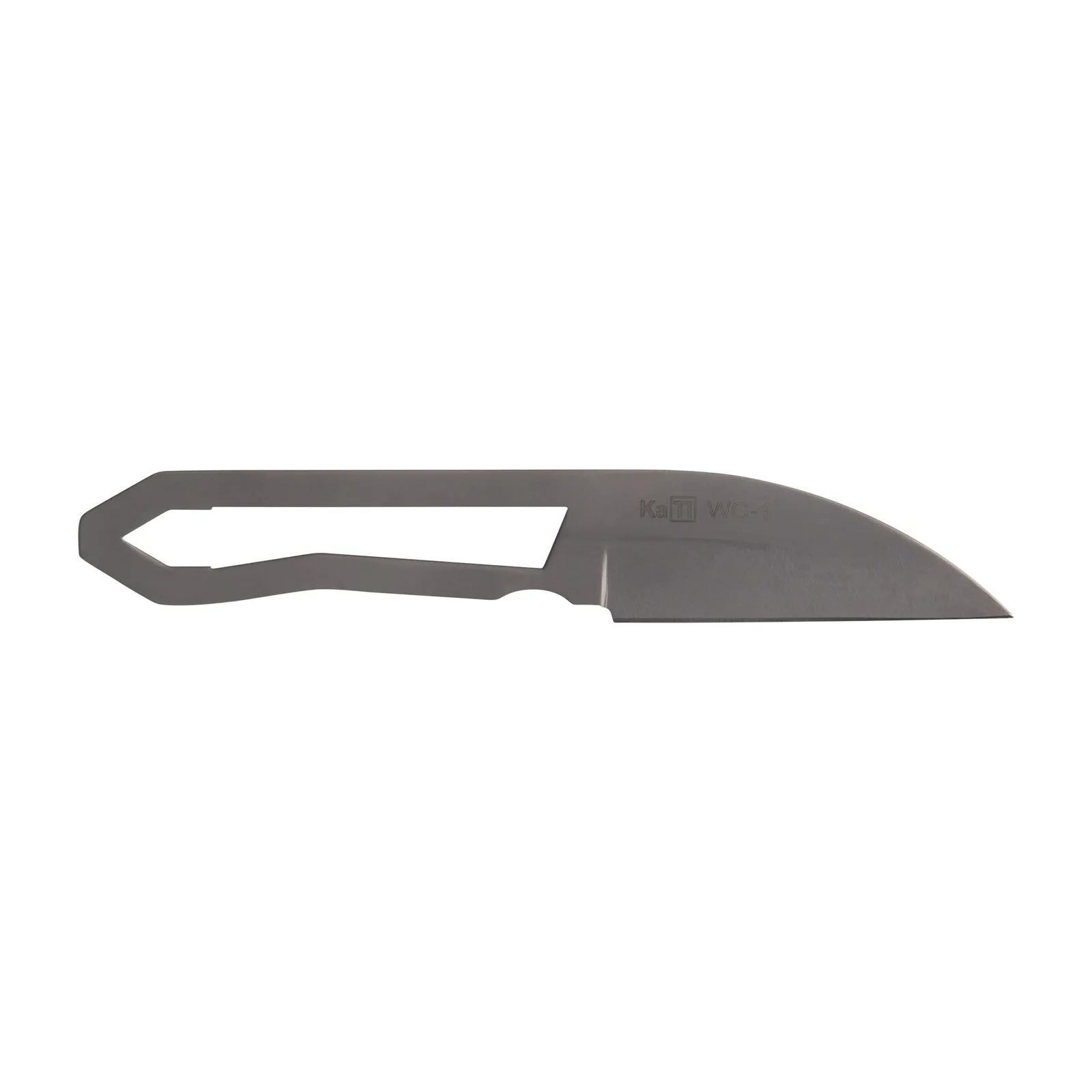
- Weighs only 1 ounce
- Forward finger choil improves grip security
- No moving parts to break or maintain
- High cost for a very small tool
- Blade length limits utility for food prep
The KaTi WC-1 represents the extreme end of minimalist tool design for hikers counting every single gram. Weighing just 1 ounce, it provides a functional cutting edge without the bulk of a traditional folding knife handle or heavy scales. The design utilizes a forward finger choil and a V-style end to create a secure grip despite the lack of traditional handle material. This specific geometry allows the user to apply downward pressure safely when slicing cordage, opening food packages, or performing minor gear repairs. Because it lacks a folding mechanism, there are no moving parts to break, rust, or foul with trail dirt. The blade length is necessarily short, restricting its use for slicing cheese, preparing vegetables, or heavy carving tasks. Hikers must also devise a safe storage method, as fixed minimalist blades require careful packing to avoid puncturing gear. For the strict minimalist who only needs a blade for occasional, precise tasks, the weight savings easily justify the ergonomic compromises. The premium price tag reflects the specialized machining required to make such a small, handle-less tool functional and safe to use.
Check price →Best Ultralight Saw
Adotec Gear Packaway Ultralight Saw
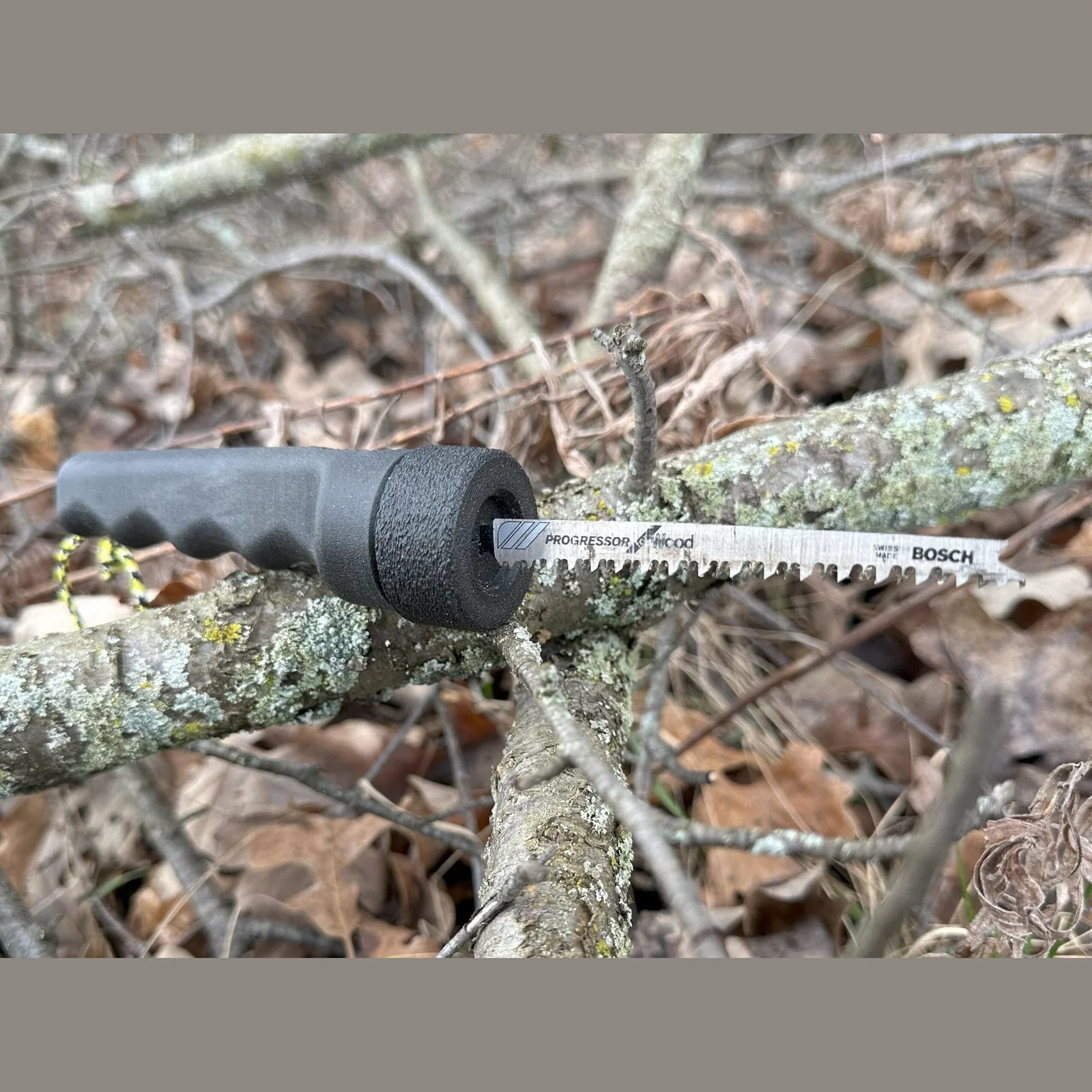
- Extremely light at 1.7 oz
- Carbon fiber reinforced polymer handle
- Highly packable profile
- Single-purpose tool
- Polymer handles can be brittle in extreme cold
The Packaway Ultralight Saw addresses a specific need for hikers who rely on processed wood for heat or cooking. At 1.7 oz, it undercuts the weight of traditional folding camp saws by a wide margin, making it viable for ultralight base weights. The handle utilizes a carbon fibre reinforced polymer, which provides the necessary rigidity for the push-pull action of sawing without the density of aluminum or steel. This material choice keeps the center of gravity near the blade, improving efficiency when cutting small branches or processing fuel for a twig stove. The saw maintains a slim profile, allowing it to slide into the side pockets of a pack or alongside tent poles without snagging. While highly effective for its intended purpose, it remains a single-use item that offers no utility for hikers using canister stoves or hiking above the treeline. The polymer construction requires some care, as aggressive lateral twisting during a cut could stress the hinge or handle material. For winter trips or dedicated wood-stove users, the 1.7-ounce penalty is minor compared to the caloric energy saved by using a proper saw instead of breaking wood by hand.
Check price →Best Value Cutlery Set
Vargo Outdoors TITANIUM SPOON / FORK / KNIFE SET
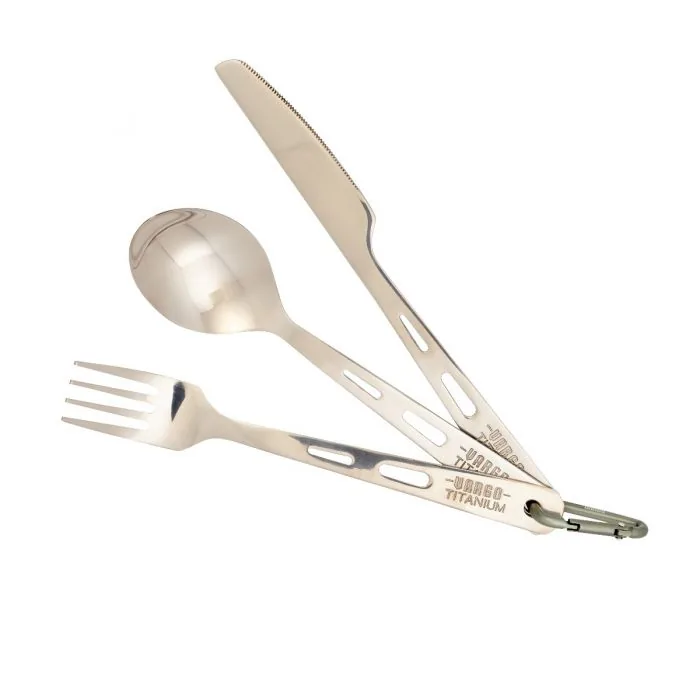
- Full titanium construction
- Stronger than Lexan alternatives
- Total weight of just 1.5 ounces
- Three separate pieces to keep track of
- Titanium knife is poor at holding a sharp edge
The Vargo Titanium Spoon, Fork, and Knife Set provides a complete dining solution for those who dislike the compromised geometry of a spork. The entire three-piece set weighs exactly 1.5 ounces, matching or beating the weight of many single heavy-duty utensils. Titanium construction ensures the utensils will not snap under pressure like comparable Lexan or plastic options, even when digging into hardened peanut butter or frozen meals. The metal is highly resistant to corrosion and will not absorb food odors or flavors over long-distance hikes. Carrying three separate items does introduce the risk of losing a piece in the dirt, requiring more careful organization in the camp kitchen kit. The included titanium knife is adequate for spreading soft foods or cutting cooked items, but titanium is inherently softer than hardened steel and will not hold a fine edge for slicing tough materials. The fork tines are properly spaced for twirling noodles or stabbing food, a distinct functional advantage over the shallow tines found on most sporks. This set appeals directly to hikers who prioritize a civilized eating experience at camp without taking on a severe weight penalty.
Check price →Best Ergonomic Cutlery Set
Sea to Summit Frontier UL Cutlery Set – [3 Piece]
![Sea to Summit Frontier UL Cutlery Set - [3 Piece]](https://ultralightpackers.com/wp-content/uploads/2026/09/sea-to-summit-frontier-ul-cutlery-set-3-piece.webp)
- Stronger than standard camp cutlery
- Lightweight 0.9-ounce total package
- Excellent mouthfeel and ergonomics
- Higher price point for basic utensils
- Prone to scratching non-stick pot coatings
The Sea to Summit Frontier UL Cutlery Set combines a knife, fork, and spoon into a cohesive 0.9-ounce package designed for maximum rigidity. The structural design emphasizes strength, ensuring the handles do not flex or bend when applying pressure during meal preparation or eating. This rigidity makes the set highly functional for scraping the bottom of deep freeze-dried meal bags or stirring thick stews. The ergonomic shaping of the handles provides a secure, comfortable grip, mimicking the feel of home cutlery more closely than flat-stamped metal alternatives. The bowls and tines are polished for a smooth mouthfeel, avoiding the rough texture that plagues some budget metal utensils. Like any metal cutlery, these items require caution when used inside pots with non-stick coatings, as aggressive scraping will damage the finish. The three-piece format offers versatility, allowing users to leave the knife or fork behind on trips where only a spoon is strictly necessary. The Frontier set stands out for hikers who are willing to pay slightly more for refined shaping and superior structural integrity in their camp kitchen.
Check price →Best for Camp Kitchens
Sea to Summit Detour Stainless Steel Paring Knife
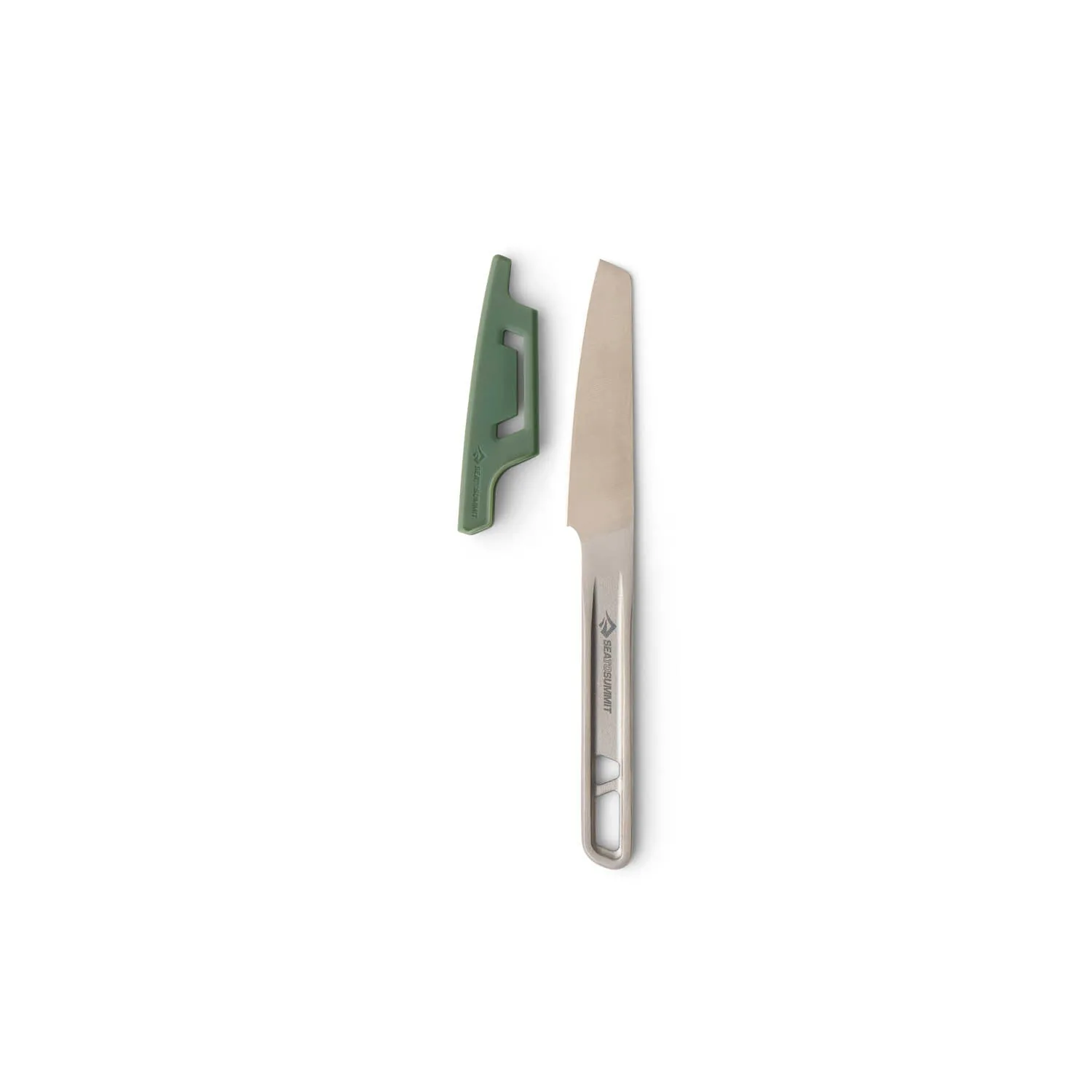
- High-strength stainless steel blade
- Proper handle for extended food prep
- Excellent edge retention
- Heavy at 2.4 ounces for a single tool
- Overkill for standard dehydrated meals
The Sea to Summit Detour Stainless Steel Paring Knife is built specifically for hikers who process fresh food at camp. Unlike titanium blades or micro-tools, this knife utilizes high-strength stainless steel, which takes and holds a sharp, fine edge necessary for peeling fruit or slicing vegetables. The 2.4-ounce weight makes it the heaviest item on this list, reflecting the inclusion of a substantial handle and a thicker steel spine. The handle provides the necessary leverage and comfort for extended cutting tasks, preventing hand fatigue during complex meal preparation. Stainless steel requires minimal maintenance and resists rust, even if put away slightly damp after washing in a stream. This tool is entirely unnecessary for backpackers relying on add-boiling-water meals, as the weight penalty offers zero return on investment for that cooking style. For those carrying fresh produce, cheese, or cured meats, a proper paring knife prevents the frustration and danger of using a dull or improperly shaped blade. It bridges the gap between a home kitchen tool and a durable piece of camping gear.
Check price →At a glance
| Spec | KaTi WC-1 | Packaway Ultralight S… | TITANIUM SPOON / FORK… |
|---|---|---|---|
| Weight | 1.0 oz | 1.7 oz | 1.5 oz |
| Price | $95 | $37 | $29.95 |
What to look for
Material selection dictates the weight, durability, and edge retention of any backcountry tool. Titanium is the standard for utensils because it is exceptionally light, rigid, and impervious to rust, though it is too soft to hold a sharp cutting edge for long. Stainless steel is required for functional knives that need to slice or carve, but it carries a significant weight penalty. Carbon fiber and reinforced polymers are increasingly used in handles and structural components, like saw frames, to reduce weight while maintaining the stiffness required for push-pull tools.
The choice between a dedicated cutlery set and a single multi-use utensil depends entirely on your menu. Sporks save weight and reduce the number of items to track, but they often feature shallow bowls for liquids and short tines that fail at stabbing solid food. Full three-piece sets, usually weighing around two ounces in titanium, offer superior functionality for eating complex meals or cooking fresh food. If your diet consists entirely of dehydrated meals eaten straight from the bag, a single long-handled spoon is the most efficient choice, rendering forks and butter knives unnecessary.
Blade geometry and handle ergonomics are critical when evaluating ultralight knives. Micro-knives that lack traditional handles rely on finger choils, jimping, or specific angles to provide a safe grip. Without these design elements, a small blade becomes dangerous to use, especially with cold or wet hands. A knife intended for food preparation requires a thin, flat-ground blade and a handle large enough to grip with the whole hand, whereas a knife used only for cutting cordage can be a fraction of the size and weight.
Assessing actual need is the most important step in selecting backcountry tools. A saw is a highly efficient tool for processing wood for a twig stove, but it is dead weight if you use a canister stove. A paring knife is excellent for fresh vegetables, but useless for a hiker eating protein bars and instant rice. Evaluate your specific shelter, stove system, and menu before adding any cutting tool to your kit, as the lightest tool is always the one you leave at home.
- Total weight: Ensure the tool justifies its weight based on how many times per day it will be used.
- Material composition: Look for titanium for utensils, stainless steel for sharp edges, and carbon fiber for structural handles.
- Grip security: Check for finger choils or textured grips on minimalist knives that lack full handles.
- Edge retention: Verify that any blade meant for slicing uses hardened steel rather than titanium.
- Packability: Consider how the tool will be stored; fixed blades require sheaths, while folding tools protect their own edges.
- Menu compatibility: Match your utensils to your food; deep bags require long handles, while fresh food requires a real knife.
How to choose
Selecting the right tools requires matching the gear to your specific trail routine. If you are a strict minimalist eating only packaged foods, a micro-blade for gear repair and a single spoon are all you need. Hikers who enjoy civilized meals at camp will find the two-ounce weight penalty of a full titanium cutlery set well worth the functional upgrade over a spork. If your backcountry routine involves processing fresh ingredients, prioritize a stainless steel paring knife with a proper handle, accepting the three-ounce weight as a necessary cost for culinary efficiency. Winter campers and wood-stove users should bypass heavy hatchets in favor of a carbon-fiber saw, which processes deadfall with far less caloric effort. Ultimately, let your stove choice and daily menu dictate your tool selection.
FAQ
Do I really need a knife for ultralight backpacking?
Is titanium better than stainless steel for a camp knife?
Why carry a saw instead of a hatchet?
Are full cutlery sets worth the weight penalty over a spork?
How do I maintain a titanium knife edge?
What is the lightest option for cutting gear?
The bottom line
The KaTi WC-1 stands out as the premier choice for strict minimalists, offering a functional cutting edge at an astonishing 1 ounce by eliminating unnecessary handle mass. For hikers focused on camp dining, the Vargo Titanium Spoon, Fork, and Knife Set provides a complete, durable eating solution at a mere 1.5 ounces. Both tools demonstrate that with careful material selection and precise geometry, backcountry utility does not require a heavy pack.
Related guides
Keep building your system with these closely related guides.
Further reading
Authoritative sources to go deeper on the topics above.