Zpacks Sleeping Bags: Classic, Zip Around and Mummy Compared
How we did this: we read Zpacks’ own spec tables for every sleeping bag, rating and size, checked on 29 Sep 2026, and compared them at the same size, Standard-Medium (fits up to 6 ft 0 in, 55 in shoulders). We have not field-tested these bags.
Zpacks makes three sleeping bags: the Classic, the Zip Around and the Mummy, plus the zipperless Solo Quilt they are built from. All use the same 950 fill power down and shell fabric, so the weight gap between them is the price of each feature. At 20°F in Standard-Medium, the Classic’s 3/4 zipper adds 0.5 oz over the quilt, a full-length zipper adds 2.8 oz more, and the Mummy’s hood 1.6 oz more.
Zpacks sleeping bags: the verdict up front
Choose the Zpacks Classic for the lightest bag: 13.8 oz at 30°F, the same price as the Solo Quilt. Choose the Zip Around to open it flat on warm nights or zip two together, for 2.8 oz and $60 more. Choose the Mummy only for a hood, at 20°F or 10°F.
| Standard-Medium | 30°F (-1°C) | 20°F (-7°C) | 10°F (-12°C) |
|---|---|---|---|
| Solo Quilt (no zipper) | 13.3 oz, $459 | 18.3 oz, $489 | 22.8 oz, $519 |
| Classic Sleeping Bag (3/4 zipper) | 13.8 oz, $459 | 18.8 oz, $489 | 23.2 oz, $519 |
| Zip Around Sleeping Bag (full zipper, draft tube) | 16.6 oz, $519 | 21.6 oz, $549 | 26.0 oz, $579 |
| Mummy Sleeping Bag (full zipper, hood) | Not made | 23.2 oz, $599 | 27.7 oz, $629 |
Sources: Zpacks product pages for the Classic, Zip Around, Mummy and Solo Quilt. Total weight as Zpacks lists it; prices for the Standard-Medium size.
What each feature weighs
Because every Zpacks bag uses the same fabric and down, the differences between models isolate the cost of each feature. At 20°F in Standard-Medium:
| Step up | Adds | Weight | Price |
|---|---|---|---|
| Solo Quilt to Classic | 3/4-length bottom zipper, closed back | +0.5 oz | +$0 |
| Classic to Zip Around | Full-length two-way zipper, draft tube, zipper guard | +2.8 oz | +$60 |
| Zip Around to Mummy | Hood | +1.6 oz | +$50 |
The Zip Around and Mummy also carry more down for the same rating: 14.5 oz and 15.6 oz against the Classic’s 13.7 oz at 20°F. Shell weight explains the rest (6.8 oz of shell on the 30°F Zip Around against 4.9 oz on the Classic).
Which Zpacks bags weigh under 1 lb
Only 30°F bags. Every Classic size qualifies, from 12.3 oz (Slim-Short) to 15.4 oz (Broad-Long). The Zip Around makes it only in Standard-Short, at 15.7 oz; in Standard-Medium it is 16.6 oz. The lightest 20°F bag, the Classic Slim-Short, is 16.5 oz, just over the line.
Zpacks Classic Sleeping Bag
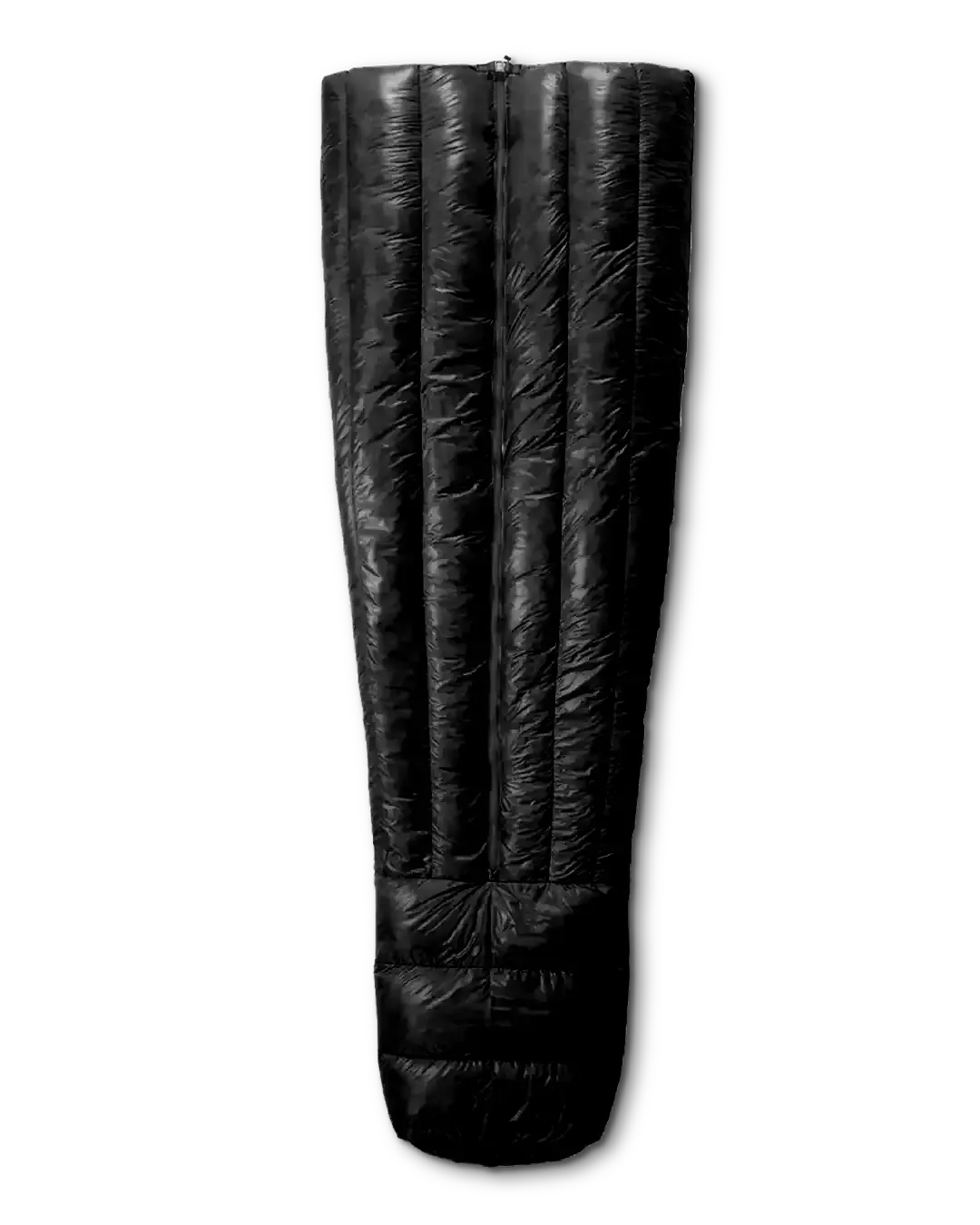
- Lightest Zpacks bag at every rating
- Same price as the Solo Quilt
- Slim sizes from 12.3 oz
- A 3/4 zipper vents less than a full one
- No hood
- Slim sizes fit shoulders up to 50 in only
Zpacks describes the Classic this way:
“Our ultralight Classic Sleeping Bag features a 3/4th length zipper on the bottom, combining the best aspects of a down quilt and a down sleeping bag.”
Zpacks, Classic Sleeping Bag page
Target loft is 2 in at 30°F, 2.5 in at 20°F and 3 in at 10°F. It ships with a roll-top dry bag; prices run from $419 (30°F Slim-Short) to $559.
Check price →Zpacks Zip Around Sleeping Bag
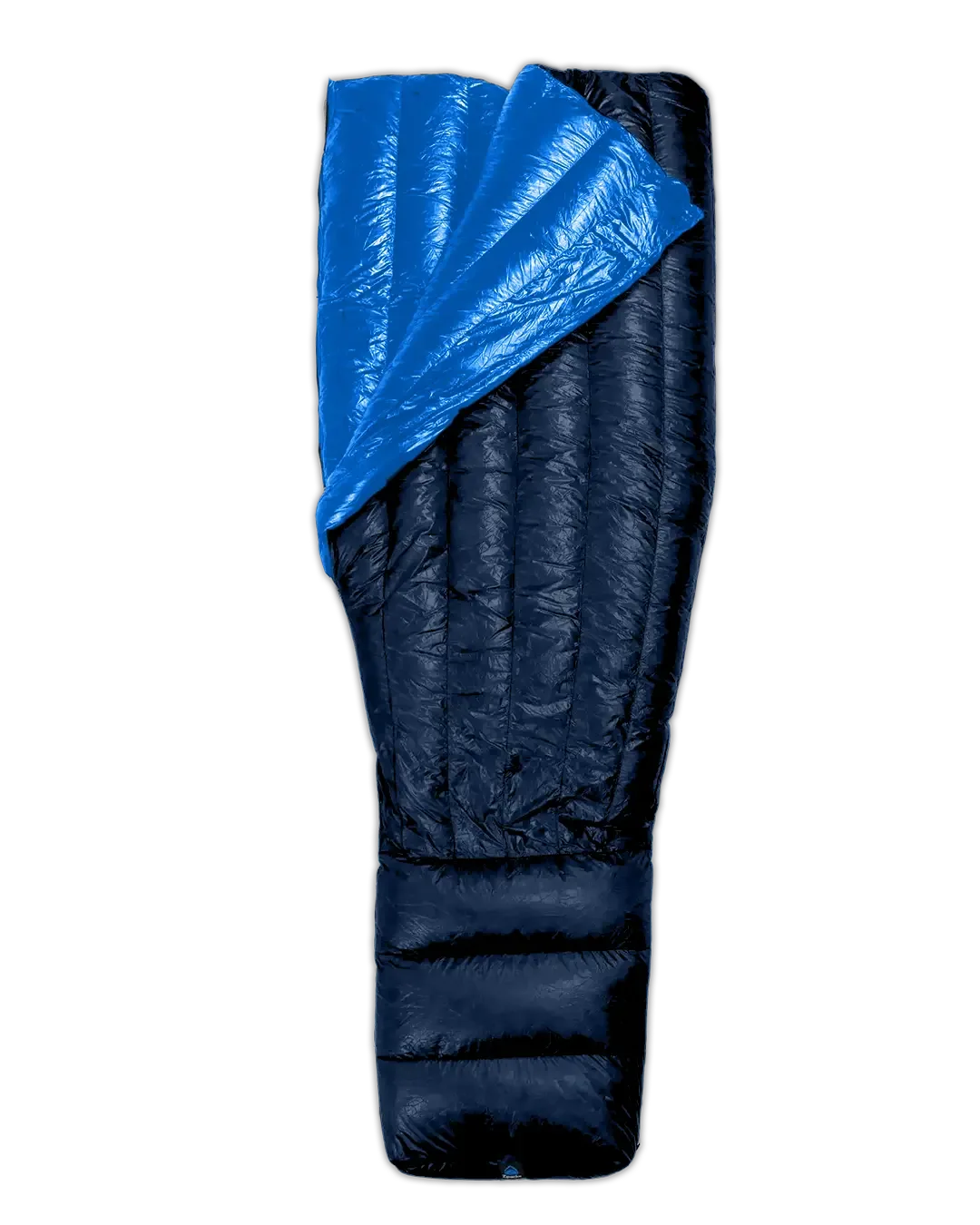
- Opens completely flat
- Draft tube and zipper guard
- Two bags bought since Nov 2024 zip together
- 2.8 oz heavier than the Classic
- $60 more
- No Slim sizes
The Zip Around’s zipper runs the full length of the side and around the footbox. Zpacks says any two Zip Arounds bought in November 2024 or later zip together. At 30°F it runs from 15.7 oz (Standard-Short) to 18.3 oz (Broad-Long); across all ratings and sizes, prices run from $499 to $619.
Check price →Zpacks Mummy Sleeping Bag
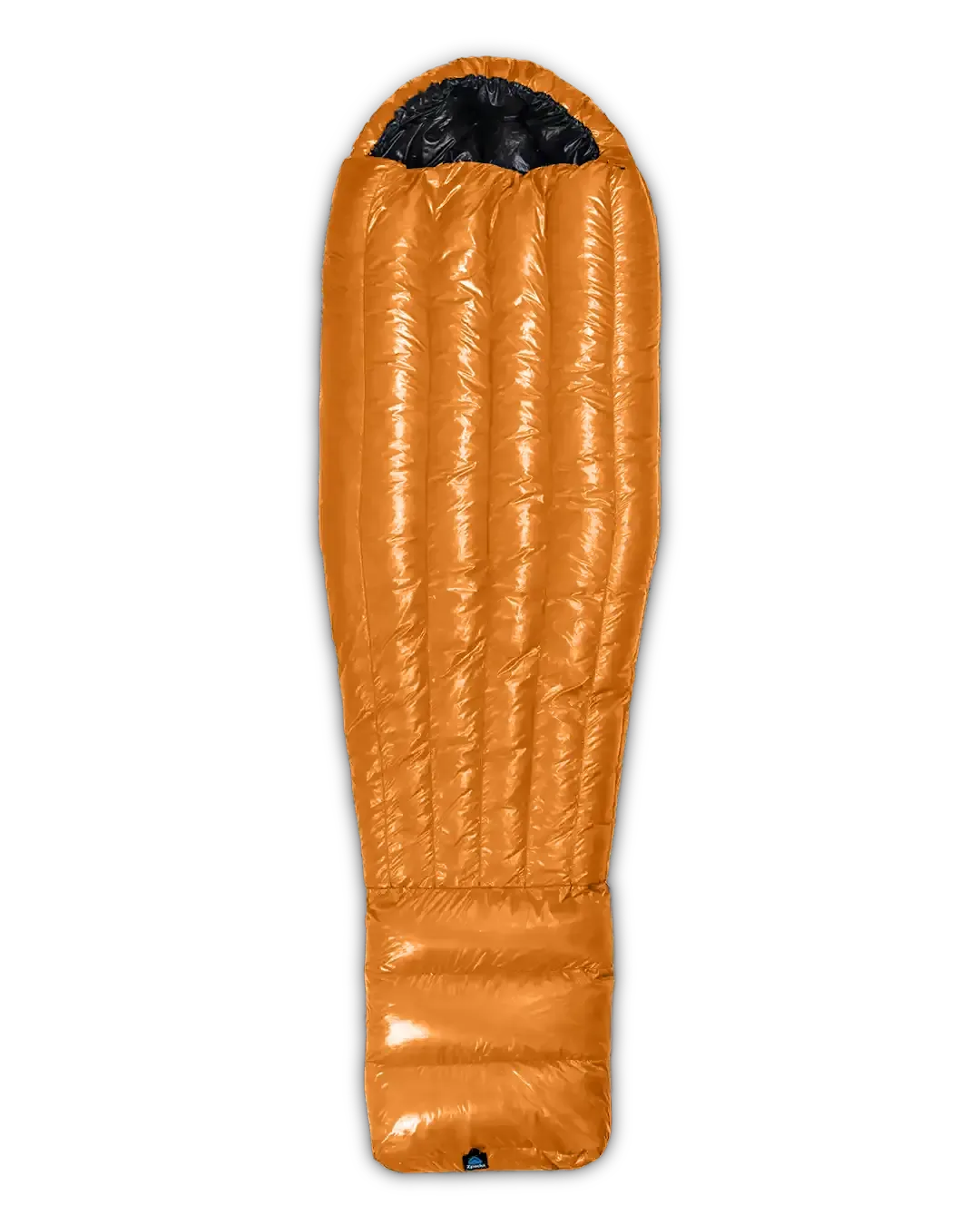
- The only Zpacks bag with a hood
- Most down at each rating
- Full-length zipper
- Heaviest: 1.6 oz over the Zip Around
- No 30°F version
- $579 to $669
The Mummy is the Zip Around with a hood, made in 20°F and 10°F only. At 20°F in Standard-Medium it carries 15.6 oz of down and weighs 23.2 oz.
Check price →A note on the temperature ratings
Zpacks does not ISO-test its bags. In its own words:
“While our sleeping bags and quilts have not been tested for their International Standard Organization (ISO) rating, we estimate, based on feedback and use, that they are closest to the ISO ‘Transition Range.’”
Zpacks, Classic Sleeping Bag page
The ISO transition range sits between the comfort and the limit ratings, so a Zpacks 20°F rating corresponds to somewhere between an ISO-rated bag’s comfort and limit figures, not to its comfort figure.
Which should you buy?
- Lightest: Classic, 13.8 oz at 30°F (Standard-Medium).
- Warm-night flexibility: Zip Around.
- Hood for cold trips: Mummy, 20°F or 10°F.
- No zipper at all: Solo Quilt, 0.5 oz lighter than the Classic for the same price.
FAQ
Which Zpacks sleeping bag is the lightest?
Which Zpacks sleeping bags weigh under 1 lb?
What is the difference between the Classic and the Zip Around?
Are Zpacks temperature ratings ISO tested?
What down does Zpacks use?
The bottom line
Zpacks’ sleeping bags share one fabric and one down, so choose by feature: the Classic is the lightest, the Zip Around adds 2.8 oz for a full zipper, and the Mummy adds 1.6 oz more for a hood. Only the 30°F bags come in under 1 lb.
Related guides
Keep building your system with these closely related guides.
- How to Choose a Quilt Temperature Rating for Thru-Hiking
- NeoAir XLite NXT vs Ether Light XR
- Zpacks: Duplex, Altaplex, Vertice and the Full Lineup
- PCT Gear List: An Ultralight Kit Under 10 Pounds
- Katabatic Gear Quilts: Flex vs Alsek, Palisade and Sawatch
- Backpacking Quilt vs Sleeping Bag: What the Bag Costs You
- Hammock Gear Quilts: Burrow, Incubator and Phoenix Weights
- Enlightened Equipment Revelation vs Enigma, and the Torrid