4 Proven Ultralight Dry Bags and Stuff Sacks to Keep Gear Dry
How we did this: we analyzed the manufacturer-published specifications for 4 products — weight, capacity, price and material — alongside documented design differences. We have not field-tested them.
Organizing a backpack often leads to a creeping base weight as hikers add unnecessary ounces through heavy nylon sacks and redundant closures. Selecting the right ultralight dry bags and stuff sacks ensures critical gear remains protected from moisture without penalizing your shoulders. This guide filters the options down to four proven designs that balance hydrostatic head ratings, material durability, and minimal weight.
- Dyneema Composite Fabric (DCF) offers the best weight-to-waterproofing ratio but costs significantly more than traditional fabrics.
- Drawstring sacks are strictly for organization and will not protect gear from submersion or heavy rain.
- Silnylon remains the best option for hikers who need their stuff sacks to slide easily into the tight voids of a backpack.
- A roll-top closure requires at least three tight folds to create a reliable barrier against moisture.
- Best Overall — Hammock Gear Dry Bags: Hikers seeking maximum weather protection for minimal weight and cost
- Lightest — Adotec Gear Featherweight Drawstring Stuff Sacks: Gram-counting backpackers who strictly need internal organization
- Best for Small Electronics — Hyperlite Mountain Gear Roll-Top Stuff Sacks 3L: Hikers needing a dedicated, bombproof vault for sensitive small items
- Best Value — Gramxpert Silnylon stuffsack: Budget-conscious hikers who prefer slippery fabrics for easy packing
The picks, reviewed in detail
Best Overall
Hammock Gear Dry Bags
- Highly durable 1.3 oz/yd² fabric
- Fully taped seams for water resistance
- Exceptional price point for Dyneema
- Stiff material can create packing voids
- Roll-top hardware adds slight bulk
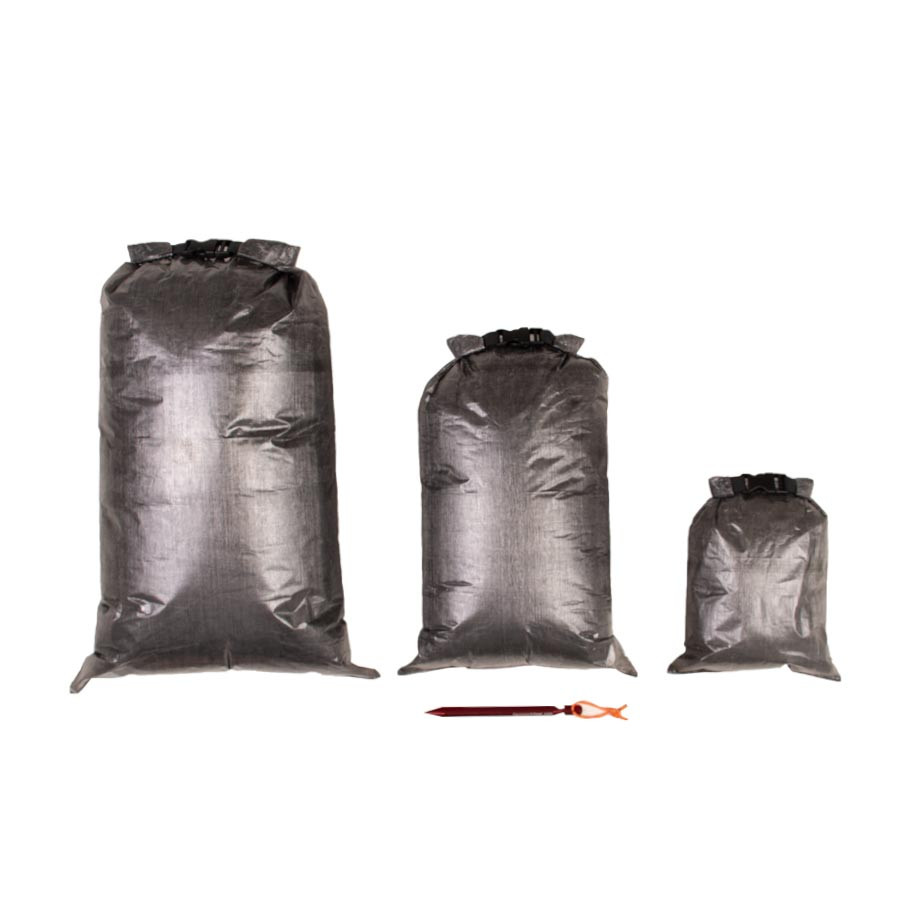
Built from 1.3 oz/yd² Dyneema Composite Fabric, this dry bag prioritizes high water resistance and long-term durability. The heavier fabric weight offers a significant increase in abrasion resistance compared to standard half-ounce canopy fabrics, making it suitable for storing items that might rub against the inside of your pack. Fully taped seams ensure that water cannot seep through the stitching holes, providing a reliable barrier against sustained rain. At just 0.63 ounces, it adds virtually no weight to your base load while offering structural rigidity that makes packing straightforward. The roll-top closure requires a standard three folds to achieve optimal weatherproofing. Because DCF is inherently stiff, the bag holds its shape well when open, allowing for easy loading of quilts or clothing. The $19 price point is highly competitive for a fully taped Dyneema product, offering premium material performance at a budget-friendly tier. One limitation is that the stiffer fabric can create small air pockets inside your pack if not compressed carefully.
Check price →Lightest
Adotec Gear Featherweight Drawstring Stuff Sacks

- Weighs only half an ounce
- Flat-bottom design stands upright
- Highly translucent for finding gear
- Drawstring closure is not waterproof
- 0.5 oz fabric requires careful handling
Utilizing a featherweight 0.5 oz/yd² Dyneema Composite Fabric, this drawstring stuff sack is designed strictly for internal organization rather than weatherproofing. The flat-bottom floor construction allows the sack to stand upright on its own, which significantly streamlines the process of loading loose items like food or cooking gear. It represents an absolute minimalist approach to gear compartmentalization. The drawstring closure provides rapid access but inherently leaves a small opening at the top, meaning it will not protect contents from a dunking or heavy condensation. Because the 0.5 oz DCF is highly translucent, finding specific items inside your pack requires merely a glance rather than unpacking the entire bag. The material does lack the abrasion resistance of heavier variants, requiring careful placement away from sharp objects like tent stakes or stove edges. It serves best as a secondary organizer inside a primary waterproof pack liner. The $31 price tag is steep for a non-waterproof sack, reflecting the premium cost of the raw Dyneema material.
Check price →Best for Small Electronics
Hyperlite Mountain Gear Roll-Top Stuff Sacks 3L

- Perfect 3L size for small kits
- Robust moisture barrier
- Highly durable construction
- Very expensive for the volume
- Closure is bulky on a 3L sack
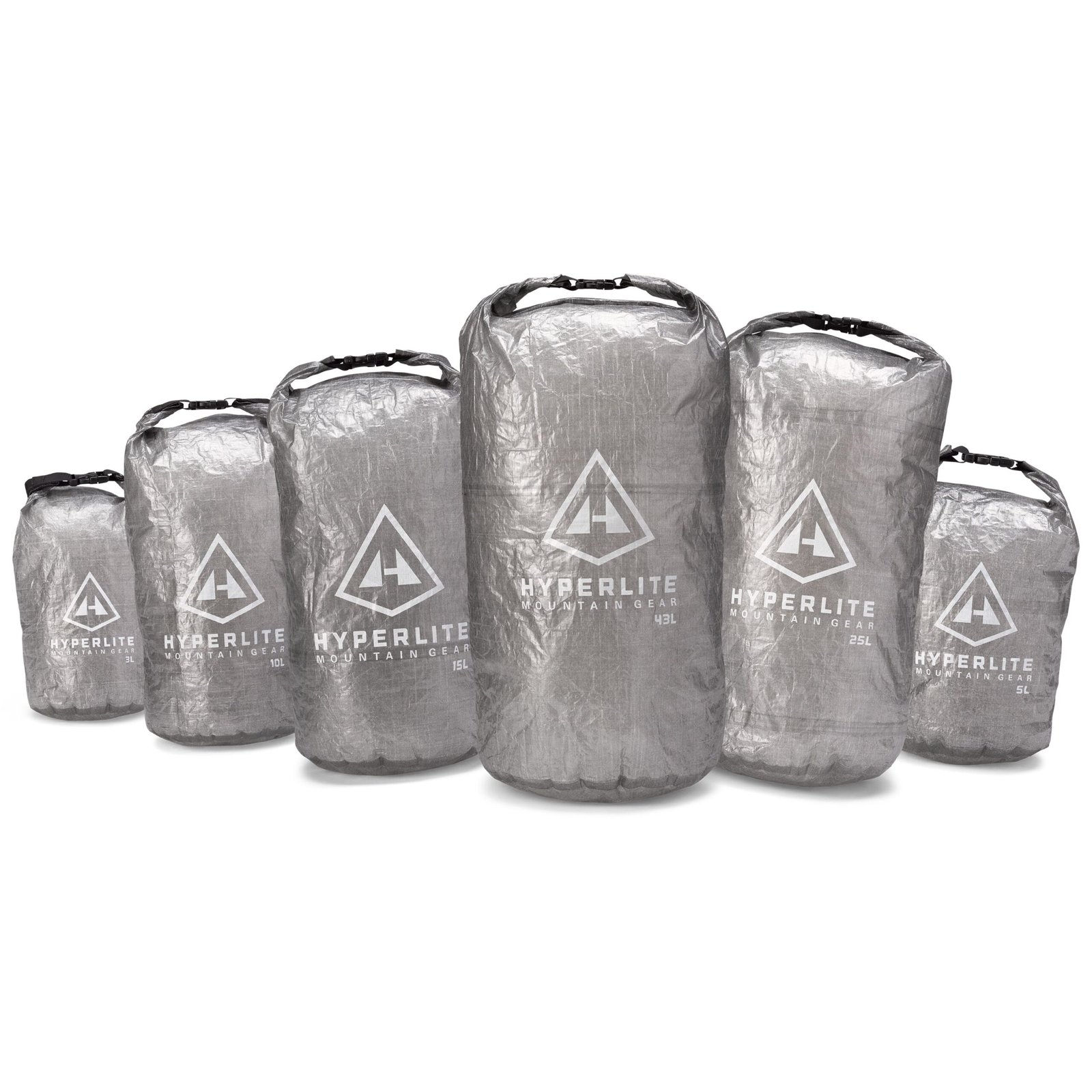
This three-liter roll-top sack provides a dedicated, highly water-resistant vault for critical small items like electronics, first aid supplies, or a compact down jacket. Utilizing a robust Dyneema fabric, it easily withstands the friction of daily packing and unpacking. The roll-top mechanism creates a secure seal against moisture, provided the user carefully executes three tight folds before buckling. A three-liter volume is highly specific, offering just enough space for a minimalist sleep system accessory or a day's worth of dense trail food. The inherent stiffness of the Dyneema material means the bag will not conform perfectly to the empty spaces in your backpack, potentially leaving small voids. At $53, this is a premium investment aimed squarely at hikers who refuse to compromise on either weight or moisture protection for their most sensitive gear. The manufacturer does not publish whether the construction is fully bonded, though the design helps protect gear inside your pack. Users must be mindful that the stiff roll-top closure can be slightly bulky relative to the small overall volume of the sack.
Check price →Best Value
Gramxpert Silnylon stuffsack

- Slick fabric slides into pack voids
- Very affordable price point
- Drawstring allows rapid access
- Not fully waterproof
- Silnylon stretches over time
Constructed from 15-denier silnylon, this budget-friendly stuff sack offers a completely different packing experience compared to rigid composite fabrics. Weighing 0.9 oz, it relies on a simple drawstring closure to keep possessions organized rather than offering a hermetic seal against the elements. The primary advantage of silnylon is its incredibly slick surface, which allows the sack to slide effortlessly against other gear and compress into awkward voids inside a backpack. This slippery nature makes it an excellent choice for packing down sleeping bags or bulky insulating layers. While the fabric itself is waterproof, the drawstring top means the sack as a whole is only water-resistant and should be paired with a pack liner in wet conditions. The starting price of 8,11 € makes it an accessible option for hikers looking to organize their entire pack without a massive financial outlay. Silnylon does have a tendency to stretch slightly over time, which can be beneficial for stuffing but may result in a less uniform shape. It remains a highly practical, low-cost solution for internal pack organization.
Check price →At a glance
| Spec | Dry Bags | Featherweight Drawstr… | Roll-Top Stuff Sacks… |
|---|---|---|---|
| Weight | 0.63 oz | 0.5 oz | 0.8 oz |
| Price | $19 | $31 | $53 |
What to look for
The choice of material dictates both the weight and the physical behavior of a stuff sack inside your backpack. Dyneema Composite Fabric (DCF) is completely waterproof, does not absorb water, and offers an exceptional strength-to-weight ratio. However, DCF is inherently stiff and crinkly, meaning it holds its shape and can create dead air space inside a tightly packed bag. Silnylon, typically made from 15-denier or 30-denier nylon impregnated with silicone, is much more pliable and features a slick surface. This slippery texture allows silnylon sacks to slide past one another easily, helping you compress gear into the small crevices of your pack, though it will absorb a tiny amount of water over time.
Closure systems determine whether a sack is meant for organization or true weather protection. A roll-top closure, secured by a plastic buckle, is required to achieve high water resistance. To work effectively, the top must be folded tightly at least three times to prevent water from migrating through the folds. Drawstring closures use a simple cord and toggle, offering much faster access and a slight weight reduction. Because a drawstring always leaves a small opening at the top of the cinch, these sacks cannot be relied upon to keep gear dry in a downpour or if submerged.
Seam construction is a critical failure point for waterproofing. Traditional sewing punctures the fabric with thousands of needle holes, which water will easily pass through under pressure. For a dry bag to function properly, these seams must be sealed. DCF bags are typically taped with a specialized adhesive backing that bonds permanently to the mylar surface of the fabric. Silnylon cannot be taped effectively with standard adhesives due to the silicone coating, so these seams are usually sealed with a liquid silicone application. If you purchase an unsealed silnylon bag, you will need to apply a product like SilNet yourself.
Volume strategy is a matter of personal packing philosophy. Using many small dry bags allows for meticulous organization, making it easy to locate your stove, first aid kit, or electronics without emptying your entire pack. However, multiple small bags add redundant weight through extra buckles and fabric, and their individual shapes can lead to inefficient packing. The alternative is using one large pack liner for all critical dry gear—like your quilt and spare clothes—and using ultra-lightweight, non-waterproof drawstring sacks strictly to keep smaller items from shifting around.
- Hydrostatic Head Rating: Check the fabric's water resistance; aim for at least 15,000mm if relying on it for critical moisture protection.
- Seam Sealing: Verify if the seams are fully taped or welded, as stitched seams without sealing will leak immediately.
- Closure Hardware: Inspect the size of the buckle on roll-top bags; oversized buckles add unnecessary weight to low-volume sacks.
- Shape and Cut: Look for flat-bottom or block-shaped designs, which stand upright and pack more efficiently than simple flat envelopes.
- Fabric Weight: For DCF, ensure the weight matches the use case; 0.5 oz/yd² is for gentle organization, while 1.0 oz/yd² or higher is needed for abrasion resistance.
How to choose
Selecting the right dry bag depends entirely on your packing style and budget constraints. Gram-counting minimalists who use a waterproof pack liner should opt for featherweight 0.5 oz DCF drawstring sacks to organize gear without adding bulk. Hikers expecting constant rain or frequent river crossings need the security of a fully taped, roll-top Dyneema bag to protect critical insulation. If you struggle with packing your backpack efficiently, the slippery nature of silnylon stuff sacks will help your gear settle into tight spaces much better than rigid composite fabrics. Budget-conscious backpackers should lean toward silnylon, which offers excellent utility at a fraction of the cost of Dyneema. Always match the closure type to the item's vulnerability: roll-tops for down quilts and electronics, drawstrings for cooking gear and tent bodies.
FAQ
Do I need a dry bag or a stuff sack?
Are drawstring stuff sacks waterproof?
How many dry bags do I need for a thru-hike?
What is the difference between DCF and silnylon for stuff sacks?
Can I use an ultralight dry bag as a bear bag?
How do I repair a tear in a Dyneema dry bag?
The bottom line
For the optimal balance of weight, weather protection, and cost, the 0.63 oz Dyneema Dry Bags stand out as the clear winner. They provide the fully taped seams and roll-top security necessary for critical gear while maintaining a highly competitive price point. Hikers strictly seeking internal organization without the need for waterproofing will find the Featherweight Drawstring Stuff Sacks to be the most efficient, minimalist option available.
Related guides
Keep building your system with these closely related guides.
- Ultralight Dry Bags and Stuff Sacks: The Complete Guide
- How to Choose Dry Bags and Stuff Sacks for Ultralight Backpacking
- Trekking Poles
- Lighting
Further reading
Authoritative sources to go deeper on the topics above.