Ultralight Backpacking Base Weight: The Complete Guide

Base weight is the foundational metric of ultralight backpacking, dictating gear selection, physical strain, and daily mileage. This guide defines standard measurement protocols, categorizes weight thresholds, and explains how to accurately audit a pack system to achieve a lighter load.
- Base weight includes all gear inside the pack, excluding consumables like food, water, and fuel.
- The standard threshold for an ultralight base weight is strictly under 10 pounds.
- Accurate measurement requires a digital scale and meticulous tracking of every individual item.
- Reducing base weight safely requires balancing weight savings with environmental conditions and personal safety.
Defining Base Weight: The Industry Standard
Base weight is the static mass of the backpack and all its contents, strictly excluding consumables. It serves as the primary metric for gear optimization because it is the only fully controllable variable prior to a trip. Total pack weight fluctuates wildly based on daily water carries and food consumption, making it useless for tracking gear efficiency. Base weight isolates the equipment itself, allowing a hiker to analyze their choices independently of route length or water availability.
The strict exclusion of consumables—food, water, and fuel—is necessary for comparative analysis. If a hiker wants to compare their kit against a standardized norm or another hiker's setup, they require a static number. Edge cases often confuse this boundary. Bear spray, for example, is frequently debated. As a non-consumed safety item, standard accounting places it squarely in base weight. Similarly, the empty weight of a fuel canister is base weight, while the compressed gas inside is consumable.
A common error is compartmentalizing base weight based on where an item sits. Hikers sometimes exclude items strapped to the outside of the pack, such as a foam sleeping pad, wet tent fly, or microspikes, arguing they are not 'in' the main compartment. Base weight encompasses anything carried by the pack structure, regardless of internal or external attachment. Failing to account for this distorts the true load requirements of the backpack, frequently leading to poor pack selection and suspension failure.
- Bear canisters: The hard-sided container is always included in base weight, whereas the food inside is consumable.
- Fuel systems: The empty metal canister or bottle is base weight; the fuel inside is consumable.
- Camera gear: Included in base weight even if carried on a shoulder strap capture clip, as it is load borne by the pack infrastructure.
- Water filtration: The filter device is base weight, though water trapped inside the element after use is technically consumable weight.
- Hygiene and First Aid: The containers and bags are base weight, while the pills, ointments, and toothpaste are technically consumables, though often weighed together for simplicity.
The Weight Thresholds: Traditional to Super Ultralight
The traditional baseline hovers broadly around the 20- to 30-pound mark, a relic of heavy canvas, internal frames with thick aluminum stays, and overbuilt synthetic sleeping bags. The transition into the 'Lightweight' category, typically defined as 10 to 20 pounds, represents the adoption of modern nylon fabrics and down insulation without sacrificing the standard double-wall tent or framed pack paradigm. This is where the majority of modern long-distance hikers sit, optimizing for comfort while shedding archaic bulk.
The Ultralight (UL) threshold is strictly defined as a base weight under 10 pounds. Hitting this mark requires a fundamental shift in gear philosophy, moving away from specialized single-use items toward multi-use systems. It demands replacing conventional double-wall shelters with single-wall Dyneema or silpoly setups, swapping sleeping bags for quilts, and utilizing frameless or minimal-frame backpacks. The 10-pound limit forces the user to evaluate the necessity of every ounce and accept reduced camp comfort.
Super Ultralight (SUL) drops the ceiling to 5 pounds. This bracket is heavily dependent on favorable environmental conditions and extreme user discipline. SUL setups often rely on minimal tarp shelters, half-length foam pads, and the omission of a dedicated cook system entirely. It is less a permanent packing strategy and more a specialized approach for specific, predictable routes where the margin for error regarding weather and temperature is wide enough to safely strip the kit down to its barest essentials.
- Traditional (>20 lbs): Maximizes camp comfort and redundancy at the cost of high caloric expenditure and joint strain.
- Lightweight (10-20 lbs): Balances modern durable materials with traditional shelter mechanics and robust pack suspension.
- Ultralight (<10 lbs): Sacrifices structural framing and camp conveniences to optimize entirely for miles-per-day efficiency.
- Super Ultralight (<5 lbs): Eliminates almost all redundancy, requiring pristine weather windows and advanced site selection skills to maintain safety.
- Extreme Ultralight (XUL): A niche sub-category under 3 pounds, generally utilizing mylar bivvies and frameless running vests for fast-packing specific endurance challenges.
Worn Weight vs. Packed Weight
The delineation between worn weight and base weight is the most manipulated boundary in pack weight accounting. Worn weight consists of the items physically supported by the hiker's body rather than the backpack. The standard definition includes the clothes currently worn, footwear, and trekking poles in active use. Because these items do not contribute to the load carried by the pack's suspension system, they are excluded from the base weight metric, which is primarily used to determine pack volume and frame requirements.
The system breaks down around edge cases and 'pocket packing.' Experienced hikers understand that shifting heavy items like smartphones, power banks, or dense snacks into pants or jacket pockets does not reduce the caloric effort required to move them up a mountain. In fact, weight carried on the extremities, such as heavy boots, requires significantly more energy to move than weight carried close to the spine. While stuffing pockets technically lowers the spreadsheet base weight, it entirely defeats the biomechanical purpose of load reduction.
Environmental fluctuations further complicate this boundary. A heavy fleece or insulated jacket worn at the start of a cold morning is worn weight. Two hours later, when the temperature rises and the jacket goes into the pack, it becomes packed weight. A rigid gear list must account for the maximum potential base weight—the scenario where the hiker is wearing only their base layer and carrying all other insulating pieces. Failing to account for this transition leads to undersized packs that cannot comfortably carry the extra volume and mass during the heat of the day.
- Footwear: Always categorized as worn weight, but heavily influences energy expenditure more than pack weight.
- Trekking poles: Counted as worn weight when in hand, but must be factored into pack volume and weight for technical sections requiring hands-free scrambling.
- Electronics in pockets: Should be counted as base weight to prevent artificially deflating the pack weight metric on paper.
- Layering systems: The heaviest configuration of carried clothing dictates the true base weight requirement for pack selection.
- Fanny packs: Often treated as worn weight by hikers, but functionally act as an auxiliary pack system and should be tracked accordingly.

Consumables and Total Skin-Out Weight
Base weight provides a static baseline, but consumables dictate the dynamic load a hiker actually experiences on trail. Water, food, and fuel fluctuate continuously throughout a trip, often representing a larger percentage of pack weight than the gear itself. Proper management of these categories requires shifting focus from static pack configuration to route logistics and caloric density. Hikers who invest heavily in ultralight gear often negate those gains by carrying redundant water or low-density foods out of anxiety rather than calculated need.
Skin-out weight, or Full Skin-Out (FSO), represents the holistic mechanical burden placed on the hiker's joints and musculature. This metric accounts for the base weight, consumables, and everything worn on the body, from trail runners to trekking poles. Evaluating skin-out weight prevents the common accounting trick of shifting heavy items from the pack to the pockets to achieve a superficial ultralight base weight. The physical toll on the body remains identical whether a heavy smartphone is in a hipbelt pocket or a fleece jacket pocket.
A rigid focus on base weight often masks inefficiencies in consumable management. Carrying a sub-ten-pound base weight is easily undone by poor water logistics, such as carrying three liters through an environment with abundant, mapped water crossings. Similarly, fuel efficiency involves complex tradeoffs; utilizing a narrow, heavy titanium pot may save initial weight but drastically reduce stove efficiency, requiring the hiker to carry larger, heavier fuel canisters to achieve the same number of boils over a multi-day trip.
- Targeting a nutritional density of 100 to 125 calories per ounce to minimize food weight.
- Repackaging commercial dehydrated meals into lighter bags to eliminate heavy, bulky foil packaging.
- Mapping water sources meticulously to carry only what is necessary between reliable fills.
- Matching fuel canister capacity precisely to the expected number of boils and ambient temperatures.
- Accounting for the hidden water weight absorbed by filters, sponges, and hydration bladders post-use.
Measurement Tools and Tracking Systems
The transition to ultralight backpacking begins with empirical measurement. The foundational tool is a digital kitchen scale capable of measuring in single grams or fractions of an ounce. Weighing every individual component of a kit forces an objective confrontation with reality; assumptions about gear weight are frequently inaccurate. A hanging luggage scale serves as a secondary tool for verifying total pack weight, but the granular data required for systemic weight reduction requires the precision of a flat digital scale.
Physical weighing must be paired with digital tracking systems to be effective. Dedicated inventory applications allow hikers to input their entire gear closet and build modular pack lists. This digital visualization, often utilizing pie charts to represent weight categories, instantly highlights areas of disproportionate bulk. Tracking software shifts the process from guesswork to targeted auditing, allowing a hiker to model the impact of leaving a specific item behind before ever packing their bag.
The methodology of the audit is as critical as the tools used. The most common error in tracking is relying on manufacturer-stated weights. Production variances, fabric coatings, and the inclusion or exclusion of accessories mean that a shelter straight from the factory rarely matches its advertised specifications. Furthermore, items must be weighed in their actual trail configuration, accounting for added guylines, seam sealer, dirt accumulated on stakes, and replacement insoles in footwear.
- Weighing every item independently, down to individual tent stakes and dry bags.
- Creating rigid digital categories (shelter, sleep system, cook kit) to isolate weight inefficiencies.
- Building season-specific modular pack lists within tracking software to avoid carrying winter gear in summer.
- Stripping redundant packaging, tags, and excessive strap lengths before recording final weights.
- Using measured weights exclusively, ignoring manufacturer specifications or pre-production claims.
The Big Three: Foundation of Base Weight Reduction
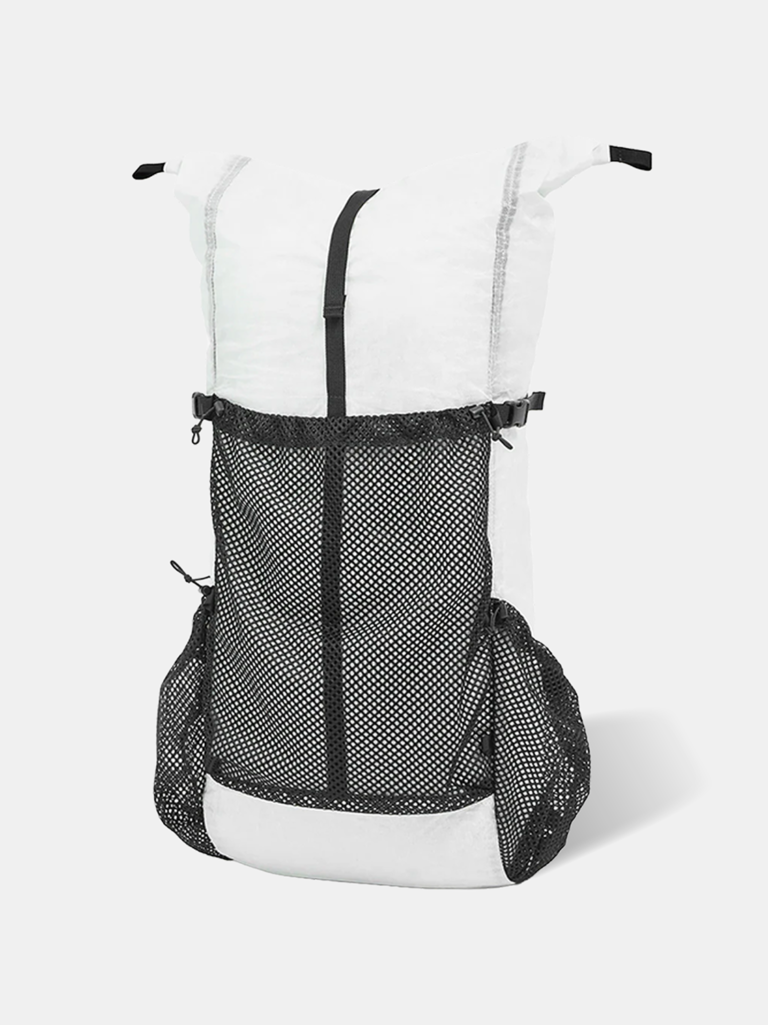
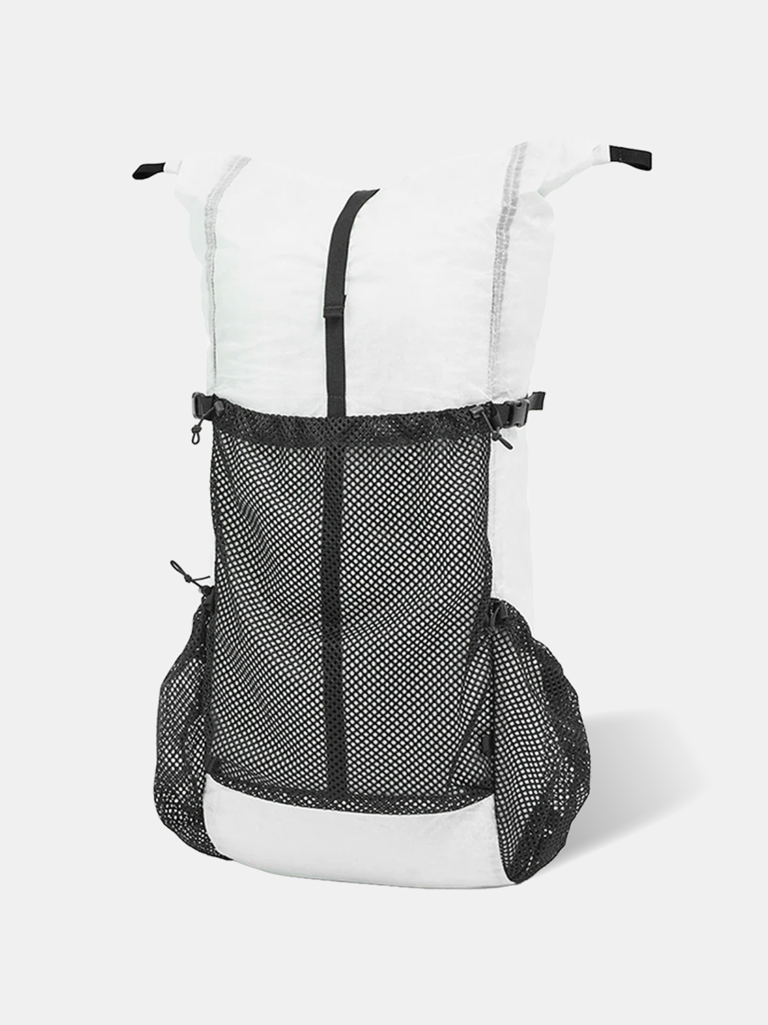
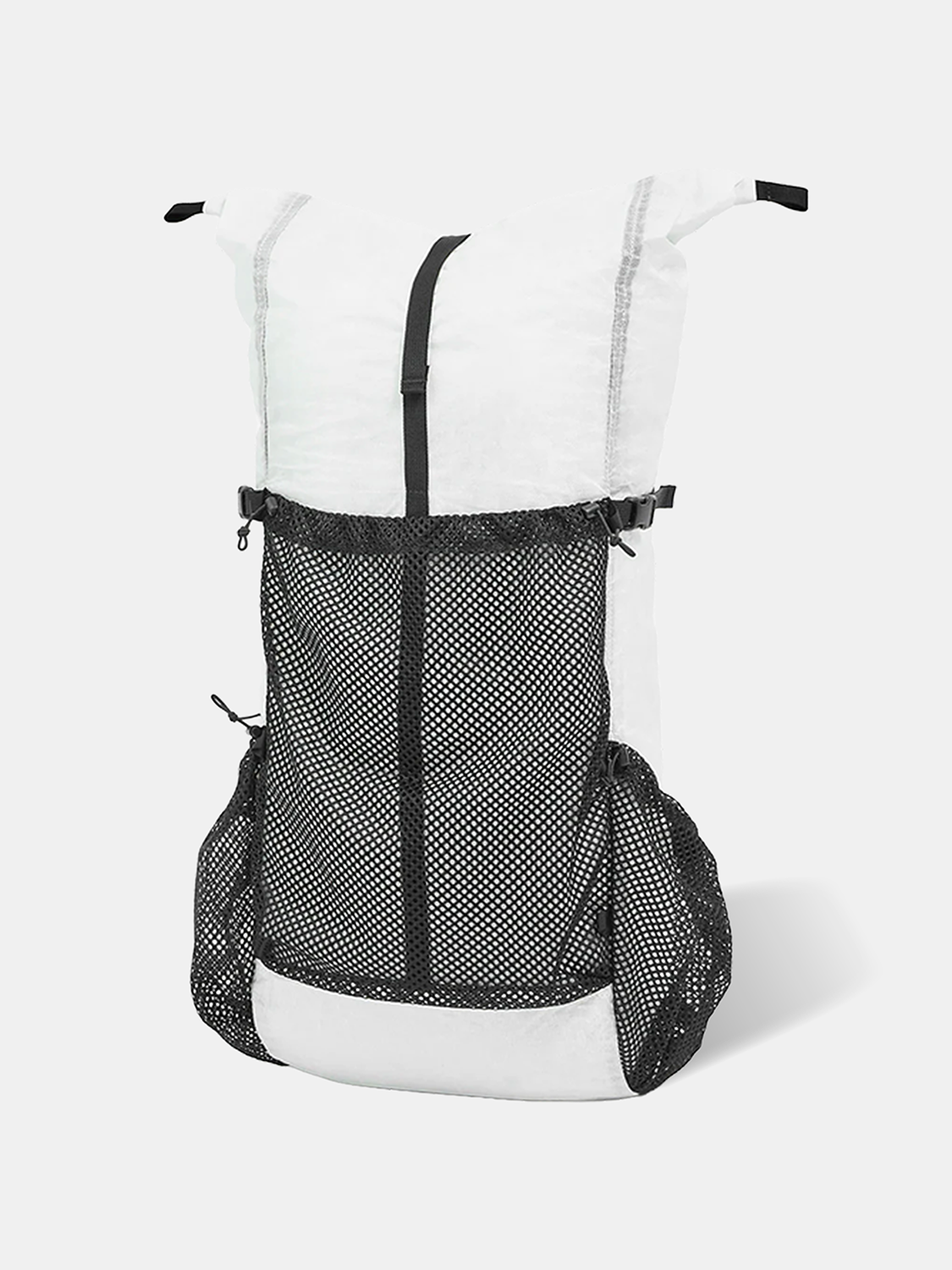
The shelter, sleep system, and backpack represent the largest static weights in any kit and offer the highest yield for weight reduction. Upgrading these components, often referred to as the Big Three, is mandatory for achieving traditional or super ultralight base weights. The transition typically involves moving from heavy, multi-pole freestanding tents to trekking-pole-supported shelters, and from traditional synthetic mummy bags to high-fill-power down quilts. Crucially, the backpack must be replaced last; an ultralight, frameless pack relies on the reduced volume and weight of the optimized shelter and sleep system to carry comfortably.
Shelter optimization requires handling the tradeoffs between double-wall and single-wall designs, as well as fabric choices like silpoly versus Dyneema Composite Fabric (DCF). Single-wall DCF shelters eliminate the weight of an inner mesh body and do not absorb water, but they require precise site selection and ventilation management to mitigate internal condensation. The reliance on trekking poles for structure eliminates the need for dedicated tent poles, shifting structural weight to items already in use.
Sleep systems demand strict adherence to required insulation levels rather than relying on heavy, general-purpose bags. The adoption of the backpacking quilt eliminates the compressed, thermally useless insulation trapped beneath the hiker, saving considerable weight and bulk. This must be paired with an appropriate sleeping pad, as the pad provides all underneath insulation. The balancing act involves matching the pad's R-value and the quilt's temperature rating exactly to the expected environmental conditions, minimizing redundant thermal capacity.
- Utilizing trekking poles for shelter structure to eliminate the weight of dedicated aluminum or carbon poles.
- Transitioning to down quilts to remove heavy zippers, hoods, and crushed bottom insulation.
- Sizing the backpack volume precisely to the kit, typically utilizing sub-40-liter capacities to enforce discipline.
- Selecting shelter fabrics based on water absorption rates and stretch, recognizing DCF's static nature versus nylon's sag.
- Matching sleeping pad R-values strictly to overnight lows rather than carrying four-season pads year-round.
Cost vs. Weight Ratio: Strategic Upgrades
The pursuit of a lower base weight operates strictly on the law of diminishing returns. Transitioning from traditional backpacking gear to lightweight alternatives often yields substantial weight reductions for a moderate financial outlay. However, crossing the threshold from ultralight to super ultralight requires exponentially higher capital for increasingly marginal gains. Hikers must evaluate gear replacements through the rigorous metric of cost per ounce saved to allocate their budgets efficiently.
Evaluating the cost-to-weight ratio dictates a clear hierarchy for upgrading equipment. The most significant initial investments should target primary load-bearing and shelter items, where switching to advanced materials can eliminate multiple pounds simultaneously. Conversely, spending premium prices to replace already functional titanium accessories with carbon fiber alternatives usually results in a poor financial return. Strategic upgrades require analyzing the entire gear list to find the most inefficient items rather than simply buying the lightest available option in every category.
The high cost of specialized ultralight gear is driven heavily by material science and manufacturing complexities. Fabrics such as Dyneema Composite Fabric (DCF) or UltraWEAVE rely on complex lamination or weaving processes using ultra-high-molecular-weight polyethylene. Constructing gear from these materials often requires specialized taping and bonding rather than traditional sewing, which dramatically increases labor costs. Hikers pay a premium not just for the raw materials, but for the specialized construction techniques required to make these advanced fabrics functional under tension.
- Target major categories like shelters and sleep systems before optimizing smaller accessories.
- Calculate the specific dollar-to-ounce metric for every prospective purchase to ensure efficient spending.
- Exhaust zero-cost weight reductions, such as trimming excess straps or removing redundant items, before buying new gear.
- Invest in multi-use items that can eliminate entire standalone components from the pack.
- Avoid replacing high-wear items like trail runners purely for weight savings, as frequent replacements negate the long-term investment.

Seasonal and Environmental Adjustments
A static base weight is a myth; gear lists must remain fluid to accommodate varying environmental demands. An optimized loadout for a mid-summer thru-hike in a temperate forest will systematically fail in alpine terrain or during shoulder seasons. Adjustments are mandated by shifts in temperature gradients, precipitation norms, and regional regulations, requiring the hiker to swap core components to maintain baseline safety and thermal regulation.
Scaling insulation for colder conditions introduces unavoidable weight penalties. Transitioning from a summer-weight quilt to a lower-temperature sleeping bag, combined with a higher R-value sleeping pad, alters both base weight and required pack volume. While utilizing high fill-power down optimizes the warmth-to-weight ratio, colder conditions also demand additional active and static clothing layers, further inflating the total skin-out weight.
Regional regulations and specific terrain hazards dictate equipment requirements that override base weight goals. Hard-sided bear canisters, mandated in numerous wilderness areas, add significant, non-negotiable bulk and weight that fundamentally alters pack balance. Similarly, routes featuring prolonged snow travel or glacial traverses require traction aids, specialized ice axes, and robust shelter stakes, shifting the loadout entirely away from super ultralight thresholds.
Shelter geometries and materials must adapt to prevailing weather patterns. A minimalist flat tarp constructed of ultrathin membrane fabrics serves well in sheltered forests but provides inadequate protection against sustained alpine winds or heavy snow loading. Transitioning to enclosed, aerodynamic shelters constructed from higher-denier woven fabrics or robust laminates is necessary to manage condensation and mechanical stress in volatile environments.
- Bear canister mandates impose immediate and non-negotiable weight additions to any gear list.
- Dropping temperatures require escalating insulation values in both sleep systems and static clothing layers.
- High-exposure environments demand enclosed shelters capable of shedding wind and multi-directional precipitation.
- Alpine or shoulder-season routes necessitate the inclusion of traction aids and specialized safety hardware.
- Arid climates require significantly expanded water carrying capacity and robust filtration for scarce, silty sources.
The 'Stupid Light' Trap and Common Mistakes
The 'stupid light' trap occurs when the pursuit of weight reduction compromises baseline safety, mechanical reliability, or critical physiological needs. This threshold is crossed when hikers select materials that are fundamentally inadequate for the terrain. Utilizing ultra-thin, low-denier fabrics in environments characterized by abrasive granite or dense brush frequently leads to catastrophic gear failure, transforming a minor inconvenience into an immediate structural failure.
Minimizing the margin of error is the defining symptom of overly aggressive weight reduction. Stripping a first aid kit to nothing but tape, or carrying a shelter system that requires perfect weather to function, assumes an ideal scenario that the wilderness rarely provides. Relying on perfect conditions, rather than adequate preparation, leaves the hiker highly vulnerable to sudden weather shifts, minor injuries, or unexpected navigation delays.
Artificial spreadsheet optimization often results in dangerous caloric and hydration deficits. Reducing fuel reserves, water capacity, or dense food weight to hit a specific base weight bracket leads directly to physical exhaustion on the trail. A remarkably low base weight offers no practical advantage if the hiker lacks the caloric density or the robust water processing tools required to sustain output under physical stress.
- Eliminating essential navigation or emergency communication devices to save marginal ounces.
- Carrying inadequate insulation based on optimistic interpretations of projected weather forecasts.
- Utilizing frameless backpacks for total loads that exceed the suspension system's functional capacity, leading to strain.
- Packing insufficient rain gear in regions historically prone to sudden, severe, and prolonged precipitation.
- Failing to carry adequate water capacity or backup purification methods for remote, dry stretches.
The Future of Gear Weight Standards
The progression of base weight standards is currently constrained less by design ingenuity and more by material science. Traditional woven nylons and standard laminate composites have largely reached their optimization ceiling. The next frontier relies on ultra-high-molecular-weight polyethylene (UHMWPE) blends and advanced composites like ALUULA and Spectra. These materials achieve exceptional tensile strength and abrasion resistance at a fraction of the denier weight of historical fabrics. By replacing standard polyester face fabrics with these advanced polymers, manufacturers can strip ounces from pack bodies and tent canopies without catastrophically compromising puncture resistance.
However, integrating these materials introduces new construction tradeoffs. Advanced laminates often resist traditional sewing and require specialized ultrasonic welding or proprietary taping methods to maintain structural integrity and waterproofing. This shift moves the failure point from the fabric itself to the seams and load-bearing junctions. For the experienced hiker, this means that evaluating a next-generation minimalist pack or shelter requires looking past the face fabric to examine how the manufacturer manages stress distribution at harness attachment points and guy-outs. A material that is theoretically highly durable is useless if the bonding agent degrades under prolonged UV exposure or repeated mechanical flexing.
As the baseline for a standard ultralight kit drifts closer to the super-ultralight threshold, hiker behavior and skill must adapt to match the margins of this new gear. Extremely low-weight fabrics inherently possess less stiffness, altering how a frameless pack carries a load or how a shelter sheds wind. A common mistake among early adopters of next-gen fabrics is assuming that a lighter material behaves identically to its heavier predecessor. Hikers pushing these new boundaries must refine their packing strategies to create internal structure and adopt more precise site-selection techniques, as the structural forgiveness of the gear itself is minimized to save weight.
- Transition from mechanical stitching to structural adhesives and welded seams to eliminate water ingress and thread degradation.
- Integration of hybrid fabrics that map different composite weights to specific wear zones, reducing overall weight while protecting high-friction areas.
- Increased reliance on modularity, allowing hikers to strip structural components for shorter trips and reattach them when conditions demand.
- Shift in durability expectations, requiring users to accept shorter gear lifespans in exchange for absolute minimum base weights.
- Development of highly localized structural reinforcements, abandoning full-panel thickness in favor of targeted load-bearing grids.
FAQ
Do trekking poles count toward base weight?
Does a bear canister count as base weight or consumables?
How accurate does my gear scale need to be?
The bottom line
Mastering base weight is less about hitting a specific number and more about understanding the exact composition of your gear. Use these measurement standards to systematically audit your kit, making informed decisions that balance weight, safety, and comfort on the trail.
Related guides
Keep building your system with these closely related guides.
- Ultralight Weight Measurement Standards: The Complete Guide
- How to Reduce Your Backpacking Base Weight Step by Step
- Ultralight Backpacks: 9 Packs Compared per Liter and Load
- How to Reduce Backpack Weight by 10 Lbs: A Step-by-Step Guide
- 5 Best Ultralight Dog Gear Items to Cut Pack Weight
- Editorial Standards
Further reading
Authoritative sources to go deeper on the topics above.