Tranquil campsite in the Uinta Mountains, Utah under a clear blue sky.

4 Best Ultralight 2-Person Tents That Won’t Fail Your Partner

We may earn a commission from links on this page. It never affects our verdicts.

Sharing a tent with another person cuts per-person weight, but only if the tent itself is genuinely built for two rather than a stretched-out solo shelter. We narrowed this list to true two-person ultralight designs, weighed practicality for couples and hiking partners against raw weight, and cut anything that could not honestly qualify as a dedicated 2P shelter or that failed the weight-for-category bar.

Key takeaways
  • The X-Mid Pro 2+ and Duplex Pro sit at the top of the category, both hovering right around 19 oz for a full double-wall or single-wall two-person Dyneema shelter
  • Trekking-pole tents dominate this weight class; if you are not already hiking with poles, factor that into total system cost
  • The Deschutes is a tarp, not an enclosed tent, so it belongs on this list only for couples willing to trade weather protection for weight and price
  • Floor space and vestibule count matter more for couples than solo hikers, since two packs and two sets of wet gear need somewhere to go
Our top picks
  • Best Overall — Durston X-Mid Pro 2+: couples who want the most livable two-person Dyneema shelter without stepping up to a heavier double-wall tent
  • Lightest — Zpacks Duplex Pro: weight-obsessed pairs who have already mastered pitching a trekking-pole shelter and want the absolute minimum grams
  • Best Value — Six Moon Designs Deschutes Ultralight Backpacking: budget-conscious pairs comfortable trading full enclosure for a simple, ultralight tarp setup
  • Best for Solo Hikers Who Occasionally Share — Durston X-Mid Pro 1: a hiker who solos most trips but wants a shelter that can flex to accommodate a partner on shorter trips

The picks, reviewed in detail

Best Overall

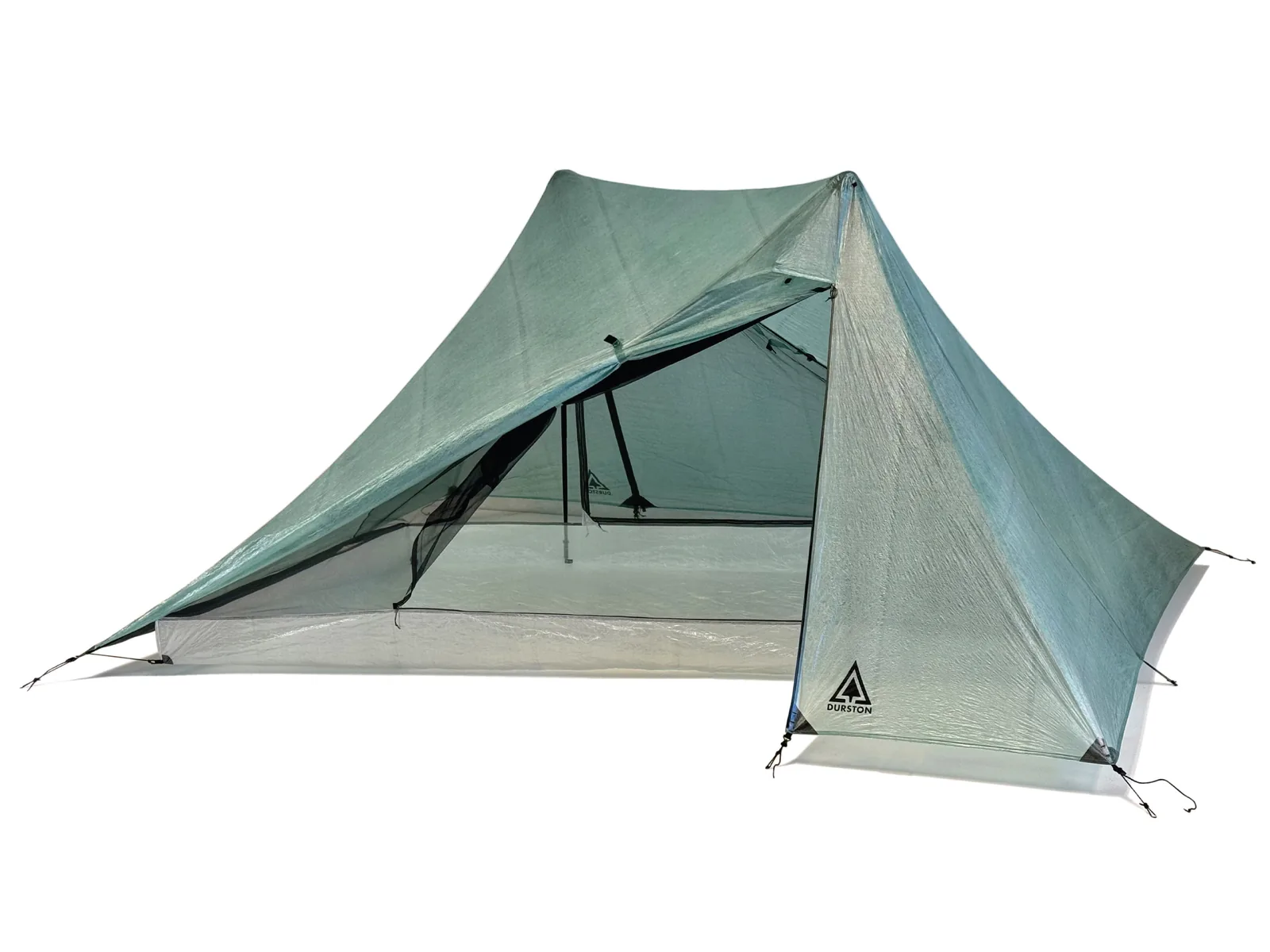
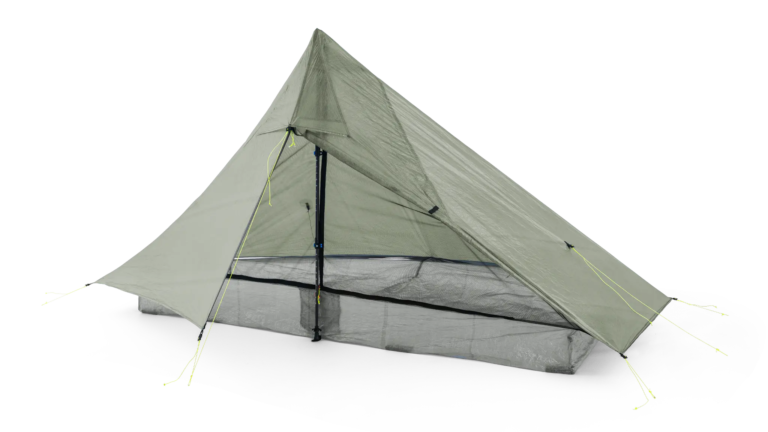
Durston X-Mid Pro 2+

Durston X-Mid Pro 2+
19.2 oz$719
Weight
19.2 oz
Sleeps
Price
$719
Material
Best for couples who want the most livable two-person Dyneema shelter without stepping up to a heavier double-wall tent
Pros
  • Dual vestibules and dual doors, so neither partner has to climb over the other
  • X-Mid geometry pitches taut with a simple two-pole setup
  • 19.2 oz is exceptional for a shelter with this much interior volume
Cons
  • At $719 it is a serious investment for a tent two people will still need to agree on
  • Dyneema fabric demands more careful site selection and storage than silnylon

The X-Mid Pro 2+ takes the geometry that made the original X-Mid Pro 2 a category favorite and scales it up, which matters more than it sounds for two adults who actually want to sit up, change clothes, or wait out weather without touching elbows. The offset pole structure creates two full-size vestibules and two doors, so each person gets independent entry and exit and a place to stash a wet pack without reaching over a sleeping partner. Pitching follows the same logic as the smaller X-Mid: stake the four corners, insert two trekking poles, and the asymmetric design tensions itself into a stable, low-profile shape that sheds wind well for a non-freestanding tent. At 19.2 oz it is doing something unusual, delivering genuine two-person double-wall-style separation of fabric from mesh at a weight that undercuts many solo tents. The tradeoff is the price and the fabric: Dyneema composite does not stretch the way silnylon does, so pitch tension has to be right the first time, and repairs or storage habits need more care. This is the tent for a couple who has already bought into ultralight philosophy and wants the least weight penalty for hiking together rather than solo.

Check price →

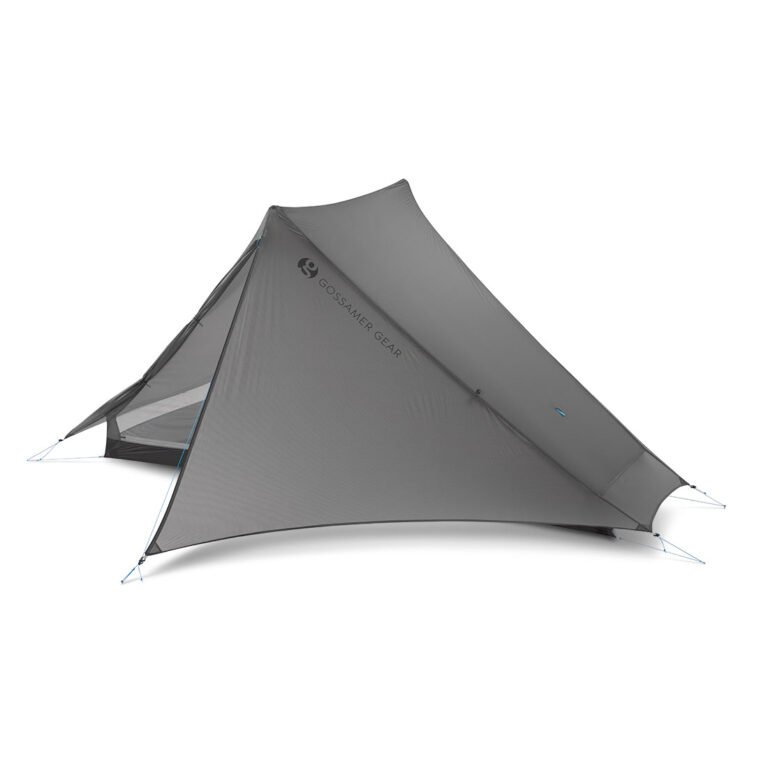
Lightest

Zpacks Duplex Pro

Zpacks Duplex Pro
19 oz$799
Weight
19 oz
Sleeps
Price
$799
Material
Dyneema
Best for weight-obsessed pairs who have already mastered pitching a trekking-pole shelter and want the absolute minimum grams
Pros
  • 19 oz is the lightest true two-person shelter on this list
  • Updated Dyneema construction from a design with over a decade of refinement behind it
  • Simple two-pole pitch keeps setup fast once dialed in
Cons
  • $799 is the highest price point here
  • Single-wall Dyneema construction means condensation management is on the user, not the tent

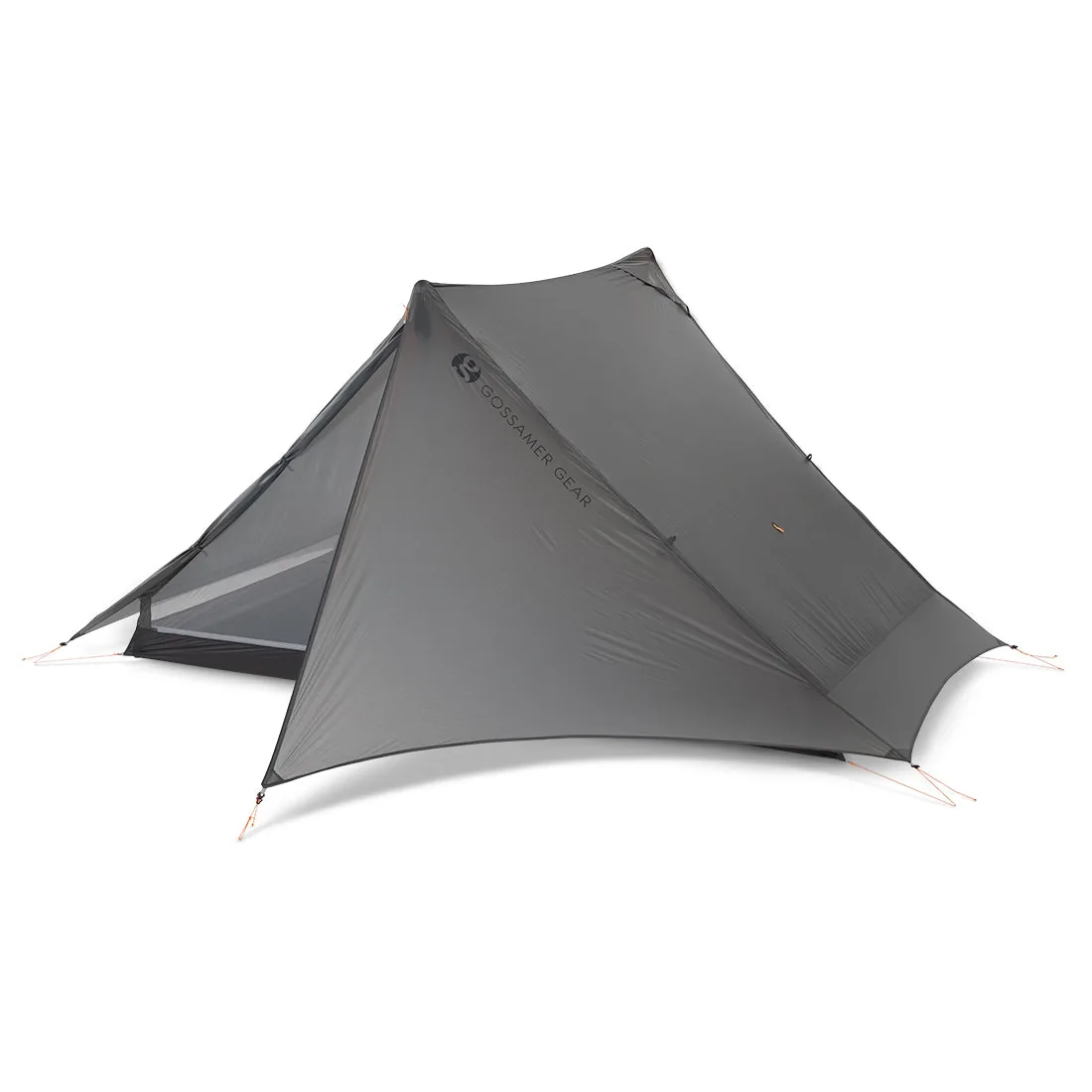
The Duplex Pro is the latest iteration of a shelter that has quietly defined the ultralight two-person category for years, and the update shaves it down to 19 oz while keeping the catenary-cut, two-trekking-pole architecture that made the original a benchmark. It is a single-wall Dyneema tent, which means there is no separate mesh inner body doing double duty as a moisture barrier, so condensation control depends on ventilation choices at pitch time rather than a built-in solution. For a couple, the appeal is less interior square footage per ounce than almost anything else on the market, paired with two doors and two vestibules so gear management does not become a nightly negotiation. Dyneema does not sag or stretch overnight the way nylon does, so a well-staked pitch stays taut through a full trip without re-tensioning, which matters when you are sharing a small footprint with another person. The learning curve is real: trekking-pole tents reward practice, and a sloppy pitch on a non-freestanding shelter shows up immediately as flapping fabric or pooled condensation overhead. At $799 this is the most expensive shelter on the list, and that premium buys refinement rather than a fundamentally different structure than the original Duplex. This is the pick for a pair who has pitched Dyneema tents before and wants the lightest defensible two-person option available.

Check price →

Best Value

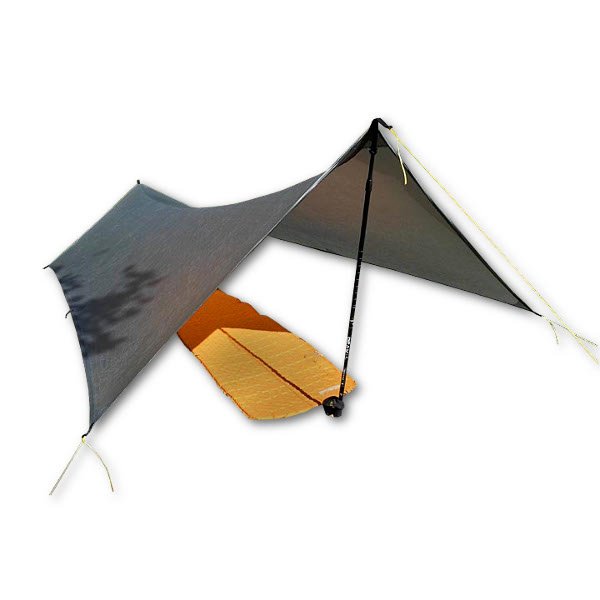
Six Moon Designs Deschutes Ultralight Backpacking

Six Moon Designs Deschutes Ultralight Backpacking
24 oz$190
Weight
24 oz
Sleeps
Price
$190
Material
Best for budget-conscious pairs comfortable trading full enclosure for a simple, ultralight tarp setup
Pros
  • $190 is dramatically less expensive than any true tent on this list
  • 24 oz is competitive weight for the price point
  • No-frills design means fewer components to fail or repair
Cons
  • It is a tarp shelter, not a fully enclosed tent, so bug and weather protection depend on add-ons or terrain
  • Listed as a solo tarp, so two people will be genuinely tight without extra floor space

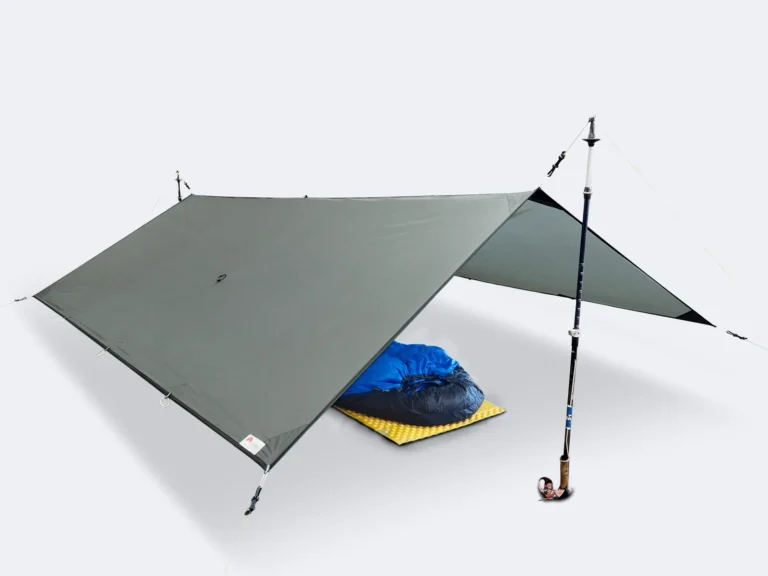
The Deschutes is worth including here specifically because it forces an honest conversation about what a couple actually needs from a shelter. It is built and marketed as a solo tarp, using a single 49-inch pole and a no-frills, minimalist construction philosophy that strips out anything not essential to keeping rain off. At 24 oz and $190 it undercuts every dedicated two-person tent on this list by a wide margin, which is real money saved for a pair willing to accept a tarp's tradeoffs: no integrated bug netting, no full floor-to-ceiling enclosure, and a footprint that was not designed with two adults in mind. For an established couple hiking together in dry, bug-light conditions or shoulder-season trips where full enclosure matters less, a tarp like this paired with a shared bivy or groundsheet can work as a genuinely ultralight two-person system. It will not suit anyone expecting tent-like weather sealing or privacy, and headroom and floor space will feel cramped for two people and their gear. This is less a direct competitor to the Duplex Pro or X-Mid Pro 2+ and more an option for experienced, gear-minimal pairs who understand exactly what a tarp does and does not do.

Check price →

Best for Solo Hikers Who Occasionally Share

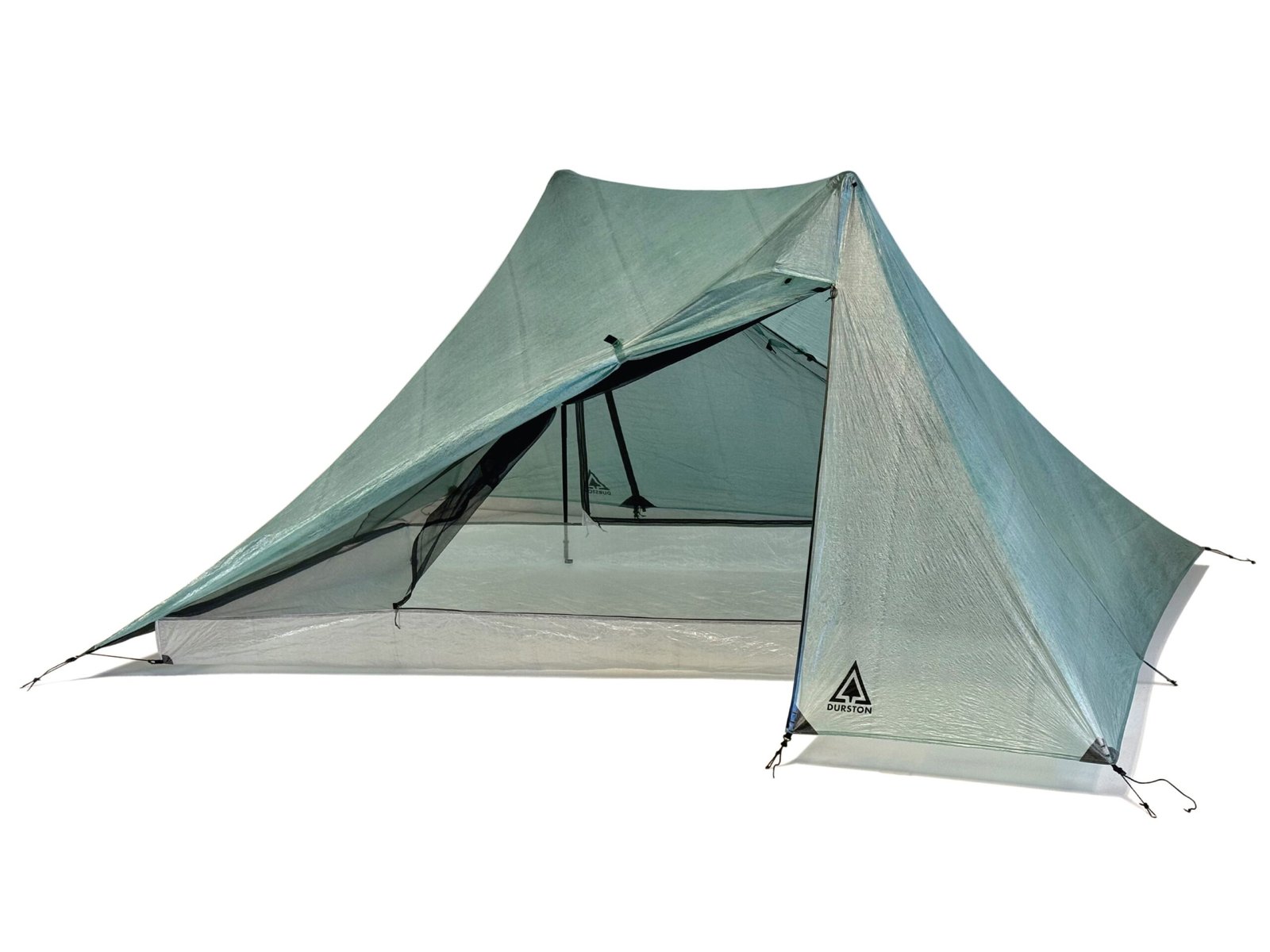
Durston X-Mid Pro 1

Durston X-Mid Pro 1
1 lbs$599
Weight
1 lbs
Sleeps
Price
$599
Material
Best for a hiker who solos most trips but wants a shelter that can flex to accommodate a partner on shorter trips
Pros
  • 1 lb weight makes it lighter than any true two-person tent on this list
  • $599 is more accessible than the Pro 2+ or Duplex Pro
  • Same proven X-Mid geometry as its larger sibling, so pitch behavior is familiar and predictable
Cons
  • Marketed and sized as a one-person tent, so two adults will be genuinely cramped for multi-night use
  • Only one door and vestibule, which becomes a real friction point when two people are sharing the space

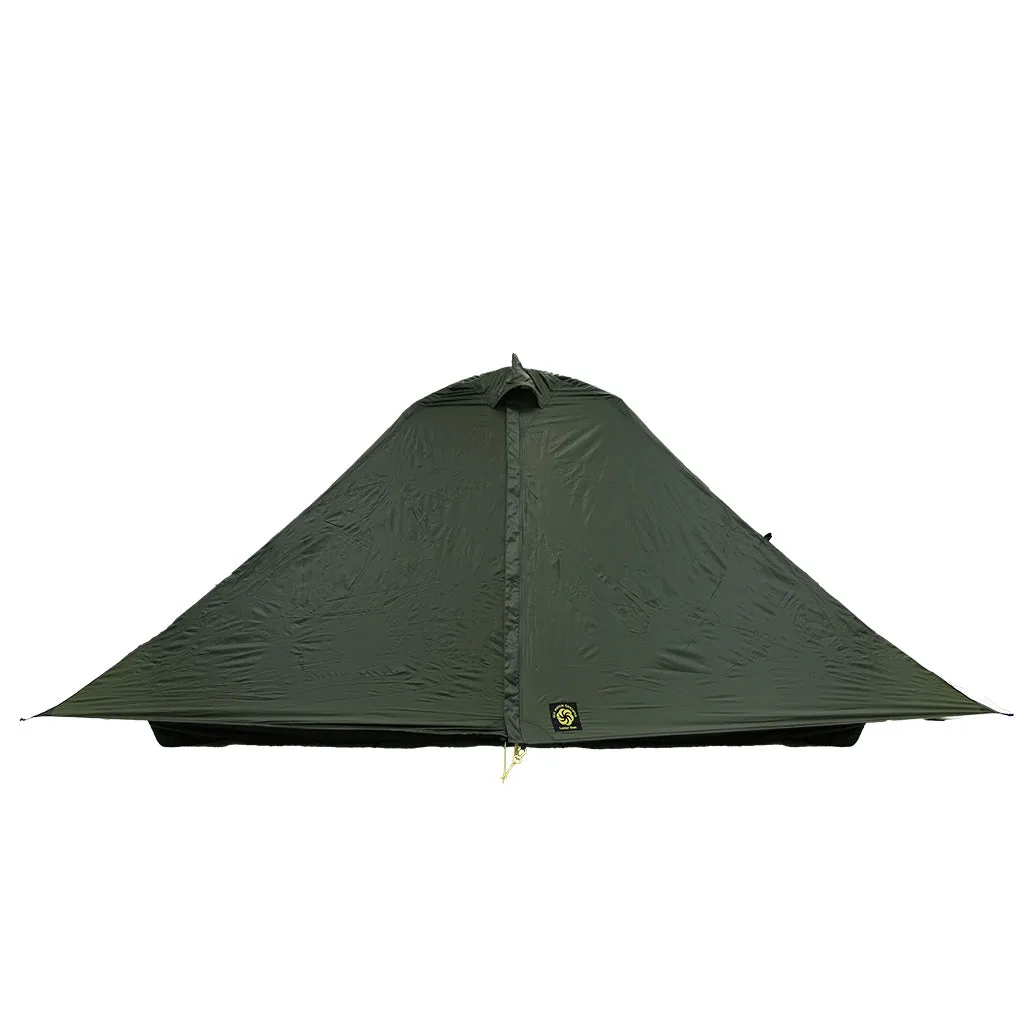
The X-Mid Pro 1 does not pretend to be a two-person tent, and that is exactly why it belongs on this list with a caveat rather than a full endorsement. It uses the same trusted X-Mid geometry as the Pro 2+, scaled down to 1 lb and $599, and for a solo hiker it is an outstanding shelter in its own right. Where it earns a spot here is as an option for a couple who hikes together only occasionally, or for a solo ultralight hiker who wants the flexibility to squeeze in a partner for a single night without owning two separate tent systems. The single door and single vestibule mean one person has to climb past the other to get in or out, and gear storage for two packs will require more creativity than a dedicated 2P design offers. Interior volume is built around one person's shoulders and gear, so two adults sharing it will notice the difference immediately compared to the X-Mid Pro 2+. This is not a recommendation to buy a 1P tent expecting full 2P comfort; it is an honest note that if weight is the overriding priority and the sharing is occasional, this is the lightest option that can technically accommodate two people. Anyone planning regular multi-night trips as a pair should look higher on this list instead.

Check price →

At a glance

SpecX-Mid Pro 2+Duplex ProDeschutes Ultralight…
Weight19.2 oz19 oz24 oz
Price$719$799$190

What to look for

Weight is only useful when you know what it is measuring. Ultralight tent listings sometimes quote trail weight (canopy, poles if included, stakes) and sometimes minimum or packed weight, and the difference between those numbers can be several ounces once you add guylines, stuff sacks, or a footprint. For a two-person shelter shared between partners, it is worth confirming what is actually included in the advertised figure and whether stakes and guylines are extra, since those add-ons are not optional in practice.

Single-wall Dyneema and double-wall silnylon or silpoly designs manage moisture very differently, and this matters more for two people than one. A single-wall tent like the Duplex Pro relies entirely on ventilation and pitch angle to control condensation, and with two people breathing and generating body heat overnight in a small enclosed space, condensation load is higher than in a solo tent. Double-wall designs or tents with more mesh, like the X-Mid Pro 2+'s inner body, separate condensation-prone outer fabric from the sleeping area, which tends to keep gear and sleeping bags drier on humid or cold mornings.

Floor space and vestibule configuration are where a genuine two-person tent earns its price premium over a stretched one-person design. Two adults need enough shoulder and hip width to sleep without constant contact, headroom to sit up and dress, and ideally two doors and two vestibules so neither partner has to crawl over the other or share a single gear-storage area. A tent with only one entry point, like the X-Mid Pro 1, works for occasional sharing but becomes a genuine point of friction on trips longer than a night or two.

Non-freestanding, trekking-pole-supported tents dominate this weight class because eliminating dedicated tent poles is one of the most effective ways to cut grams. That efficiency comes with a real requirement: both hikers need to carry trekking poles of the correct length, and at least one person needs to be comfortable pitching a shelter that depends on staking angle and ground tension rather than a freestanding pole structure. Anyone new to this style should expect a learning curve before the pitch becomes fast and reliable, particularly in wind or on hard or rocky ground where staking is harder.

  • Confirm whether the listed weight includes stakes, guylines, and any included footprint or ground sheet
  • Check door and vestibule count if you are buying for two people who will both need independent entry and gear storage
  • Decide whether single-wall Dyneema condensation management is acceptable or whether a double-wall design suits your climate better
  • Verify you have or are willing to buy correctly sized trekking poles, since most tents on this list are non-freestanding
  • Compare floor dimensions, not just weight, since two-person comfort depends heavily on shoulder and hip width at head and foot
  • Factor in fabric cost versus durability: Dyneema costs more up front but resists stretch and sag better than silnylon over repeated pitches

How to choose

If you and your partner are committed ultralight hikers who already pitch trekking-pole shelters and want the best balance of weight and livability, the X-Mid Pro 2+ is the safer all-around choice thanks to its dual doors and vestibules. If shaving every possible ounce matters more than anything else and you are experienced with single-wall Dyneema condensation management, the Duplex Pro is one ounce lighter and built on a longer track record of refinement. Pairs on a tighter budget who are willing to accept a tarp's tradeoffs in exchange for a dramatically lower price should look at the Deschutes, understanding it is not a fully enclosed shelter. If you mostly hike solo and only occasionally need to fit a partner in for a night, the X-Mid Pro 1 lets you avoid owning a dedicated two-person tent at the cost of comfort when it is actually shared. Prioritize door count and floor dimensions over headline weight if you and your partner value personal space and independent gear access over shaving the last few ounces.

FAQ

Is a single-wall Dyneema tent warm enough for two people in cold conditions
Single-wall Dyneema tents like the Duplex Pro rely on the fabric itself and ventilation for warmth retention, without a separate insulating air gap that some double-wall designs create. Two people generate more body heat than one, which helps, but also increases condensation, so proper ventilation at pitch time becomes more important in cold, humid conditions.
Do I need a footprint or ground sheet with these tents
Most ultralight tents, including the ones on this list, are not sold with a footprint by default and treat it as an optional accessory. A footprint adds a small amount of weight but protects the tent floor from abrasion and puncture, which is a worthwhile tradeoff on rocky or rough terrain.
Can two people actually share a tent listed as one-person, like the X-Mid Pro 1
It is possible for occasional or short-duration use, but the interior volume, single door, and single vestibule are sized around one person's gear and movement. For regular two-person trips, a dedicated 2P shelter with two doors will be noticeably more comfortable.
Why is the Deschutes so much cheaper than the other tents on this list
The Deschutes is a minimalist tarp shelter rather than a fully enclosed tent, so it skips components like integrated bug netting and a sewn floor that add cost and weight to true tents. That makes it significantly less expensive, but it also means less built-in protection from insects and blowing rain compared to an enclosed shelter.
Are trekking-pole tents harder to pitch than freestanding tents
Yes, generally. Freestanding tents self-support once the poles are assembled, while non-freestanding designs like the X-Mid Pro 2+ and Duplex Pro depend on correct staking angle and ground tension to achieve a taut, stable pitch, which takes practice to do quickly and well.
How much should a couple expect to spend on a genuinely ultralight two-person tent
Based on the shelters here, true two-person ultralight Dyneema tents run from roughly $719 to $799, while budget alternatives like a tarp shelter can come in well under $200 with reduced weather protection. The price gap generally reflects fabric choice, engineering refinement, and the number of doors and vestibules included.

The bottom line

For most couples serious about going light together, the X-Mid Pro 2+ earns the top spot for pairing genuine two-person livability, dual doors, and dual vestibules with a weight that rivals many solo tents. The Duplex Pro is a legitimate alternative for pairs who want the absolute lightest option and are comfortable managing single-wall condensation. Budget-focused or minimalist pairs should consider the Deschutes with eyes open about its tarp limitations, while the X-Mid Pro 1 remains a smart choice only for hikers who share a tent occasionally rather than as a default setup.

Related guides

Keep building your system with these closely related guides.
Leave a Reply

Your email address will not be published. Required fields are marked *