6 Proven Overnight Packs: What Denier Actually Tells You About a Fabric
How we did this: we analyzed the manufacturer-published specifications for 6 products — weight, capacity, price and material — alongside documented design differences. We have not field-tested them.
Choosing an ultralight overnight pack requires looking past marketing claims to understand the actual materials carrying your load. We evaluated the current market of ultralight backpacks by analyzing their fabric architecture, specifically how the denier of the yarn interacts with the base polymer to dictate abrasion resistance, tear strength, and overall longevity.
- Denier measures yarn weight, not strength; a 100-denier UHMWPE fabric vastly outperforms a 100-denier standard nylon.
- Laminated fabrics like Ultra and Dyneema Composite Fabric offer superior weather resistance but transfer more stress to the seams.
- High-tenacity nylons like Robic provide excellent durability and flexibility at a fraction of the cost of laminates.
- Pack volume must align with your base weight; ultralight fabrics lack the structural rigidity to comfortably carry overloaded internal frames.
- Best Overall — Zpacks Arc Haul Ultra 60L: Hikers seeking the highest strength-to-weight ratio in a framed pack
- Best Value — Durston Gear Kakwa 55: Weight-conscious backpackers who need efficient load carry on a strict budget
- Best for Abrasive Environments — Hyperlite Mountain Gear Southwest 55L: Off-trail navigators and canyon hikers who subject their gear to constant friction
- Best for Wet Climates — Hyperlite Mountain Gear Windrider 55L: Thru-hikers who need rapid drying capabilities for exterior gear
- Best for Heavy Hauling — ULA Circuit: Traditional backpackers transitioning to ultralight who still carry denser loads
- Best for Organization — Gossamer Gear Mariposa 60: Hikers who prefer compartmentalized storage over a single large main compartment
The picks, reviewed in detail
Best Overall
Zpacks Arc Haul Ultra 60L

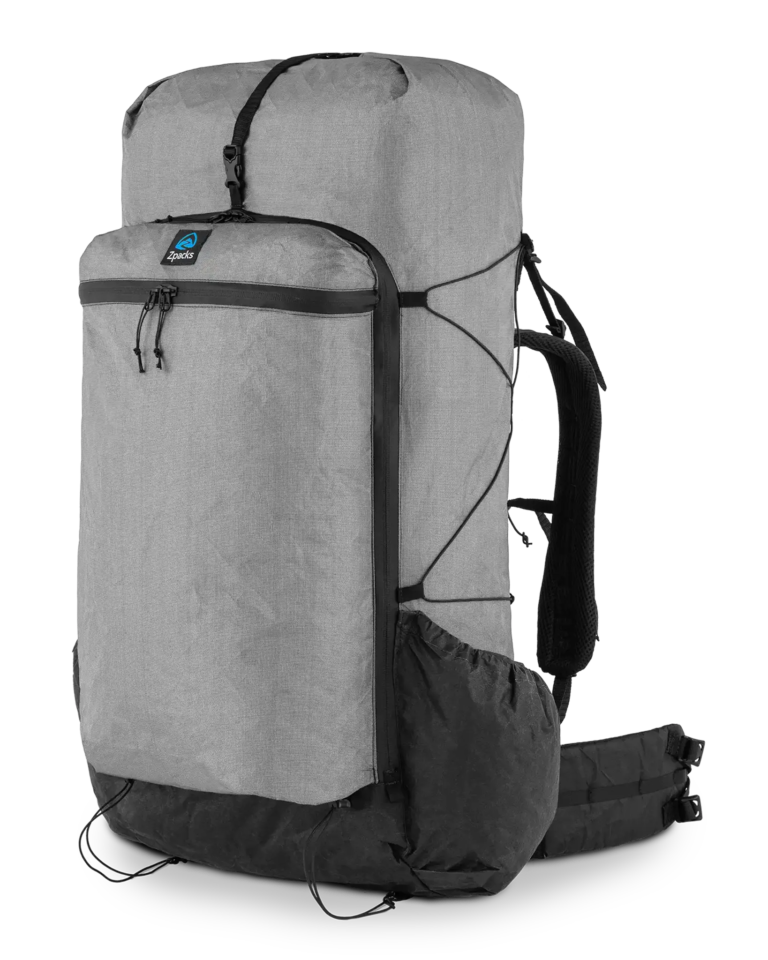
- Ultra 100X fabric offers exceptional abrasion resistance at a low denier
- External frame design maximizes ventilation and load transfer
- Base weight of 21.8 ounces is remarkably low for a 60-liter capacity
- External frame requires careful packing to avoid balance issues
- Premium materials drive the price to $399
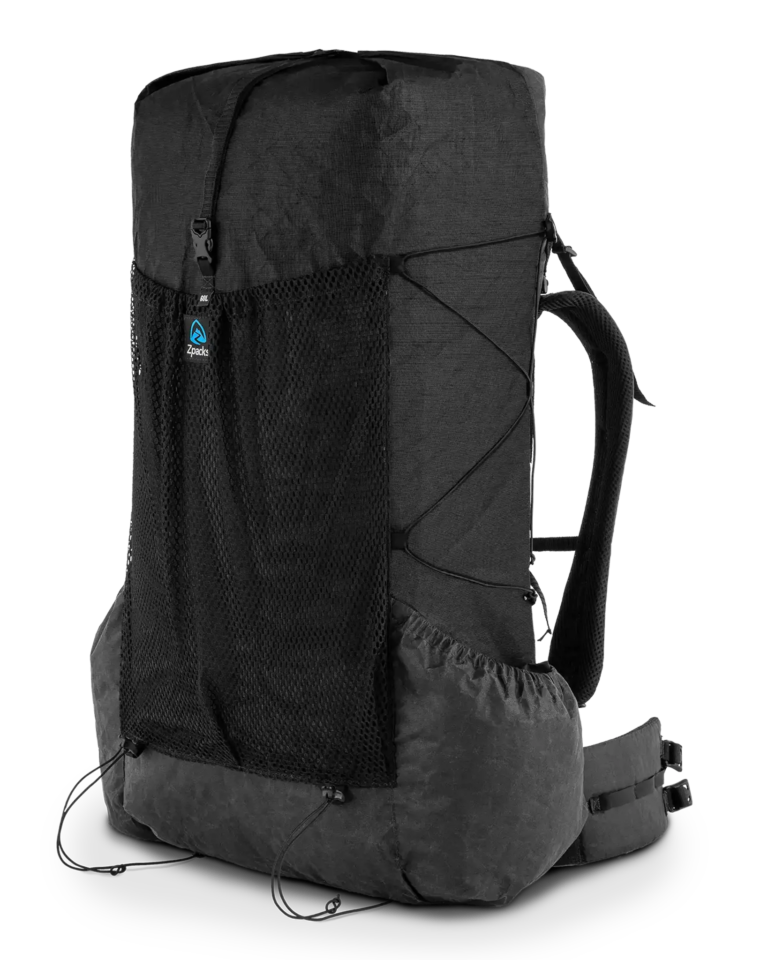
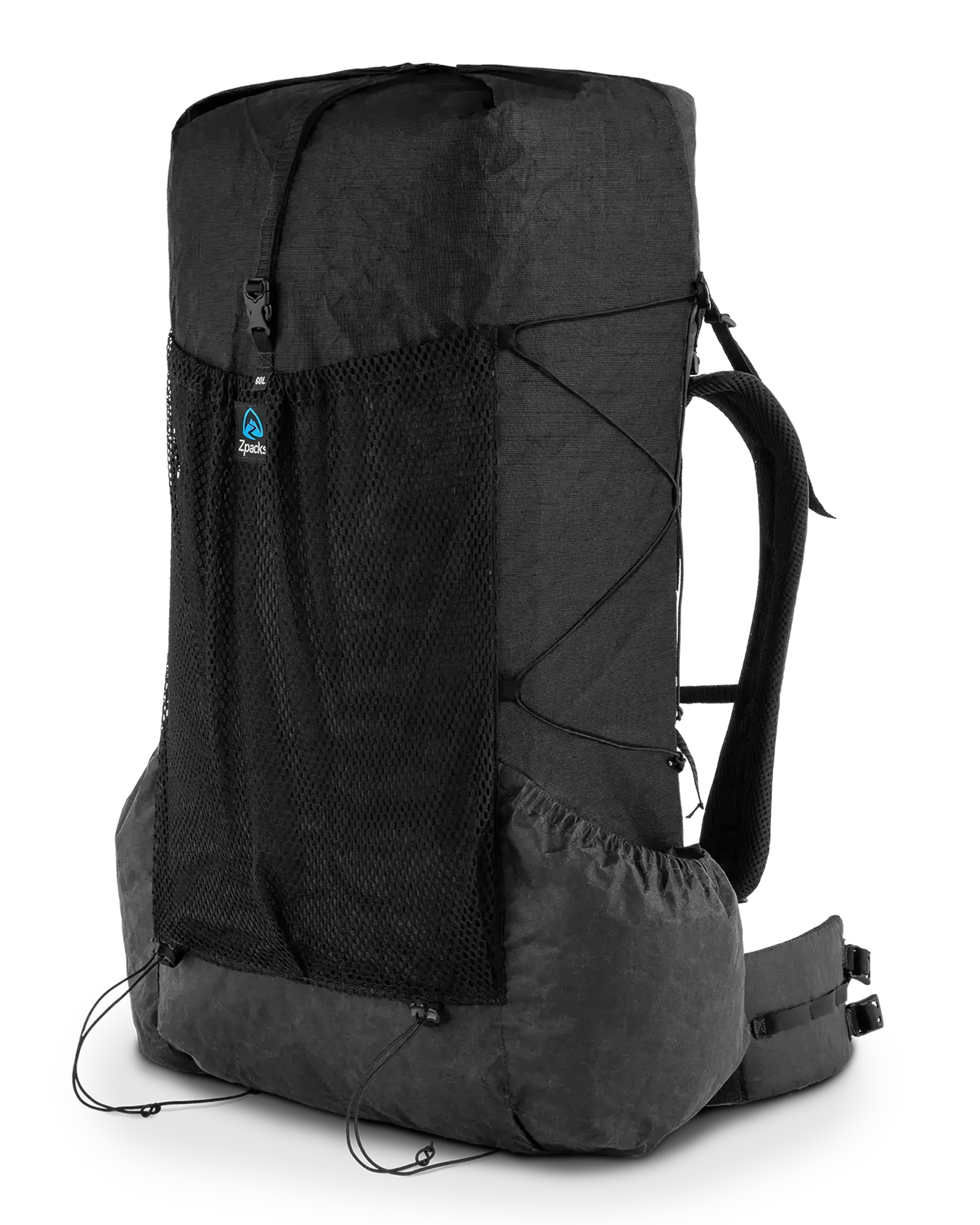
The Arc Haul Ultra 60L utilizes Ultra 100X, a fabric that perfectly illustrates why denier must be evaluated alongside material composition. While a standard lightweight nylon would be too fragile for a main pack body, Ultra 100X features a woven ultra-high-molecular-weight polyethylene (UHMWPE) face fabric laminated to a waterproof backing, resulting in extremely high abrasion resistance. This material choice allows the pack to offer 60 liters of volume while weighing just 21.8 ounces. The flexed arc frame creates a rigid structure for load transfer while maintaining an air gap against the back for ventilation. Because the Ultra fabric is highly static and does not stretch, the pack body retains its shape under load, preventing sagging that can alter your center of gravity. The primary limitation of this rigid, low-stretch architecture is that it demands precise packing; bulky items placed poorly will create pressure points against the frame rather than stretching the fabric outward. For hikers managing base weights under 15 pounds who want maximum volume and weather resistance, this material and frame combination provides an optimal balance of durability and weight savings.
Check price →Best Value
Durston Gear Kakwa 55

- Priced highly competitively at $279
- Hollow aluminum frame provides excellent vertical load transfer
- Weighs only 1.9 pounds despite a robust suspension system
- Fabric is less puncture-resistant than heavier laminates
- Fixed torso lengths require precise sizing before purchase
The Kakwa 55 achieves its sub-2-pound weight and $279 price point by utilizing Ultra 200X fabric, demonstrating how modern fabric engineering can democratize ultralight gear. This material integrates UHMWPE grids into a lighter base fabric, providing localized tear stops without the cost of a full high-denier UHMWPE weave. The resulting textile is highly flexible, allowing the pack body to conform easily to varied loads while maintaining high tensile strength across the bias. Load transfer is managed by a frame and backpad system, which directs weight directly into the lumbar pad and hip belt rather than relying on a flexible framesheet. This rigid frame, combined with load lifters that are structurally integrated into the suspension, allows the pack to comfortably manage multi-day loads without the shoulder straps collapsing. The flexible nature of the fabric means the pack compresses well when carrying smaller loads, but it also means sharp objects inside the pack are more likely to create friction points against the outer material. It serves as an ideal solution for hikers who want premium load-carrying geometry without paying the premium associated with full-laminate pack bodies.
Check price →Best for Abrasive Environments
Hyperlite Mountain Gear Southwest 55L

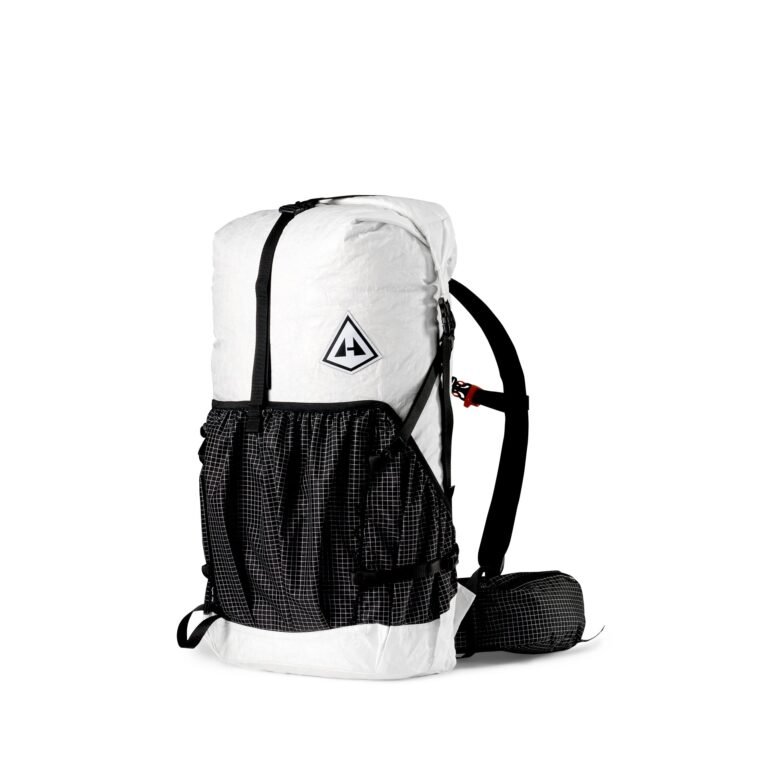
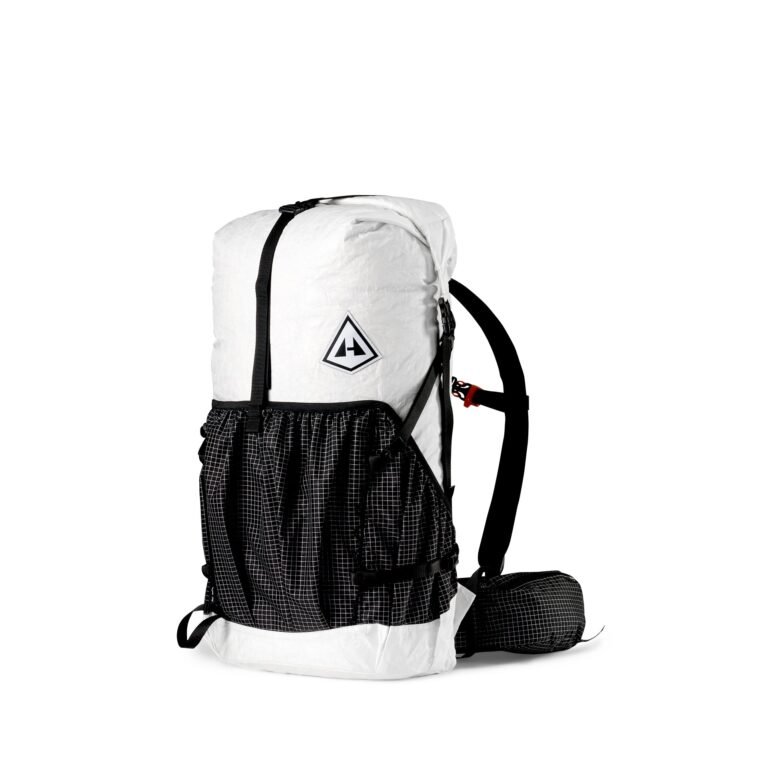
- Solid Dyneema pockets prevent snags on brush and rock
- Highly water-resistant construction minimizes the need for pack covers
- Streamlined profile prevents catching in tight spaces
- Solid pockets cannot drain water as quickly as mesh
- Weighs roughly 31 ounces, which is heavier than some frameless alternatives
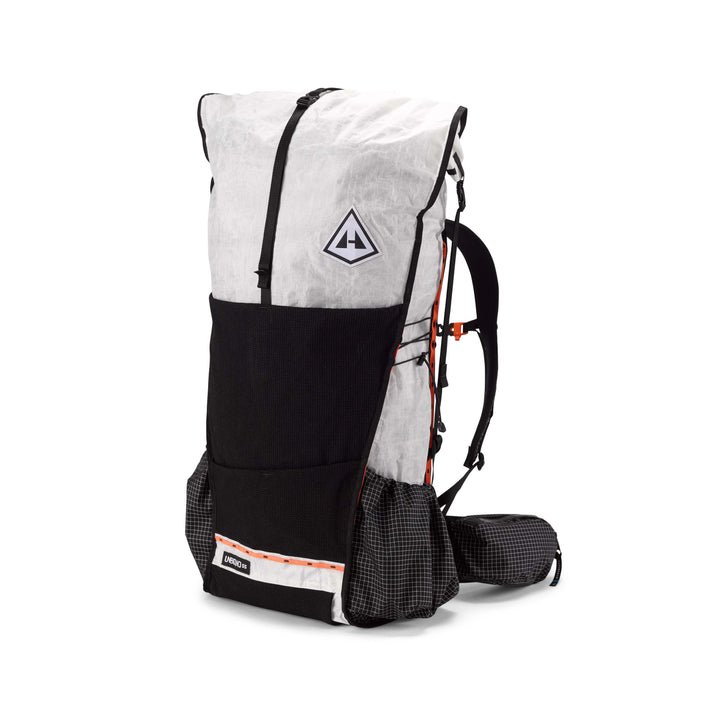
The Southwest 55L is built around Dyneema Woven Composite 3.9, a material that combines light weight with durability and abrasion resistance. The pack body utilizes Dyneema Woven Composite 3.9 fabric, though the manufacturer does not publish specific denier details for the face fabric. The interior Dyneema provides the structural stability and tear resistance, while the denier of the exterior polyester dictates how much sheer abrasion the pack can withstand against granite or thorns. Weighing roughly 31 ounces, this pack features solid exterior pockets rather than mesh, eliminating the most common failure point found on ultralight backpacks when bushwhacking. The roll-top closure and seam-taped construction provide near-waterproof performance, though the stiff nature of the DCH fabric means it will develop creases over time that can eventually compromise the laminate. The suspension relies on an integrated foam back panel pad, which transfers weight effectively but lacks the ventilation of a suspended mesh back panel. This pack is specifically engineered for environments where standard nylon meshes would be shredded within days.
Check price →Best for Wet Climates
Hyperlite Mountain Gear Windrider 55L

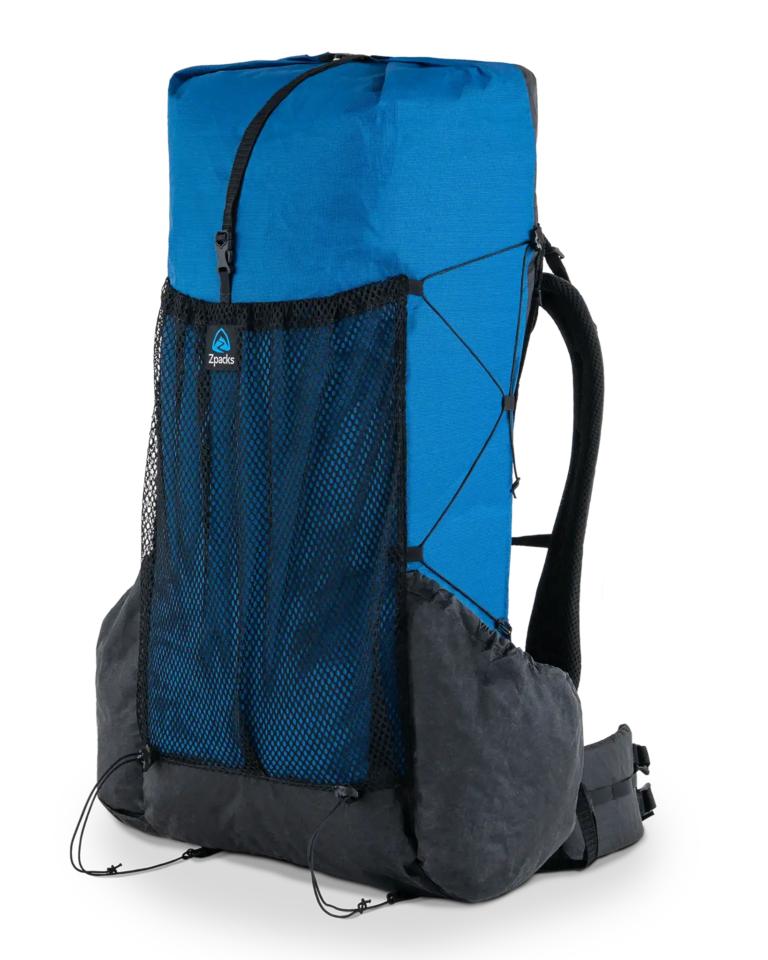
- Mesh exterior pockets allow wet gear to dry while hiking
- DCH main body fabric prevents moisture from reaching internal contents
- Proven suspension system handles 30-pound loads comfortably
- Mesh pockets are highly susceptible to tearing on brush
- High price point starting at $395
Sharing the same chassis design and Dyneema fabric architecture as the Southwest, the Windrider 55L (weighing roughly 31 ounces) swaps the solid exterior pockets for a mesh exterior. This design choice fundamentally changes how the pack interacts with the environment and the user. The mesh has a relatively low denier compared to the main pack body, making it the weakest point in terms of abrasion, but it provides essential airflow for drying rainflies, wet socks, or water filters while on the move. The main body relies on Dyneema Woven Composite fabric, ensuring the core compartment remains highly weather-resistant. The pack utilizes a simple but effective suspension system with an integrated foam back panel pad, keeping the load close to the user's center of gravity. Because DCH fabric has zero stretch, packing requires a methodical approach to fill voids, as the material will not expand to accommodate awkwardly shaped bear canisters or rigid tents. The Windrider is the standard for long-distance trails with established paths where snagging is minimal but managing wet gear is a daily requirement.
Check price →Best for Heavy Hauling
ULA Circuit
- Robic nylon construction offers excellent tear strength at a lower cost
- Suspension system includes a Delrin hoop and aluminum stay for superior rigidity
- Generous collar allows for significant vertical expansion
- At 38.5 ounces, it is the heaviest pack on this list
- Nylon absorbs more water than laminated fabrics
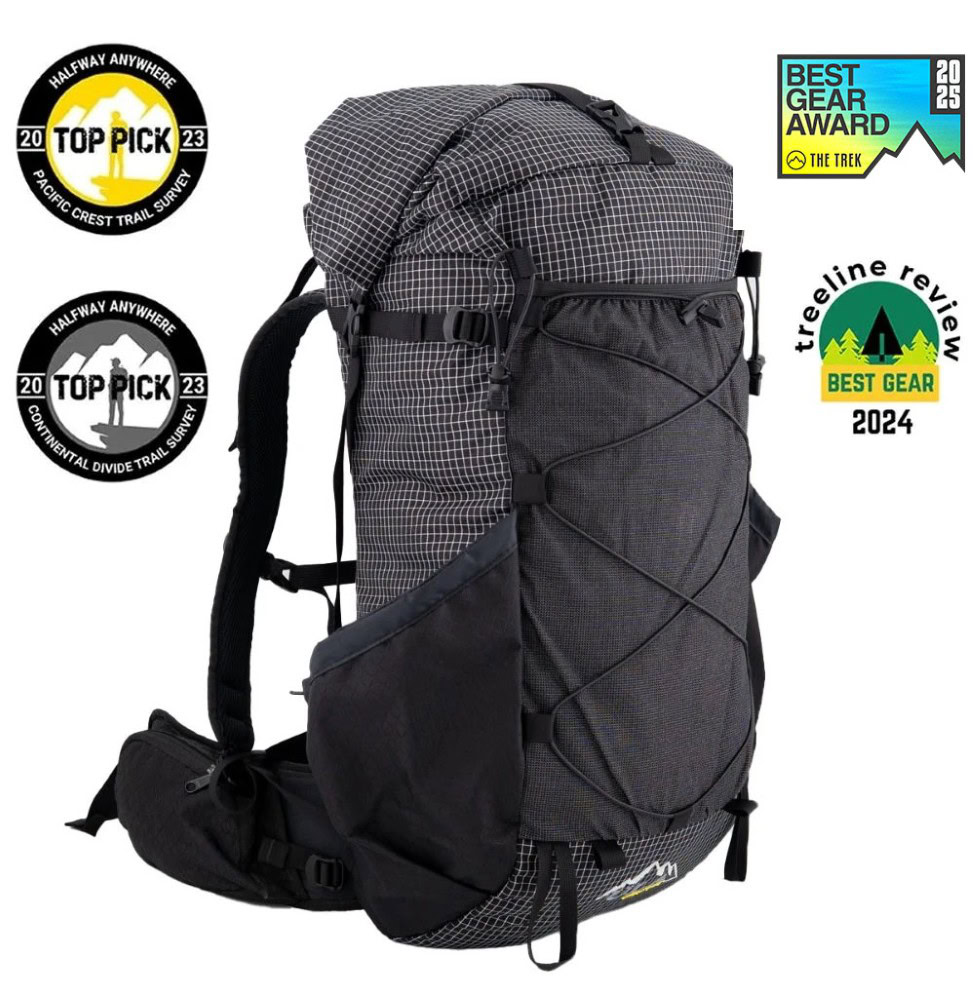
The Circuit relies on Robic nylon, a material that demonstrates how altering the chemical extrusion process of nylon can increase durability without increasing denier. Robic is a high-tenacity nylon, meaning a 100-denier or 210-denier Robic fabric possesses a higher tensile strength and abrasion resistance than standard nylon 6 or 6,6 of the exact same weight. This allows the pack to withstand significant abuse while keeping the total weight at 38.5 ounces, which is heavy for the ultralight category but exceptionally light for its load-carrying capacity. The suspension is the most robust on this list, utilizing a carbon fiber and Delrin suspension hoop combined with a single aluminum stay to transfer loads up to 35 pounds directly to the dual-density foam hip belt. The fabric drapes and folds more easily than stiff laminates, making it easier to pack and compress when carrying smaller loads. However, because it is a woven nylon rather than a film-backed laminate, it will absorb water weight during heavy rain and requires a pack liner for absolute waterproofing. It remains the most forgiving pack for users who occasionally overload their gear or carry dense, heavy items like camera equipment.
Check price →Best for Organization
Gossamer Gear Mariposa 60

- Ample external pockets provide immediate access to daily essentials
- Recycled Robic nylon balances environmental concerns with high durability
- Removable SitLight pad serves as both back panel and camp seat
- Asymmetrical pocket design can cause lateral imbalance if packed poorly
- Weighs 33 ounces, placing it on the heavier end of the ultralight spectrum
The Mariposa 60 Backpack utilizes recycled Robic nylon, applying high-tenacity yarn technology to an highly compartmentalized design. At 33.4 ounces, this pack dedicates a portion of its weight to structural organization, featuring ample exterior pockets including a massive asymmetrical side pocket designed specifically for a shelter or hydration system. The denier of the Robic nylon used here is optimized for flexibility, allowing the pockets to bellow outward and accommodate bulky items without stressing the seams. The suspension relies on an aluminum closed-shape frame and a SitLight back pad, a dual-use design that saves weight elsewhere in your kit. The fabric's pliability makes it highly user-friendly for packing, but it lacks the structural stiffness of UHMWPE laminates, meaning the pack relies heavily on the internal stay to prevent barreling against the spine. The asymmetrical layout requires the user to consciously balance dense items like water and food, as overloading the large side pocket will pull the pack off-center. It is an excellent choice for hikers who prioritize immediate access to gear throughout the day over absolute minimum weight.
Check price →At a glance
| Spec | Arc Haul Ultra 60L | Kakwa 55 | Southwest 55L |
|---|---|---|---|
| Weight | 21.8 oz | 30.4 oz | 29 oz |
| Price | $399 | $199 | $420 |
What to look for
Understanding backpack materials requires defining what denier actually measures. Denier is simply the linear mass density of a fiber, specifically the mass in grams of 9,000 meters of the yarn. A higher denier number indicates a thicker, heavier thread. However, comparing denier across different base polymers is a fundamental error. A 100-denier standard nylon yarn is relatively fragile and suitable only for light apparel or baffles. In contrast, a 100-denier ultra-high-molecular-weight polyethylene (UHMWPE) yarn possesses a tensile strength up to 15 times greater than steel by weight. Therefore, a backpack made from 100-denier Ultra fabric will vastly outperform a 210-denier standard nylon pack in sheer abrasion and tear resistance, despite having a lower denier and lower overall weight.
High-tenacity nylons, such as Robic, represent a middle ground in fabric engineering. Manufacturers alter the chemical composition and extrusion process of the nylon polymer to align the molecular chains more uniformly. This process creates a yarn that is significantly stronger than standard nylon 6 or 6,6 of the same denier. Backpacks utilizing 100D or 210D Robic nylon offer a high strength-to-weight ratio while maintaining the traditional woven characteristics of nylon: flexibility, ease of sewing, and lower manufacturing costs. Unlike rigid laminates, these fabrics drape well and compress easily, but they remain susceptible to water absorption and require secondary waterproof coatings or internal pack liners to protect gear from sustained rain.
Laminated fabrics, including Dyneema Composite Fabric (DCF) and Ultra, dominate the premium ultralight market due to their exceptional weather resistance and dimensional stability. Hybrid DCF utilizes a non-woven matrix of Dyneema threads sandwiched between a waterproof film and a woven polyester face fabric. In these constructions, the denier of the polyester face (typically 50D or 150D) dictates the pack's abrasion resistance against rocks, while the internal Dyneema matrix prevents tears from propagating. Ultra fabrics take a different approach, weaving UHMWPE directly with high-tenacity polyester and laminating it to a waterproof film. Both materials are highly static, meaning they do not stretch under load. This rigidity helps the pack maintain its shape and transfer weight efficiently to the suspension system, but it also means the fabric will crease and eventually delaminate if repeatedly folded along the same lines.
The strongest fabric on the market is useless if the pack's construction methods fail to manage stress distribution. High-denier yarns and rigid laminates do not stretch, meaning that when the pack is fully loaded, the dynamic forces of walking are transferred directly to the seams. Manufacturers must employ specialized techniques, such as flat-felled seams, extensive bartacking, and seam taping, to prevent the needle holes from elongating and tearing. When evaluating a pack, examine the junction where the shoulder straps and load lifters meet the pack body; this area experiences the highest sheer force. A well-designed ultralight pack will use internal reinforcement patches or distribute this load across a wider surface area to prevent the high-tensile fabric from simply ripping the stitching out of the seams.
- Identify the base polymer (Nylon, Polyester, UHMWPE) before comparing denier numbers.
- Check the denier of the face fabric on laminated packs to gauge rock abrasion resistance.
- Examine seam construction; rigid fabrics require bound or taped seams to prevent stitch elongation.
- Evaluate the stretch of exterior pockets; solid fabrics resist snags but limit expansion.
- Assess the frame type; internal stays require careful packing, while external frames manage load independently of fabric tension.
- Verify if the fabric absorbs water, which adds weight and requires a separate waterproof liner.
How to choose
Selecting the right overnight pack begins with an honest assessment of your base weight and the environments you hike in. If you navigate dense brush, slot canyons, or off-trail routes, prioritize packs with solid exterior pockets and high-denier face fabrics, such as the Southwest 55L. If you hike established trails in wet climates, laminated fabrics with mesh pockets, like the Windrider 55L, offer the best balance of waterproofing and gear drying. For hikers carrying loads over 30 pounds or transitioning from traditional gear, high-tenacity nylon packs with robust frames, like the Circuit, provide the necessary structural support. Conversely, if your base weight is strictly under 15 pounds and you want maximum efficiency, advanced low-denier UHMWPE packs like the Arc Haul Ultra 60L offer strength-to-weight ratios. Always match the volume and suspension of the pack to the actual density of your gear, as ultralight fabrics rely on proper tension to carry comfortably.
FAQ
What is denier in backpack fabrics?
Is higher denier always better for durability?
What is the difference between Robic nylon and standard nylon?
Why do Dyneema packs use a polyester face fabric?
Does denier affect the waterproofness of a backpack?
Why do ultralight backpacks tear at the seams?
The bottom line
The Arc Haul Ultra 60L stands out as the premier choice by fully leveraging the advantages of Ultra 100X fabric, proving that a low-denier UHMWPE weave can deliver massive volume and durability at just 21.8 ounces. For backpackers who need robust load transfer without the premium price tag of laminates, the Kakwa 55 offers an exceptionally engineered frame and high-tenacity fabric at an unbeatable value. Ultimately, the best pack is the one where the fabric's specific polymer and denier match the abrasive realities of your chosen terrain.
Related guides
Keep building your system with these closely related guides.
- Ultralight Backpacks: 9 Packs Compared per Liter and Load
- 5 Best Ultralight Backpacks for Thru Hiking, Ranked and Tested
- Hyperlite Southwest Review: 40, 55 and 70 L Compared
- Overnight Packs
- Daypacks
Further reading
Authoritative sources to go deeper on the topics above.